
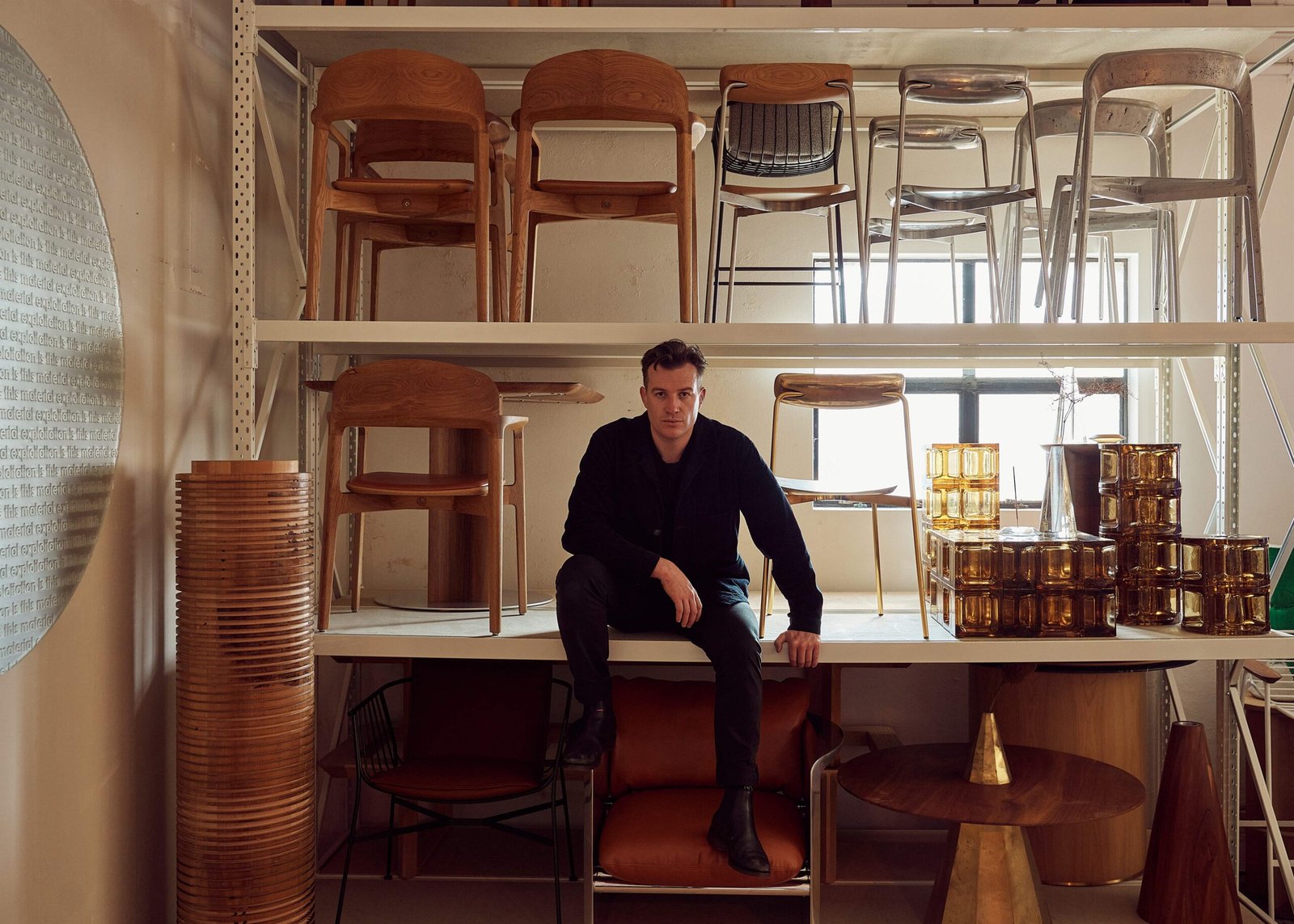
Tom Fereday on slowness, honesty, and designing for the life of an object rather than the moment of its making
Before Tom Fereday knew what design was, he knew what a well-made thing felt like. He grew up between Sydney and London in a house shaped by his father’s trade in antique rugs and textiles and his mother’s work as a ceramicist, with both grandparents being artists. As a result of that particular upbringing, he spent his childhood among objects that had already proven themselves across time. Not new or fashionable things, but things that had earned their place by surviving long enough to matter. That understanding settled into him early and has not left.
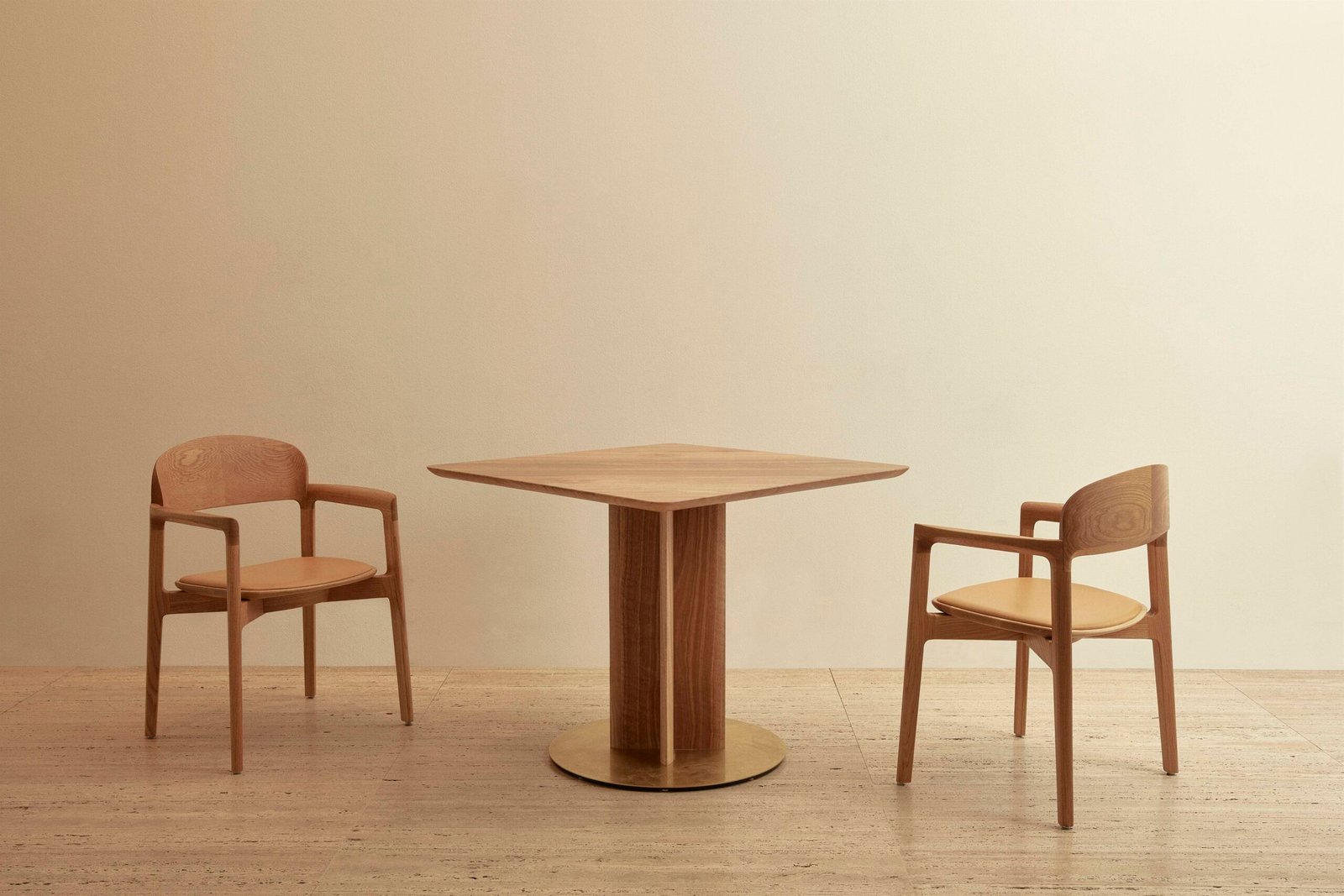
Sculpture at the Wimbledon School of Art came first, then a return to Australia for an honors degree in industrial design at the University of Technology Sydney, a shift that suited him precisely because it traded the contemplated object for the lived-with one. The studio followed in 2012, and what has accumulated since is a body of work in furniture, lighting, and objects that is functional in its purpose, serious in its material intelligence, and quiet enough in its presence to still feel right a decade after arriving in a room.
Commissions for the Art Gallery of New South Wales, the Powerhouse Museum, Louis Vuitton, Herman Miller, Alessi, and Stellarworks sit alongside a new studio and gallery opened earlier this year in Camperdown, Sydney, part working space and part archive, holding ten years of the practice’s output under one roof. Opening it, Fereday says, was about digging his toes in, a commitment to retaining a physical presence in a city where rising costs are pushing creative studios out.

When Design Diary International’s Alisha M spoke with him over email, the conversation turned quickly to the thing that defines his practice more than any single commission: the way he thinks before he makes.
“Just allowing time to think about the problem and dreaming of the most elegant solutions.”
He used to move quickly. Sketches arrived early, models soon after, and ideas tested in physical form as they came. Over time, something shifted. Sitting with a problem, letting it cycle through the mind without reaching for a pencil, produced better work than the faster process had. Not because slowness is inherently better but because the discipline of waiting produces a different quality of resolution, one where the answer that eventually arrives has already been tested against everything the design brain knows and found to be the most honest response to the problem. He calls it dreaming of the most elegant solutions, and the results of that dreaming are pieces that feel complete in a way that designed objects often do not, as though the decision that produced each one could not have gone any other way.
The goal, as he describes it, is to make pieces that grow on you over time. He aims to create pieces that gradually reveal their qualities over time, quietly inhabiting a room instead of simply performing well at first encounter. Longevity is not a material specification or a marketing promise in his practice. It is the organizing principle of the entire enterprise, the question to which every other design process question is subordinate. The person who will still own this thing in twenty years and understand by then why it was made the way it was—that is who Fereday is designing for.
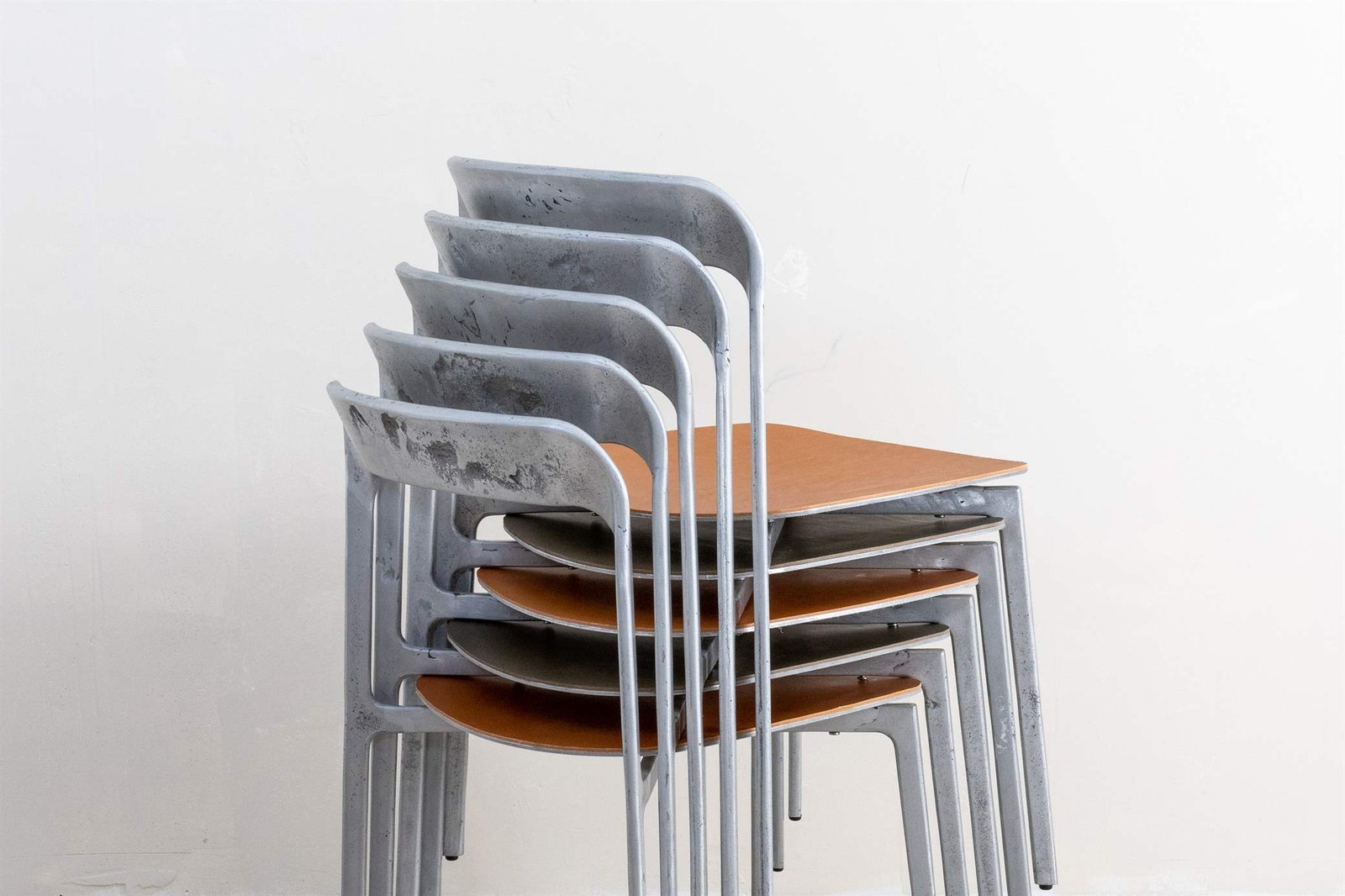
“Owning and enjoying objects for life, paying respect to the incredible natural materials that embody them.”
Wood keeps returning to his work not as a signature or default but because of its effect on the people who live alongside it. Timber offers intuitive calm and well-being, unmatched warmth, and distinctiveness that manufactured surfaces lack. It is not treated as a neutral carrier of form but as a collaborator with its qualities and its own demands, and the work shows the difference that approach makes.
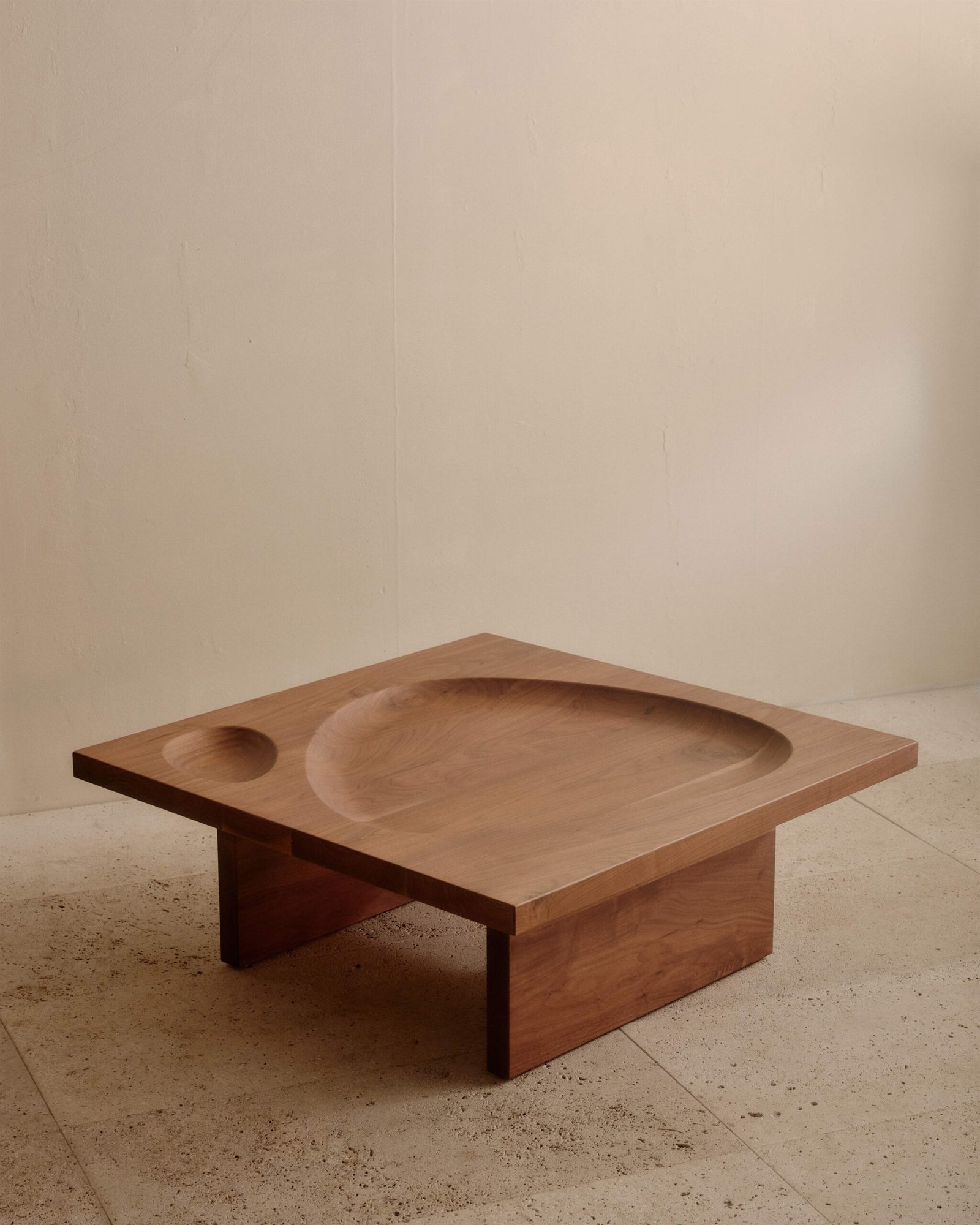
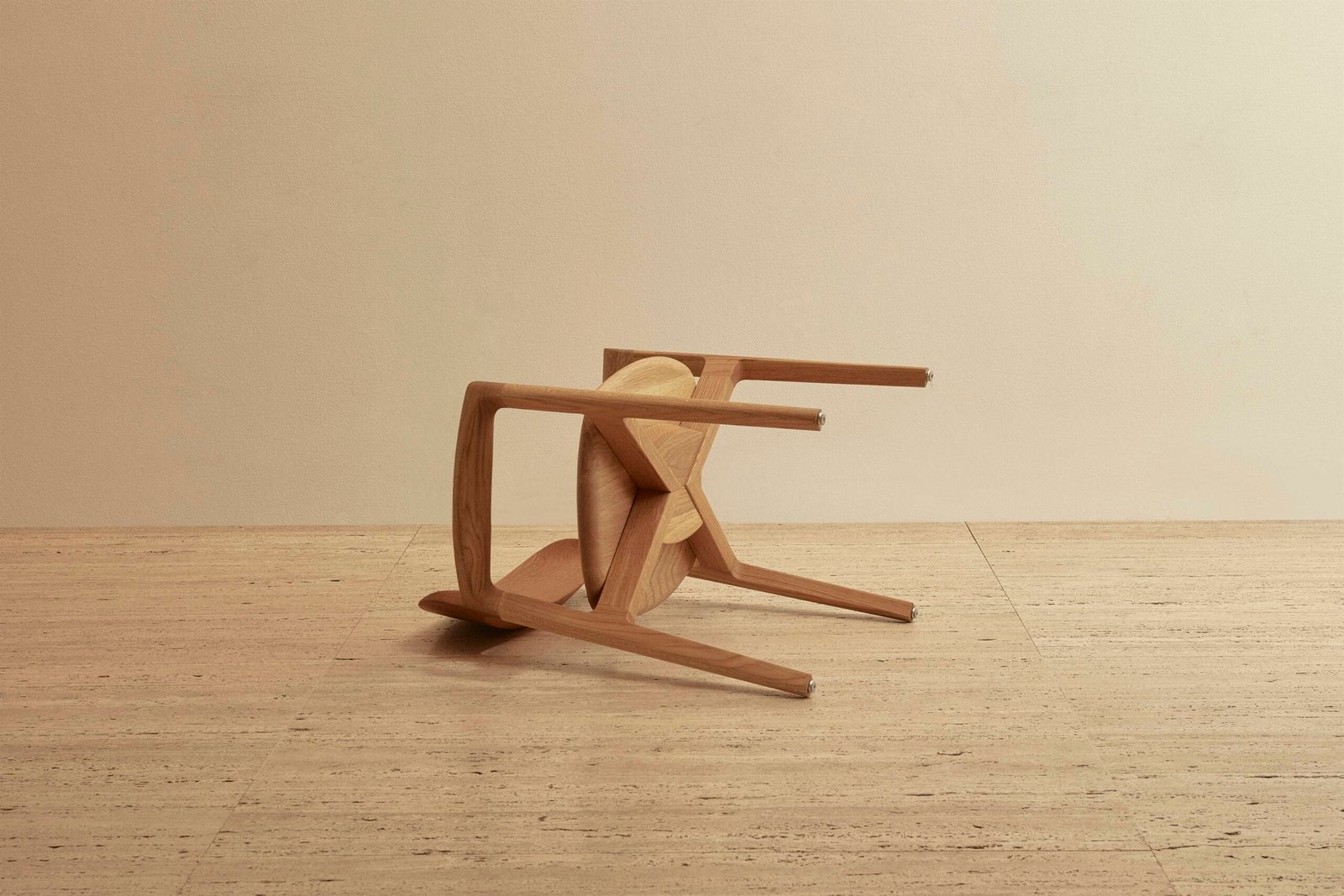
The construction of his objects is never hidden. A discipline developed early in the practice of designing from every angle, from the inside out, means every detail, including the ones that will never be looked at directly, is as resolved as the details that present themselves immediately. This is neither minimalism nor puritanism. This position emphasizes that a manufactured object must honestly reflect its construction for a fulfilling ownership experience, regardless of its immediate appearance.
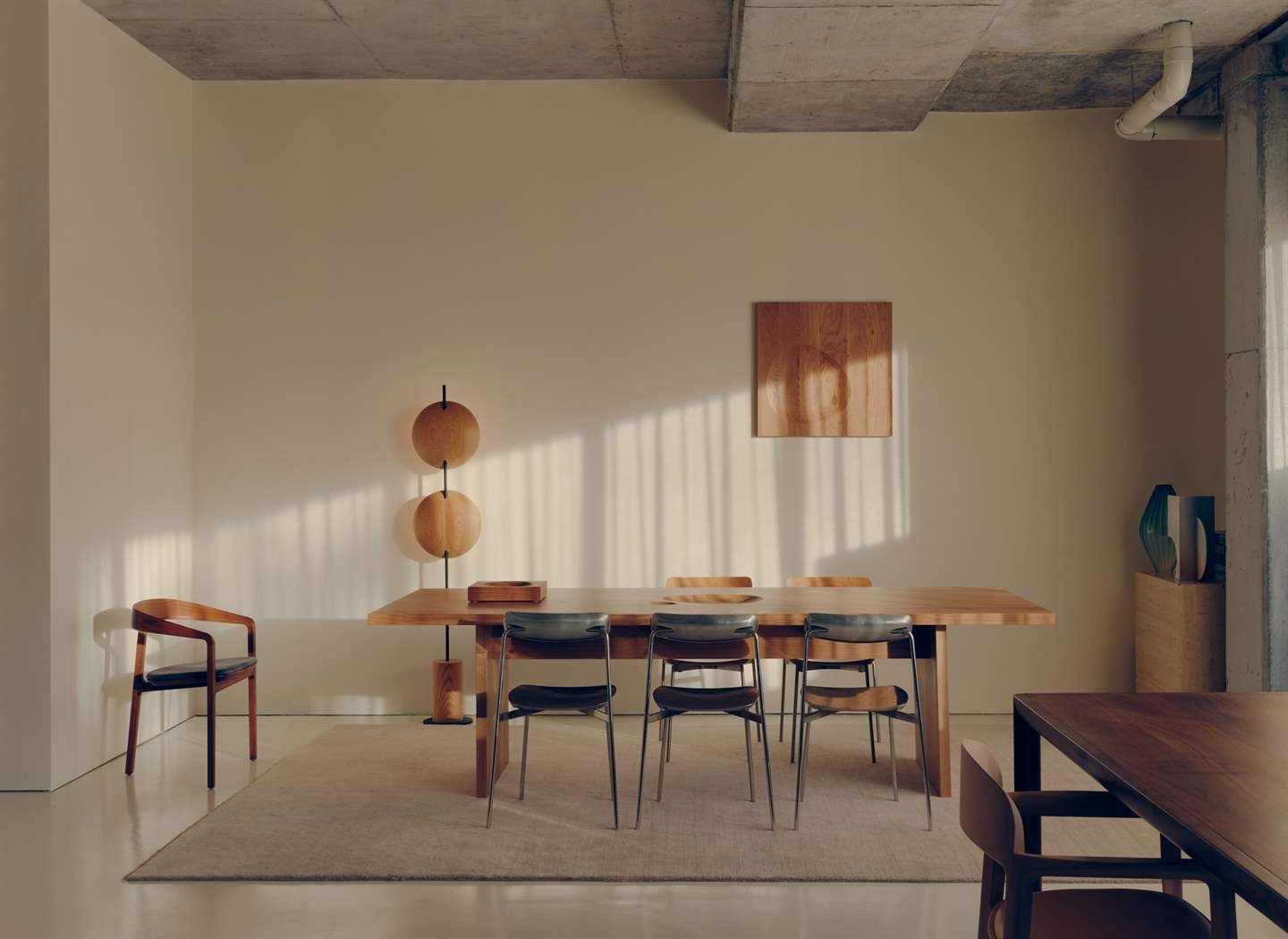
The Powerhouse Museum’s Sibling Chair, made in collaboration with his brother, also a designer, carries this quality in full. The seating for the Art Gallery of New South Wales members’ lounge must serve two purposes: it should both disappear in one sense and remain present in another. It must be comfortable enough for a schoolchild who races up and sits down on the first morning they are installed, yet also be considered appropriate for the institution that commissioned them.
“The tension and pushback between design and production are critical for creating unique, high-quality work.”
Collaboration with manufacturers and craftspeople is spoken about with the kind of specificity that comes from having built a practice around it rather than having arrived at it as a late conclusion. The artisans who have spent decades inside one specialized field carry knowledge that cannot be transferred through a brief or approximated from outside, and the encounter between that knowledge and the designer’s intentions produces something that neither party would have reached alone. The tension between design and production is not a problem to be managed but the condition that makes quality possible.

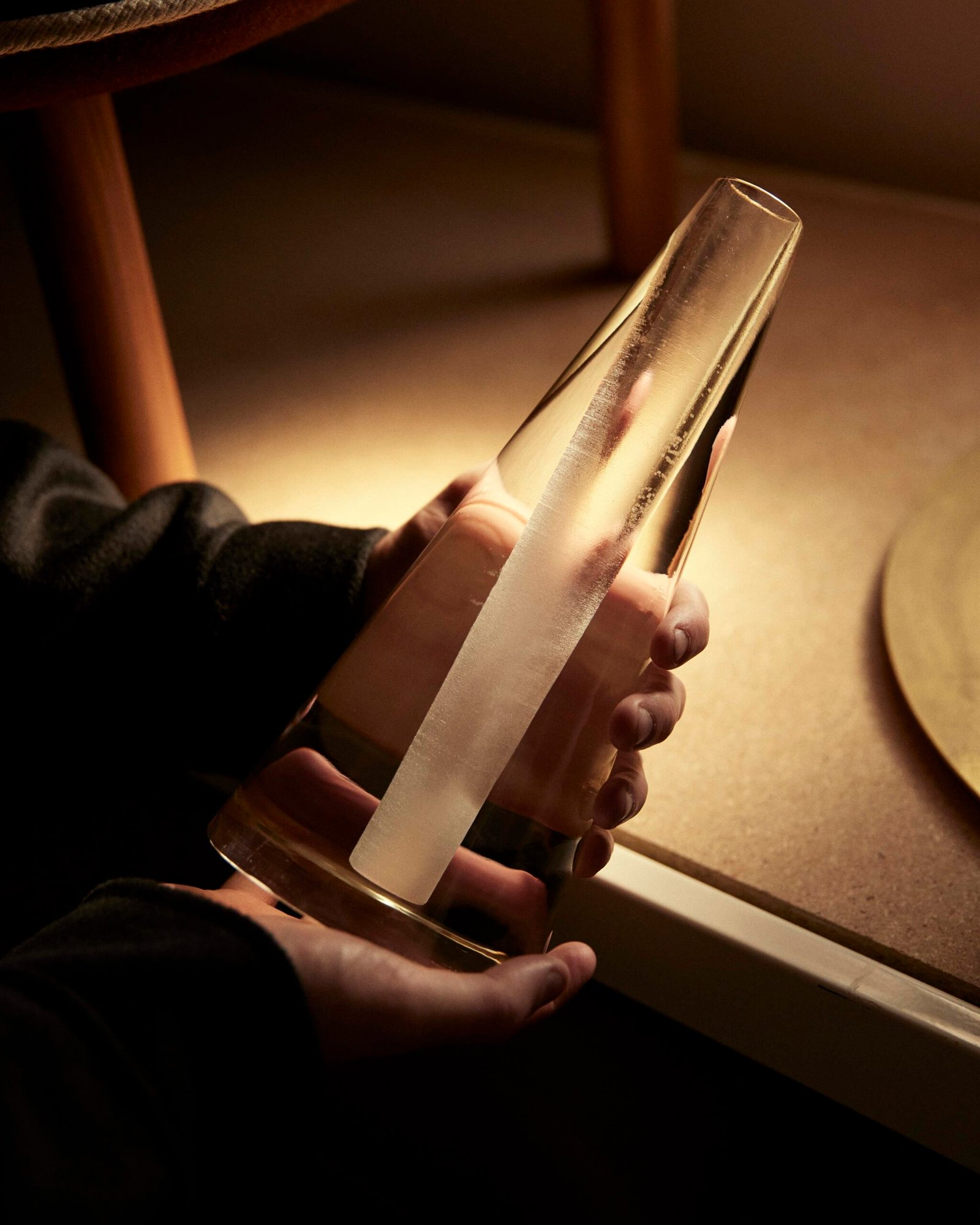
His relationship with Canberra Glassworks, ongoing since 2018, has recently deepened into what he describes as an obsession with cast glass. The nuance and beauty of cast glass, particularly how it interacts with Australian natural light, has sparked an early exploration of its possibilities. The same level of attention once given to timber is now applied to cast glass, emphasizing its behavior over time, in light, and through use.
“I am currently obsessed with cast glass. The nuance and beauty of this material are so elegant.”

Perspective and opinions, Fereday says, continue to change year on year as experience accumulates. Seeing pieces over longer periods of time gives a different interpretation. The commitment to constant improvement and refinement, he hopes, will never change. For a designer whose work is built entirely around the idea that the best things reveal themselves slowly, such ongoing restlessness is not uncertainty. It is the only honest way to keep making work that deserves the patience it asks of the people who live with it.
