

Over the past decade, Femo Design has quietly built a reputation for original furniture rooted in restraint, material intelligence, and long-term thinking. Based in Shenzhen, a southern Chinese city known for its manufacturing depth and evolving design ecosystem, the studio operates at the intersection of design, craft, and production. Founded and led by Femo Wong, an architect by training and an active curator of furniture exhibitions, Femo Design approaches furniture as a process rather than a product. In this interview with Shweta for Design Diary International, Wong reflects on authorship, craftsmanship, material experimentation, and the realities of building an original design studio in today’s global landscape.
Femo Design has a quiet confidence to it. What was the initial impulse behind starting your own design studio, and what did you feel was missing in the design landscape at that moment?
The core motivation for establishing Femo Design was actually to translate our understanding of “good design” into tangible products. My shift from architecture to furniture design was driven by the appeal of the complete creative process of turning a sketch into a physical product. This sense of accomplishment, of having full control and rapid execution, is something you can never get from working as a mere “cog in the machine” at an architecture firm after graduation.
When I started collecting original furniture pieces in the early days, I noticed that the domestic market was either flooded with blind copies and imitations or filled with “internet-famous designs” that overemphasized flashy aesthetics. Truly original works that balanced functionality, craftsmanship, and aesthetics while conveying the warmth of design to users were extremely rare. Meanwhile, many manufacturers underestimated the value of design, seeing it merely as “icing on the cake.” A severe information gap existed between designers and manufacturers.
Therefore, in founding the studio, we had two goals: on one hand, to create original designs that we ourselves believed in; on the other hand, to build a bridge between design and manufacturing, enabling good designs to truly come to life and gain recognition in the market. This vision of “filling the gaps” has endowed Femo Design with that inherent understated confidence. Our assurance does not stem from gimmicks, but from our unwavering commitment to the essence of design.
Your work often balances restraint with character. How do you personally define “good design,” and has that definition evolved since you began your practice?
To me, the core of “good design” has always been “form follows function, and details reveal warmth.” Specifically speaking, first and foremost, it must address actual user needs, such as the comfort of seating and the proportional harmony of furniture; this is the non-negotiable baseline. Secondly, it should respect the inherent properties of the materials used, avoiding unnecessary ornamentation. Finally, within a minimalist framework, it should convey uniqueness through details. This is the balance between restraint and individuality you mentioned.
Take our “Danish Chair” as an example. It is crafted by bending two solid wood pieces into shape with no redundant structures, yet the subtle cutting treatments on the backrest and leg joints make it both sleek and memorable.
While the core of this definition has remained unchanged, its scope has expanded. When I first entered the industry, my understanding of “good design” was largely confined to the form and craftsmanship of the product itself. Later, after collecting over 2,700 original furniture pieces and curating numerous exhibitions, I gradually realized that good design also needs to embrace long-term value and industry significance. It should not only be functional and aesthetically pleasing, but also stand the test of time and even inspire more people to appreciate original design.
Now, I pay greater attention to the reasoning behind a design: why choose this material, whether the structure can be optimized, and what small improvements it can bring to the user’s life. These considerations have made the definition of “good design” more comprehensive.
Growing up and working in China, how has cultural context influenced your understanding of form, proportion, and materiality?
The pursuit of a “sense of propriety” and “authenticity of materials” in traditional Chinese culture has been subtly influencing me all along. For instance, our understanding of “proportion” is easily linked to the concept of the “golden mean” in traditional Chinese furniture. It is not rigid symmetry, but a dynamic state of equilibrium.
Take our “Tree Branch Table.” The angle of the branching legs and the size of the tabletop were repeatedly adjusted to achieve that comfortable sense of proportion. This sense of balance echoes the idea of “negative space” in traditional Chinese spatial design, which is uncluttered and unassuming.
When it comes to materials, I have a particular fondness for natural materials such as solid wood and stone, which stems from the Chinese pursuit of harmony between humans and nature. Our “Mushroom Stool,” for example, uses solid wood with knots and natural cracks as its base. Instead of deliberately concealing these so-called imperfections of the material, we preserve them to showcase the vitality of nature. This is actually a modern interpretation of the traditional Chinese philosophy of unity between man and nature.
Additionally, the supply chain advantages of China’s manufacturing industry have also influenced my material choices. Mature domestic craftsmanship in solid wood processing and stone cutting, for example, allows me to more easily explore the potential of these materials, translating the material aesthetics of traditional culture into reality through modern techniques.
Many of your designs feel intentional rather than trend-driven. How do you protect your creative process from the pressure of fast-moving global design cycles?
The key is to stop competing with peers and only measure ourselves against masters. I have always believed that trends are short-lived and fickle, while good design is enduring and refined. I spend over ten hours every day researching materials and studying original furniture pieces, benchmarking our work against designs by masters such as Hans J. Wegner and Arne Jacobsen.
I ask myself, “Will my design still be relevant in ten years?” rather than “What is trendy this year?” This long-term mindset allows us to rise above the pressure of rapid iteration. My habit of collecting has also helped me stay grounded. Many of the thousands of furniture pieces in my collection are classic designs from decades ago. Their enduring popularity is not due to fleeting trends, but to their solid functionality and timeless aesthetics. Whenever I hit a creative block, I spend time in the collection area of our studio, feeling the curves and textures of these vintage pieces. It always reminds me that the core of design is to solve problems and deliver value, not to chase hot topics.
Moreover, our creative process is deliberate. From concept development to prototyping and craftsmanship refinement, we never rush through any stage. For example, the curvature of a chair seat may go through over a dozen rounds of prototyping before finalization. This dedication to detail is, in itself, a resistance to the fast-paced mindset.
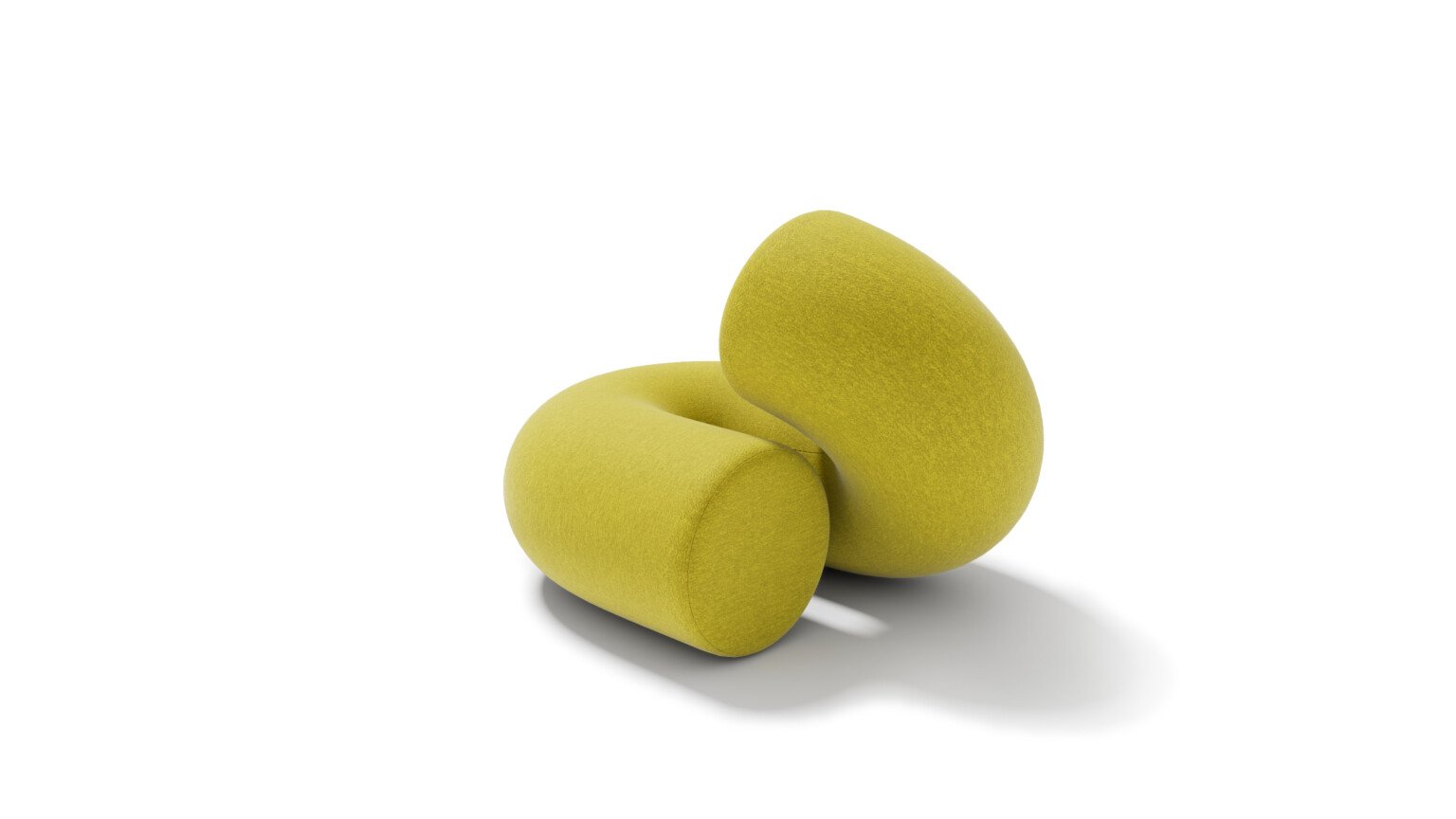
Craftsmanship plays a visible role in your work. How important is the dialogue between designer and maker in your studio, and how hands-on are you in that process?
The collaboration between designers and craftsmen is the key. Without exaggeration, it is the only way to turn great ideas into great products. More often than not, a designer’s concept is idealized, but craftsmanship has its practical limitations, such as the bending limits of solid wood and the precision requirements of stone cutting. These all require constant communication with craftsmen.
I have always believed that designers are not directors, but collaborators. The experience of craftsmen can help us avoid many pitfalls and even inspire new creative directions.
Our level of participation in this process is 100 percent. From the initial discussion of craftsmanship plans to the first round of prototyping, detail adjustments, and finally mass production, I personally visit the factories and work closely with the craftsmen every step of the way. Only through hands-on involvement can we accurately grasp the craftsmanship details and ensure that the original intent of the design is not diluted.
Furthermore, I firmly believe that craftsmanship is not a simple combination of a designer’s ideas and a craftsman’s execution, but the result of a collision between the two. The skills of craftsmen make designs more feasible, while the ideas of designers expand the possibilities of craftsmanship.
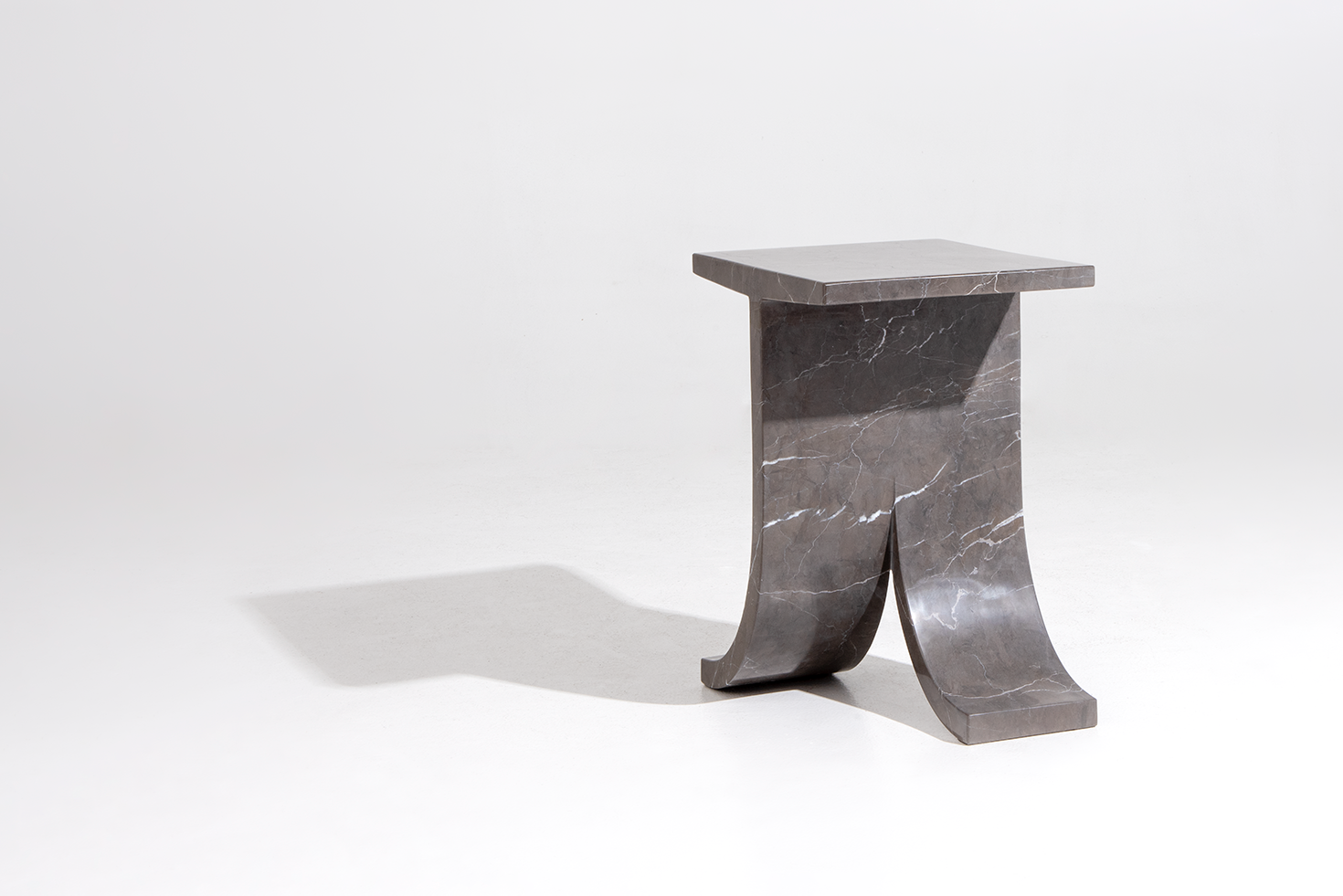
What role does material experimentation play at Femo Design? Are there materials or techniques you are particularly drawn to at this stage of your journey?
Material experimentation is the wellspring of inspiration for our creations, so much so that many of our designs actually start with material experiments. Different materials have distinct characteristics, such as the warmth of solid wood, the coolness of stone, and the flexibility of rattan. We never force a material to fit a preconceived design. Instead, we develop designs based on the inherent properties of the materials.
I am genuinely interested in all types of materials. I believe that no material is inherently superior or inferior. Any material can be used to create excellent designs as long as its intrinsic attributes are fully leveraged. Recently, I have been working on a series of products using rattan weaving and bamboo, which will be unveiled to the public in a month’s time.
Your collections often feel personal, almost introspective. Do your designs reflect your own life experiences, or do you consciously separate the personal from the professional?
I believe that every designer’s work is inevitably linked to their personal learning journey and life experiences. Additionally, the cultural environment you grow up in exerts a profound influence on your design sensibilities. I do not see design as just a job; it is an integral part of my life.
Spending over ten hours a day researching materials is both accumulation and daily routine. Even discussing design with friends or visiting factories are all part of my life. This state of integration between study, career, and life allows my personal emotions to blend naturally into my creations.
As a young designer building a brand, what challenges have been the most defining for you, both creatively and commercially?
The core challenge has been balancing the purity of creativity with the feasibility of business, a hurdle that cannot be avoided in either dimension. On the creative side, in the early days, I often fell into the trap of self-satisfaction, creating works with overly complex craftsmanship and high production costs. Although I was personally satisfied with them, they failed to gain traction in the market. This experience made me realize that great creativity cannot be divorced from commercial reality; otherwise, it will remain merely a prototype, unable to deliver real value.
On the commercial side, the most critical challenge was getting the market to recognize the value of original design. When we first launched the brand, many clients would compare our products with counterfeits and label original designs as too expensive. Furthermore, some factories, seeing the popularity of our designs, resorted to direct plagiarism, which disrupted our market position. These two issues nearly derailed the brand.
Later, through curating exhibitions and participating in industry trade shows, we continuously promoted the concept of original design, helping more people understand that the higher price reflects superior craftsmanship, innovative design, and intellectual property rights. At the same time, we established in-depth collaborations with reliable manufacturers to optimize the supply chain, controlling costs while ensuring product quality.
This journey made me understand that creativity is the soul of a brand, but business is the vehicle that brings that soul to life. Both are indispensable.
How do you see the role of designers evolving on the global design stage? Is there a distinct voice emerging, or is it still evolving?
The role of designers on the global stage has evolved from followers to participants, but a distinctive design voice is still in the making. It has not yet fully taken shape.
In the early days, many designers were focused on learning Western design concepts and craftsmanship. Today, with the upgrading of manufacturing capabilities and the improvement of the original design ecosystem, a growing number of designers are presenting their work at international exhibitions, and more global brands are collaborating with designers from this region on product development.
At present, there is no single, clearly defined identity comparable to the simplicity of Danish design or the luxury of Italian design. Designers are exploring different paths, some drawing inspiration from traditional culture, others pushing the boundaries of material craftsmanship. This is a process of continuous experimentation and accumulation.
I see this as a positive sign. It suggests that the design voice emerging today is not rigid or monolithic, but diverse and evolving. Over time, with the accumulation of more original work, a clearer identity will emerge, rooted in cultural context yet accessible to global buyers.
Sustainability is increasingly discussed in design. How do you interpret responsibility and longevity within your own work, beyond labels and certifications?
To me, sustainability is not about labels, but about longevity considered from the very beginning of the design process. Creating products that stand the test of time reduces waste, while respecting materials and optimizing craftsmanship helps minimize environmental impact.
We adhere to the philosophy of quality over quantity. We do not release new products simply to chase trends. Instead, we focus on refining long-lasting designs. For instance, our “Danish Chair” and “Shell Chair,” first introduced in 2018, have been continuously refined and remain popular today. A piece of furniture used for decades is far more sustainable than fast-changing products.
We also focus on material conservation and craftsmanship optimization. Our “Half-and-Half Table,” for example, achieves zero material waste through precise cutting. We prioritize FSC-certified timber and design furniture with disassemblable structures to support transport, maintenance, and longevity. These practices may not always carry formal certifications, but they reflect a tangible commitment to responsibility.
What kind of spaces do you imagine your furniture living in?
I do not want my designs to be confined to a specific type of space. Instead, I hope they integrate naturally into users’ lives, whether the environment is bustling or calm, becoming part of everyday routines and offering practical value and subtle warmth.
Collaboration is often a turning point for designers. Are there disciplines or industries outside furniture that you would like to explore?
Absolutely. I am particularly interested in collaborating with professionals in materials science, as furniture design is closely connected to material technology. I am also keen to work with ceramic and textile artists, whose expertise can enrich material expression and introduce new layers of texture and craft.
Looking ahead, how do you envision the future of Femo Design?
Our future focus will be a three-part strategy: deepening craftsmanship as the foundation, expanding product categories as an extension, and developing a stronger brand narrative as the soul.
Craftsmanship will always remain central. We will continue to work closely with skilled craftsmen and manufacturers while exploring new technical possibilities. Product expansion will be measured and aligned with our core philosophy. At the same time, we aim to communicate design culture more actively through exhibitions, publications, and eventually a private design museum dedicated to original design.
Finally, when someone encounters a Femo Design piece for the first time, what feeling or thought do you hope it leaves them with?
I hope their first impression is comfort, whether through visual simplicity or user-friendly functionality. After that, I hope they feel curiosity, wanting to touch the materials, examine the details, and understand why the design was made the way it was.
On a deeper level, I hope our work helps people appreciate the value of original design, not the fleeting excitement of trends, but the dedication that comes from patient refinement. Ultimately, the goal of design is to enhance life, and I hope Femo Design’s work becomes part of those small, lasting moments of everyday joy.
www.femo-design.com
