
Sapienstone, part of the Iris Ceramica Group, has built its practice around a specific proposition: that advanced technical ceramics can bring to furnishing surfaces the aesthetic depth and material intelligence that natural stone offers, combined with the resistance, stability, and durability that contemporary living and contract environments demand. The brand’s large-format slabs are designed for spaces where beauty and performance are not competing considerations but interdependent ones, and the kitchen is where that proposition finds its most direct expression. Three new surfaces, each interpreting a distinct material identity, extend that argument in 2026.
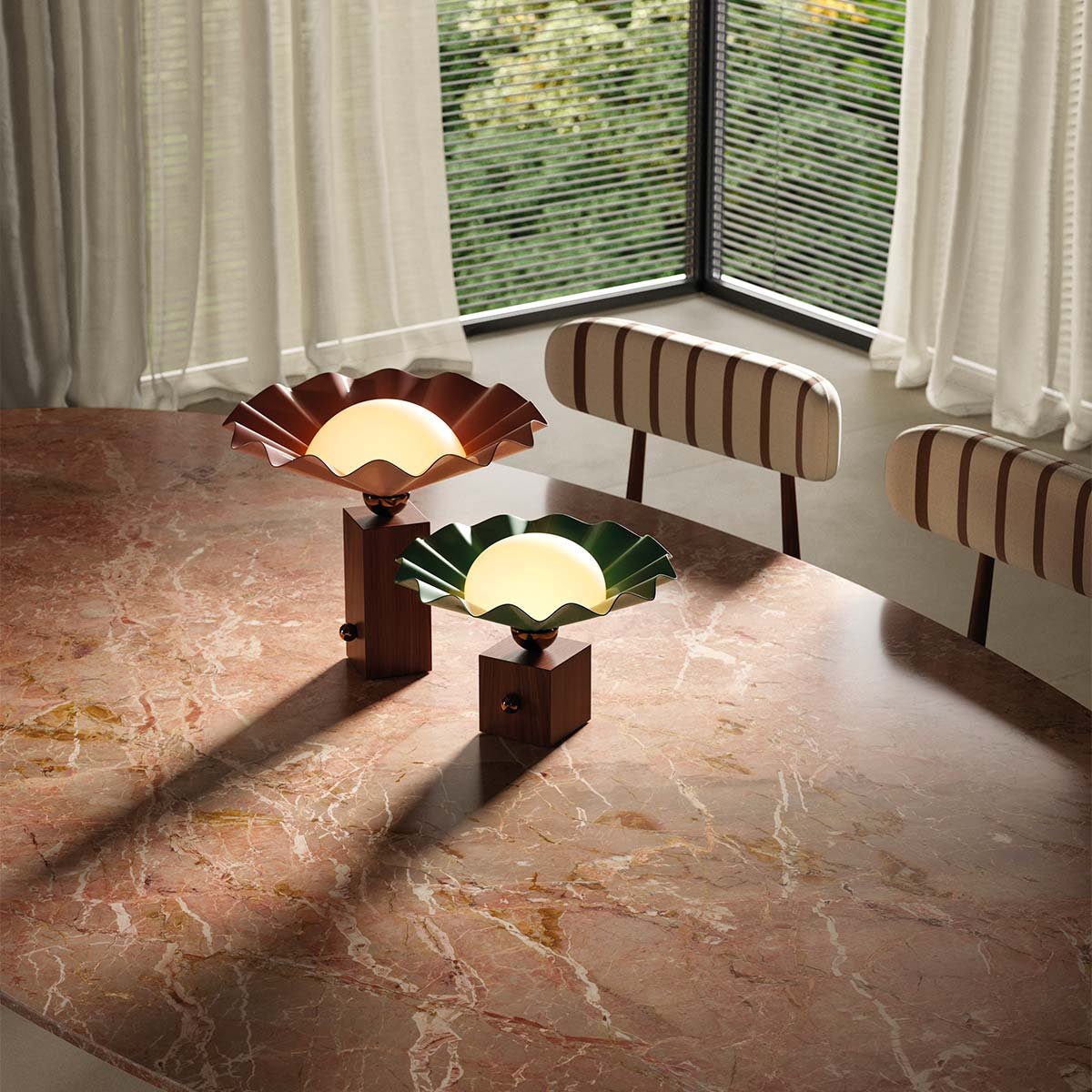
Breccia Rosa 4D draws its reference from an iconic stone of the Verona area, recognizable for its irregular structure and warm tones that move between antique pink and terracotta. The chromatic depth of the original material is enhanced through SapienStone’s 4D technology, which emphasizes veins and nuances throughout the full thickness of the slab rather than at the surface alone, so that edges align perfectly with the worktop surface and the material reads as continuous and coherent rather than applied. The cashmere finish gives the surface a velvety tactile quality that pairs with dark woods, warm metals, and contemporary palettes without competing with them.
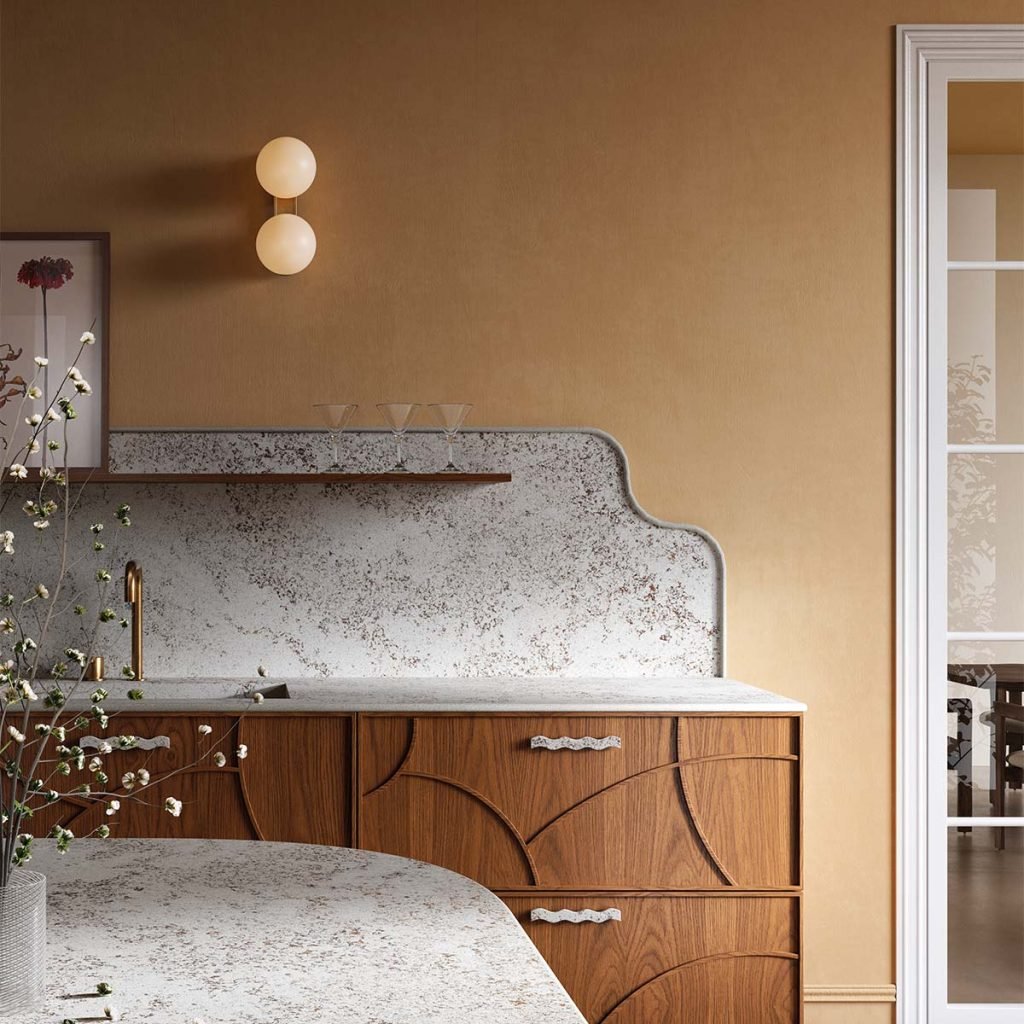
Muschelkalk takes its name and character from a rare stone of Central European origin, one that carries the geological memory of its formation on its surface. Its palette alternates warm greys, beige, and cooler notes with fluid color transitions that replicate the original sedimentation process of the stone, the movement between tones reading as natural rather than designed. The natural finish adds a tactile dimension that gives the worktop a sensory complexity beyond its visual qualities, making the surface an object of material experience rather than simply a functional plane.
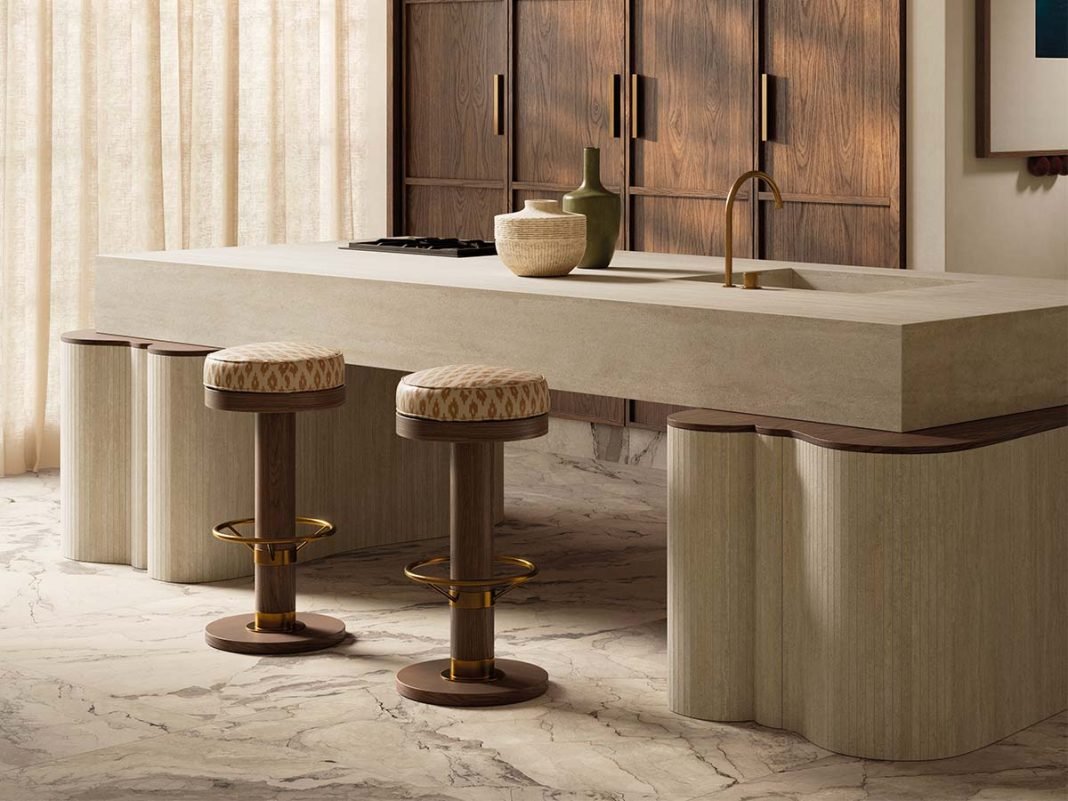
Travessa reinterprets travertine, a material whose presence in Italian architecture extends across centuries and whose aesthetic authority remains entirely current. The slab restores that heritage through advanced ceramics, delivering the resistance and stability that natural travertine cannot always guarantee in demanding kitchen environments while preserving the parallel veining, ivory and hazelnut tones, and subtle chromatic vibration that give the original material its warmth. The continuous veining creates the visual movement necessary for designing islands, backsplashes, and monolithic countertops with striking coherence, allowing the material to define the spatial identity of a kitchen rather than simply occupying a functional surface within it.
Three surfaces, three material identities drawn from three distinct geological and architectural traditions, each arriving in the kitchen not as a worktop but as an element of spatial architecture.
www.sapienstone.com
