Studio Arthur Casas Renovates a Protected Adriatic Landmark From the Inside Out
Fact File
Interior Design: Studio Arthur Casas
Type: Hotel Renovation
Rooms: 56
Year: 2025
Photography: Fran Parente
The building sits on a cliff in Dubrovnik’s Sveti Jakov area, carved into the limestone of the Dalmatian coast a short walk from the UNESCO-listed Old Town, its architecture a protected part of the city’s skyline since 1961 when it was first built as a private residence for Yugoslavia’s political elite. The protection means the facade cannot be touched. Whatever Studio Arthur Casas does with this hotel must happen entirely on the inside, within the walls of a structure that the Croatian authorities have determined belongs as much to the city as to the people who own it. This constraint, which would frustrate many practices, becomes in the hands of a designer as attuned to interior atmosphere as Arthur Casas the defining logic of the entire project: a renovation that works by going inward, toward the specificity of the place and the materials and the culture rather than outward toward any expression of the building’s new identity.
Hotel Villa Dubrovnik had been closed since October 2023, shuttered for what would become a nearly two-year transformation, and it reopened in the spring of 2025 as a member of The Leading Hotels of the World, a designation that carries specific expectations about what luxury in a hotel means and that Studio Arthur Casas interprets here not as opulence but as alignment — between the building and its cliff, between the interior and the Adriatic outside its windows, between a Brazilian design practice and the particular visual and material culture of the Dalmatian coast. The result is a 56-room hotel whose interiors feel less like the product of a design intervention than like the building finally becoming what the site and the city always suggested it should be.
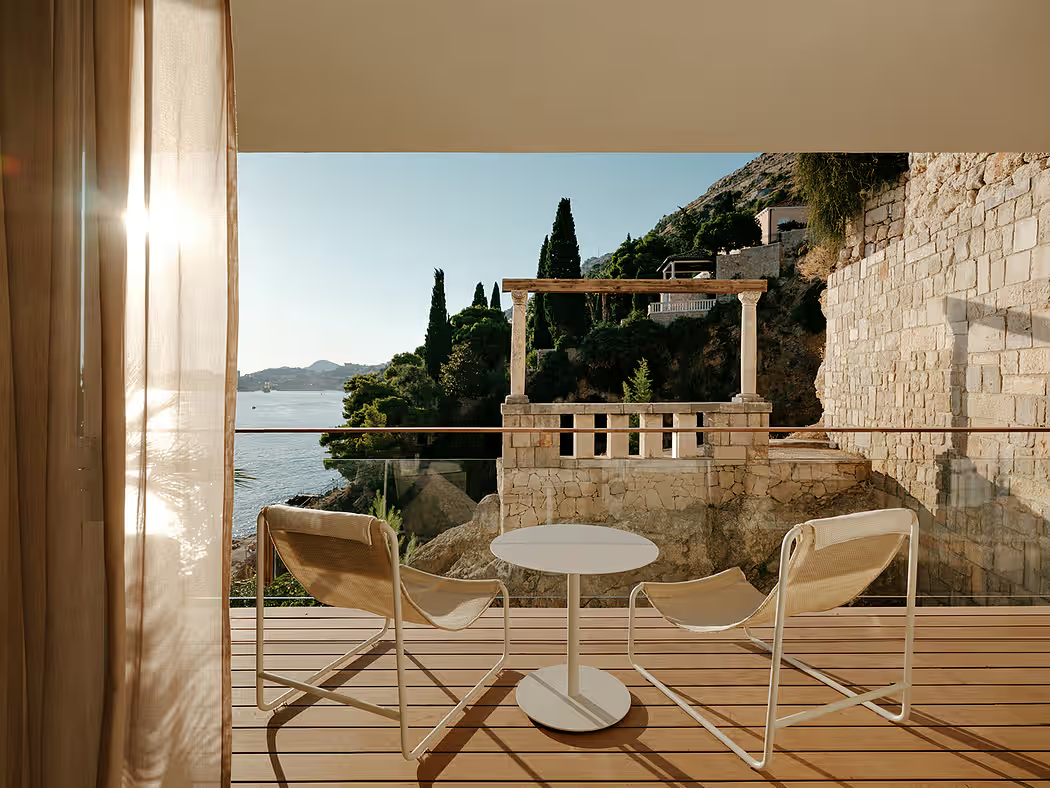
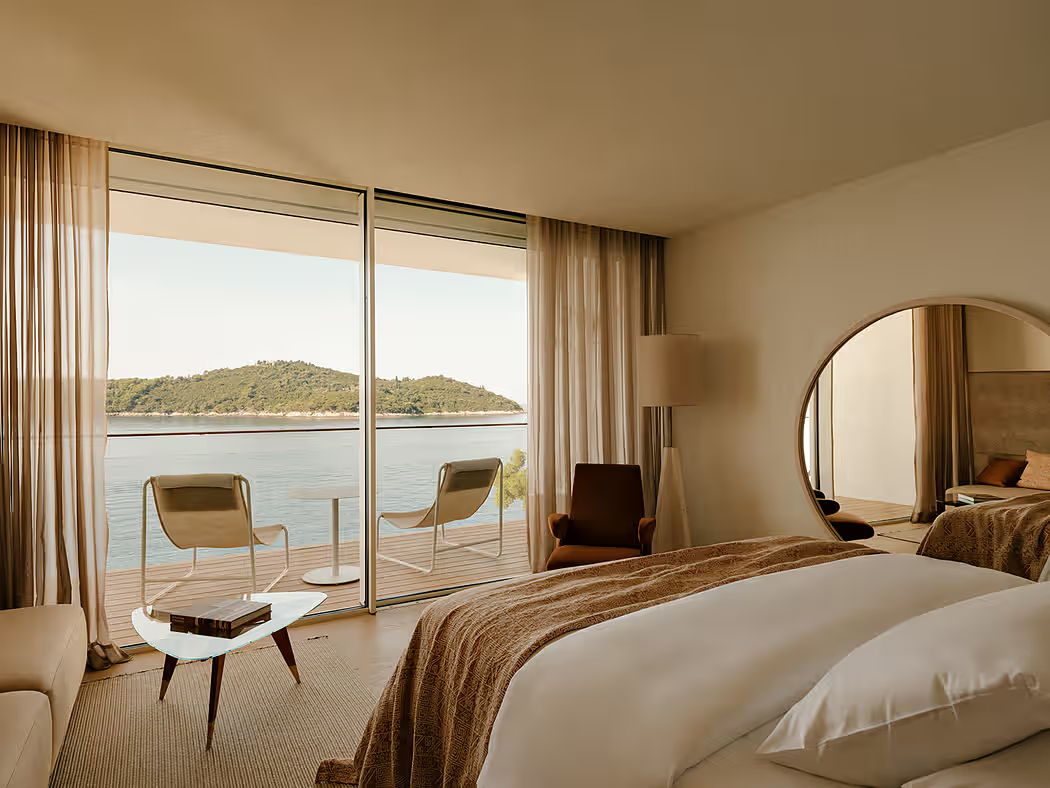
The palette that governs every surface is drawn from Dubrovnik itself. The stone walls of the Old Town, visible from almost every room in the hotel, are limestone in shades of white and sand and pale beige, and these are the tones that run through the interior, from the wall finishes to the upholstery to the millwork, creating a visual continuity between the building and its surroundings that makes the Adriatic views from the private balconies feel less like something framed and looked at than like something the interior is already participating in. Against this neutral field, warm terracotta introduces the colour of Dubrovnik’s rooftops, the distinctive reddish-orange that gives the Old Town its aerial character, and accents of Adriatic blue bring the sea itself into the material conversation of the rooms. The palette is specific to this city in a way that a hotel anywhere else in the world could not replicate, which is precisely the point.
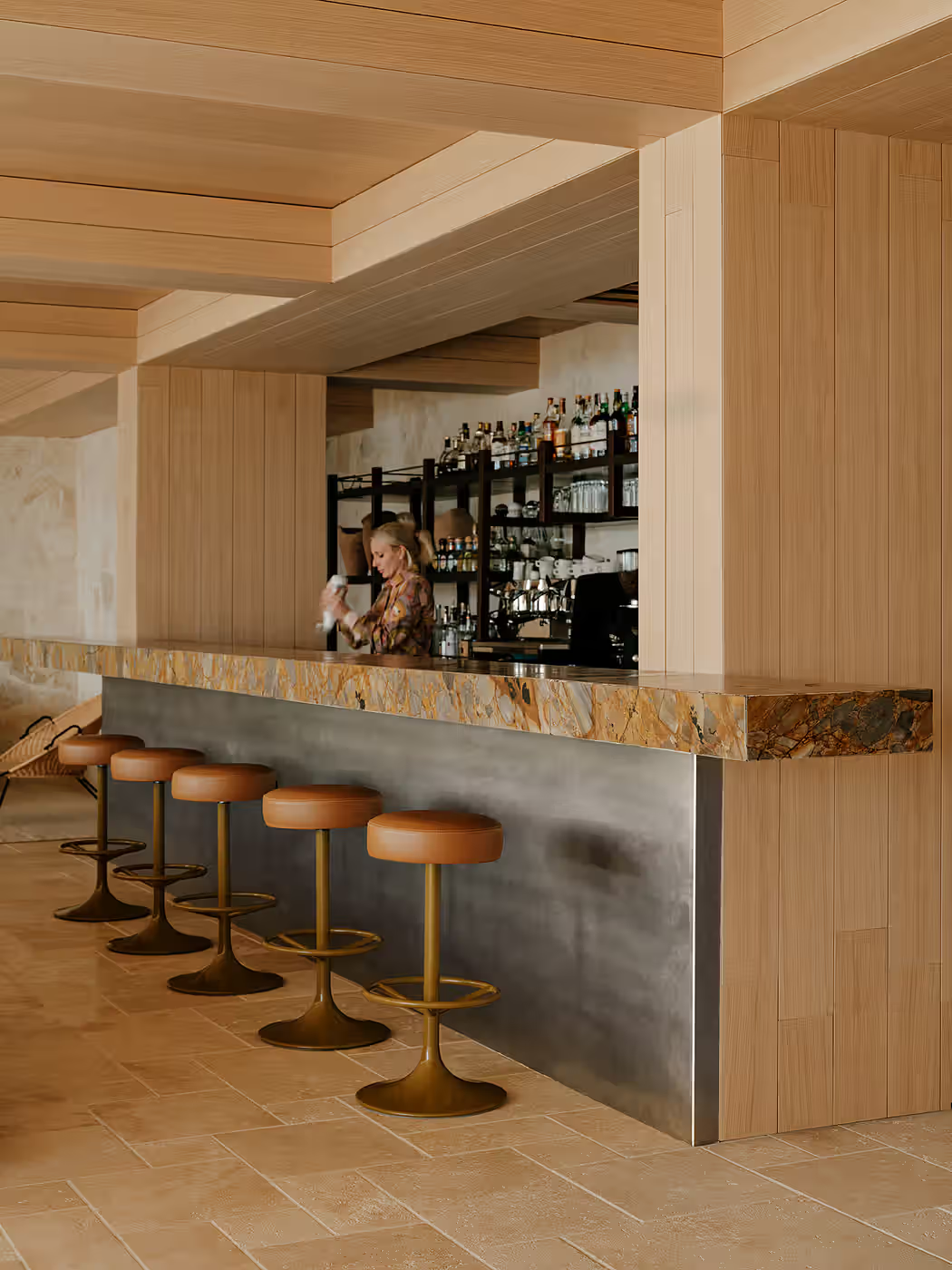
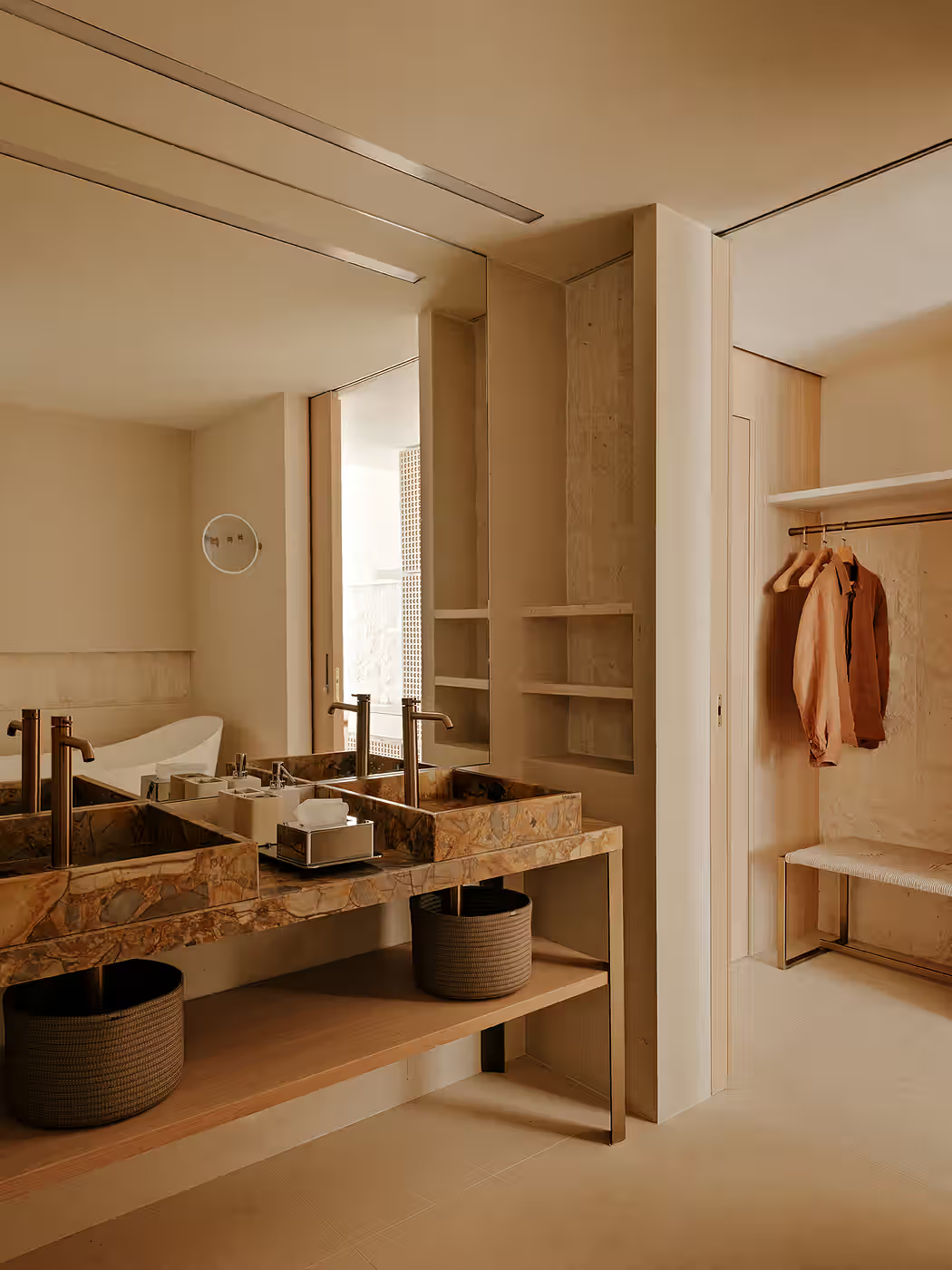
The materials are local in a way that goes beyond sourcing. Croatian stone appears throughout in finishes that acknowledge its geological relationship to the cliff on which the building sits. Hand-glazed terracotta tiles bring the craft traditions of the Dalmatian coast into the interior surfaces. Polished wood introduces warmth alongside the stone, and the combination of the two follows a logic familiar to anyone who has spent time in the older buildings of the Croatian coast, where timber and limestone have been worked together for centuries in the construction of structures that are as much geological as they are architectural. Casas and his team studied the traditional Croatian lace patterns that are recognised by UNESCO as part of the country’s intangible cultural heritage, and their geometric logic appears in the decorative details of the interior as a reference that local guests will recognise and international ones will find intriguing without needing to understand its origin.
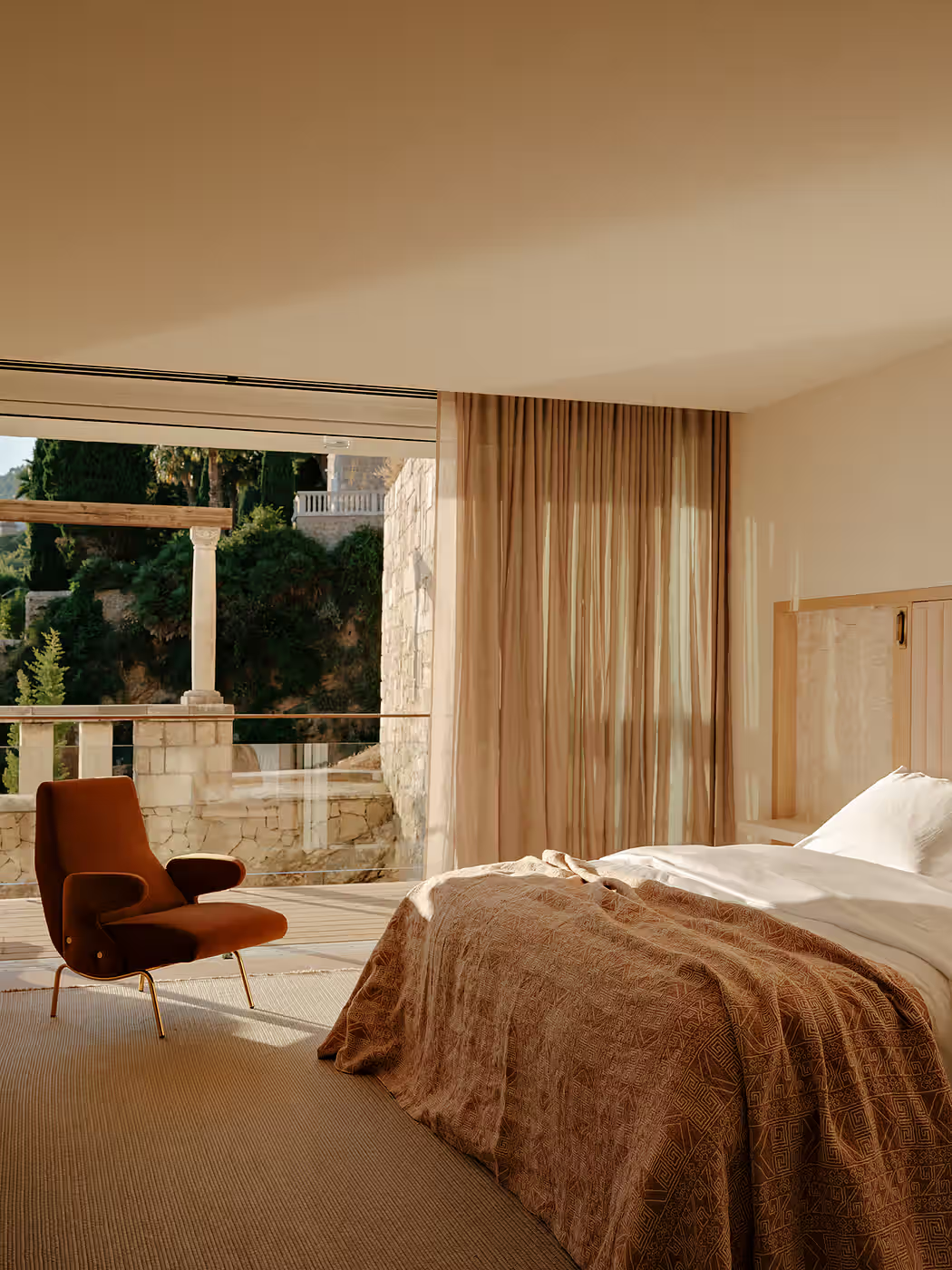
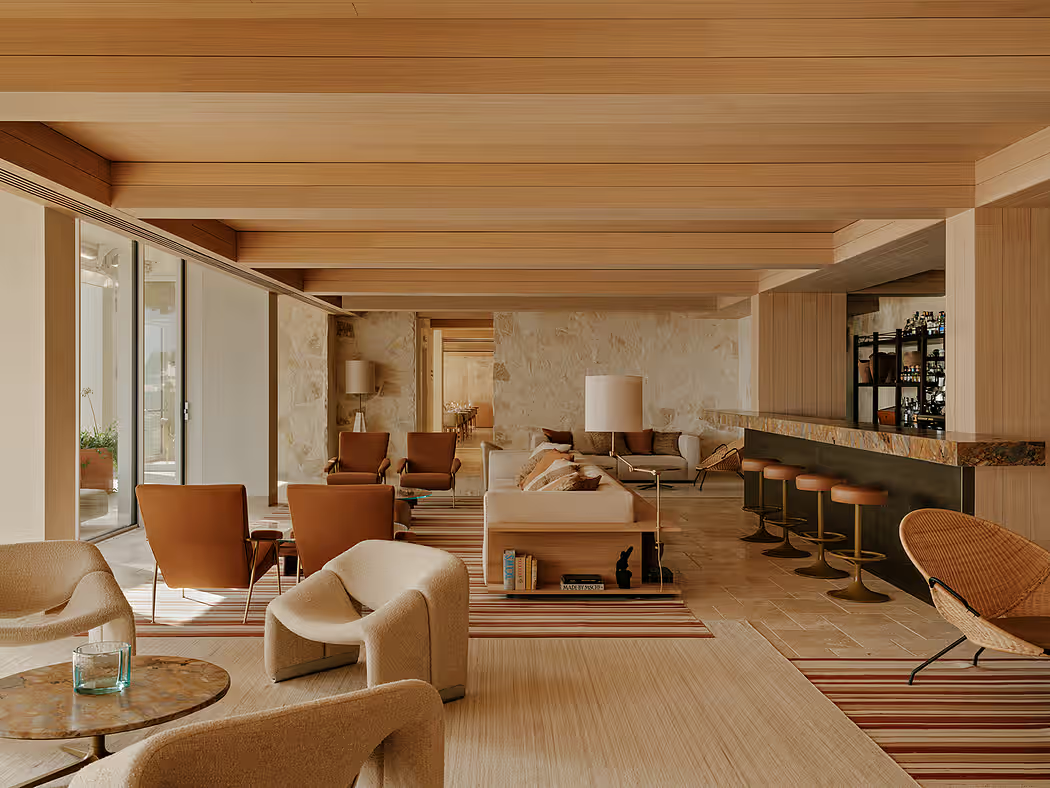
The bespoke furniture designed for the hotel includes pieces produced in collaboration with Prostoria, the Croatian furniture brand whose contemporary interpretation of local making traditions gives its objects a quality of belonging that imported pieces could not have achieved. The Dubrovnik lamp, designed specifically for this project, is the most visible of these bespoke elements, its form responding to both the aesthetic language of the interior and the particular quality of light on the Adriatic coast. Custom sofas throughout the public spaces continue this dialogue between the practice’s design language and the specific material culture of the place, the result being furniture that reads simultaneously as the work of Studio Arthur Casas and as something that could only have been made for this building in this city.
The hotel serves as a curated gallery for Croatian art, a function that Casas has integrated into the project as something more than wall decoration. The painters Ivana Pegan and Dubravka Tulio, the sculptor Ivo Dimnić, and the fashion designer Juraj Zigman each contribute to the hotel’s identity in different ways, with Zigman designing the staff uniforms as an extension of the hotel’s visual language into the people who animate it, a gesture that turns every interaction with the hotel’s team into a continuation of the aesthetic experience the rooms provide. Alongside this Croatian programme, the hotel’s furniture and objects include pieces by Gio Ponti, Patricia Urquiola, Pierre Paulin, Paola Lenti, and Eileen Gray, the presence of these international mid-century and contemporary design landmarks giving the interior a depth of reference that the local work alone could not have produced and that the local work alone makes meaningful.
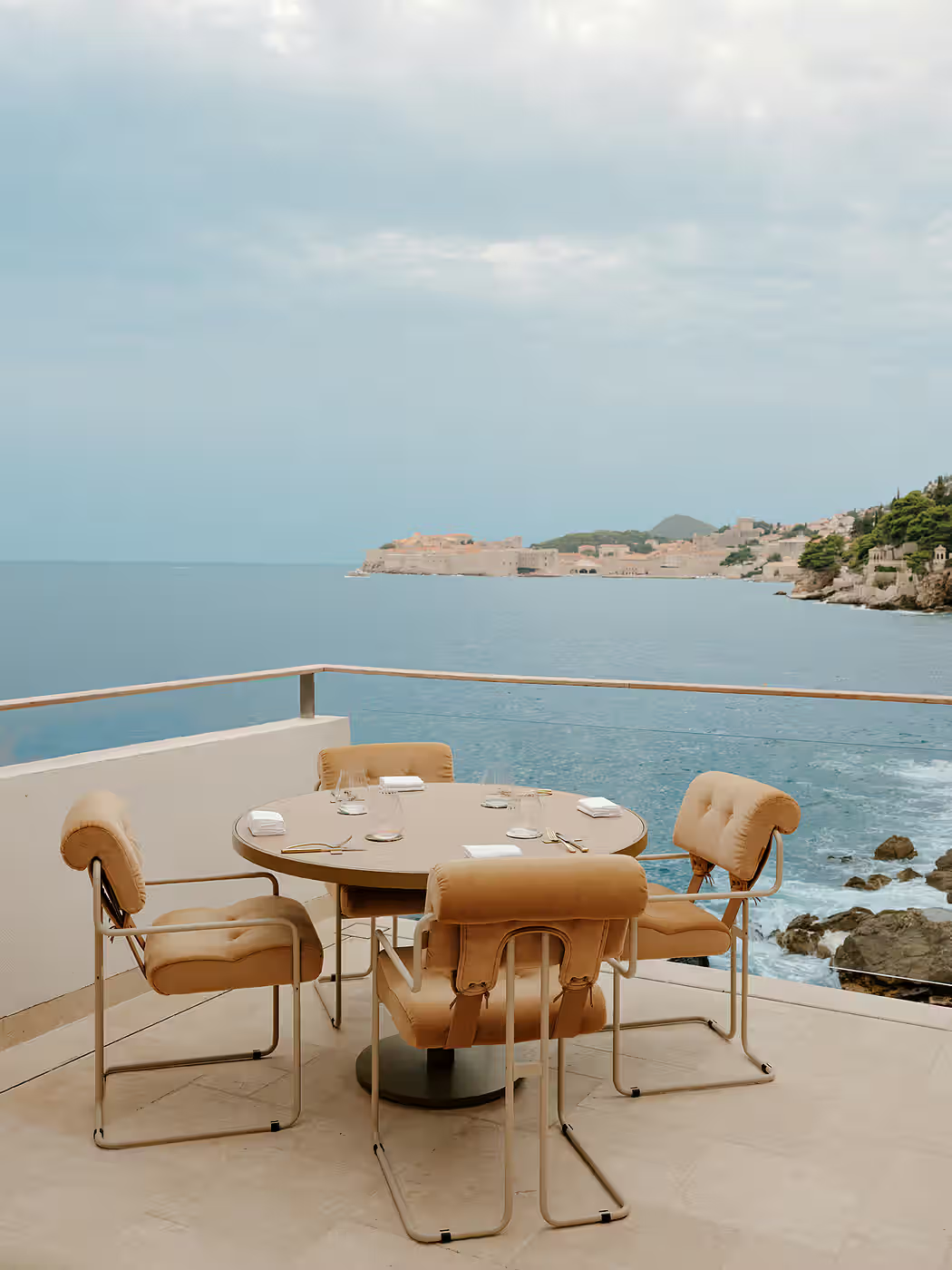
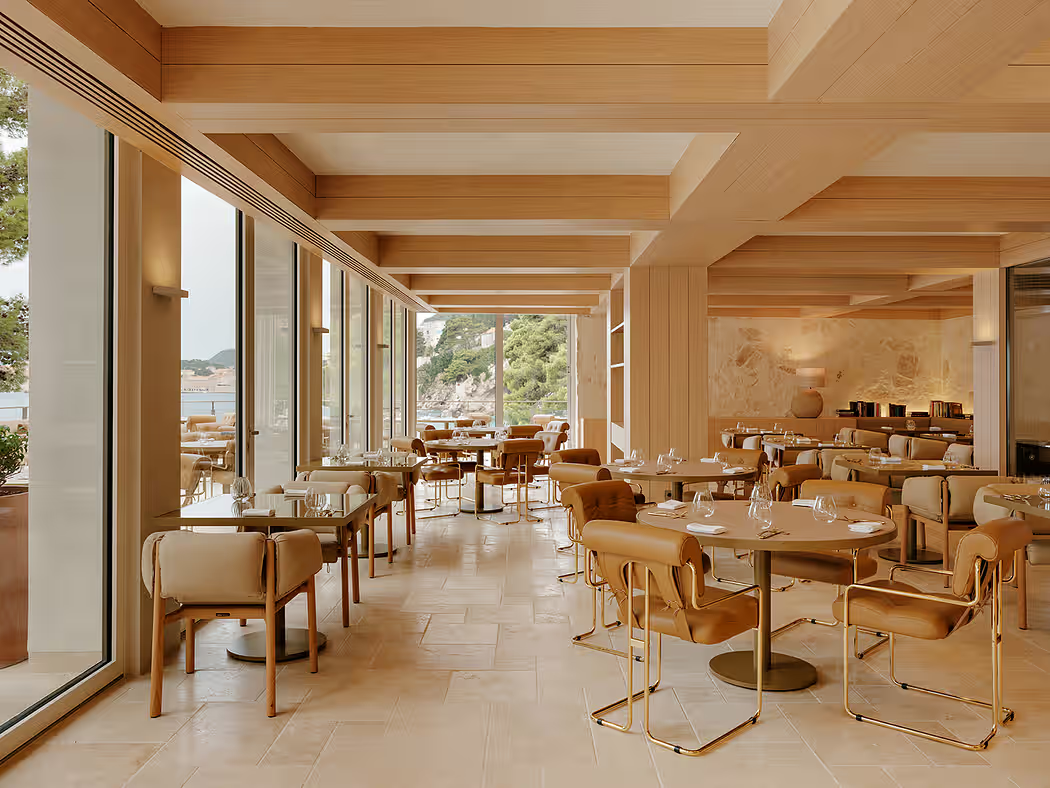
The hotel’s organisation follows the natural topography of the cliff, descending from the rooftop bar to the private beach below in a sequence of spaces that Casas describes as each naturally dialoguing with its surroundings, making the landscape the main protagonist. Galanto Bar at the top, Dubrovnik’s only rooftop bar, overlooks the Adriatic at the level where the city and the sea meet in the most dramatic combination of man-made and natural landscape available from any position in the city, the Old Town visible to the west and Lokrum Island across the water to the south. The Michelin-recognised Pjerin Restaurant occupies the dining level below, its panoramic terrace above the sea serving a menu built around locally sourced Croatian ingredients and the daily Adriatic catch under Executive Chef Robert Račić, whose cuisine treats the proximity of the sea as a design brief as specific as any that Casas received for the interior. The Libero Bar introduces a book-lined lounge at a different register, quieter and more residential, its display of historic Croatian costume replicas connecting the present of the hotel to the deeper past of the coast. The Giardino, open-air and shaded by the Mediterranean pines that grow from the cliff around the hotel, provides the most relaxed of the hotel’s dining experiences, the kind of outdoor table where the line between being in a hotel and simply being in Dalmatia becomes difficult to locate.
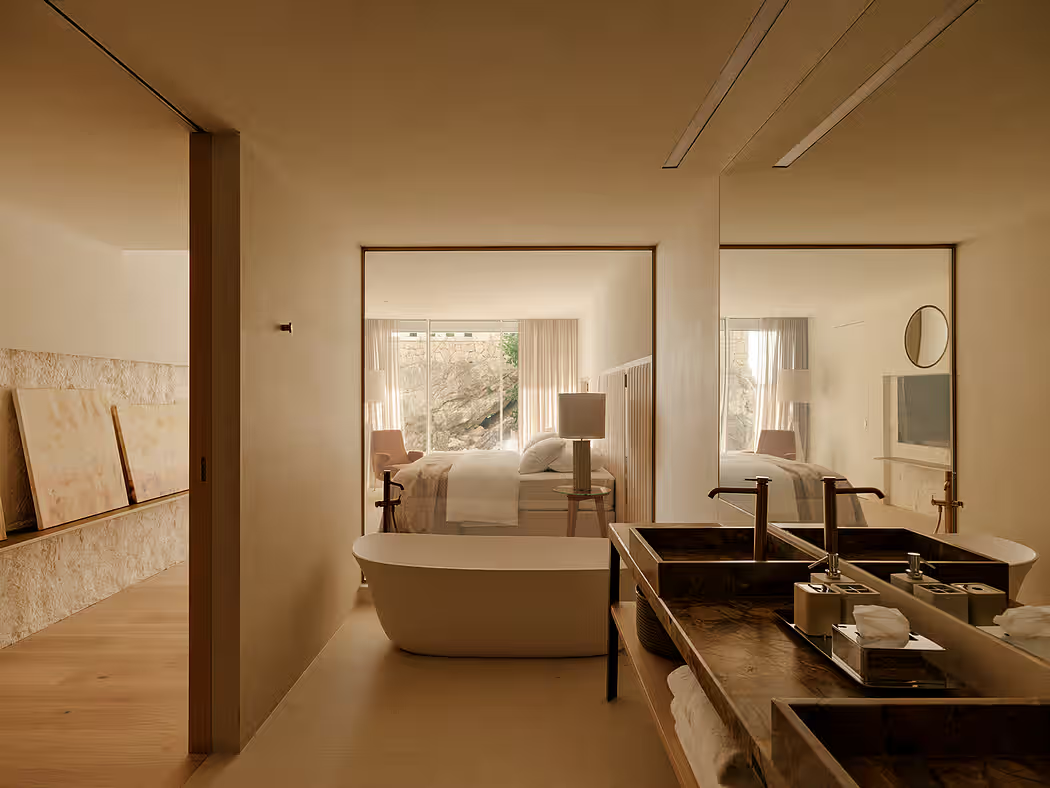
The Croatian concept of fjaka, the particular art of easy living that the Dalmatian coast has elevated to a cultural value, shapes the hotel’s atmosphere as surely as its material palette. Fjaka is not merely relaxation but a specific quality of unhurried presence, the willingness to let time pass without accounting for it, that the Adriatic coast produces in people who spend enough time beside it. The rooms and suites, nearly all with private balconies suspended above the sea, are designed for this quality of occupation, their loggias sized and furnished for morning coffee with Lokrum Island across the water and evening wine with the Old Town’s lights reflected in the Adriatic below. Some suites include private outdoor jacuzzis, and the Villa Spa on the lower levels offers five treatment rooms, a fitness centre, Finnish sauna, and an indoor swimming pool whose views continue the hotel’s dialogue with the sea. The private beach at the foot of the cliff completes the descending sequence from rooftop to water, the building participating in the Adriatic as much as it overlooks it.
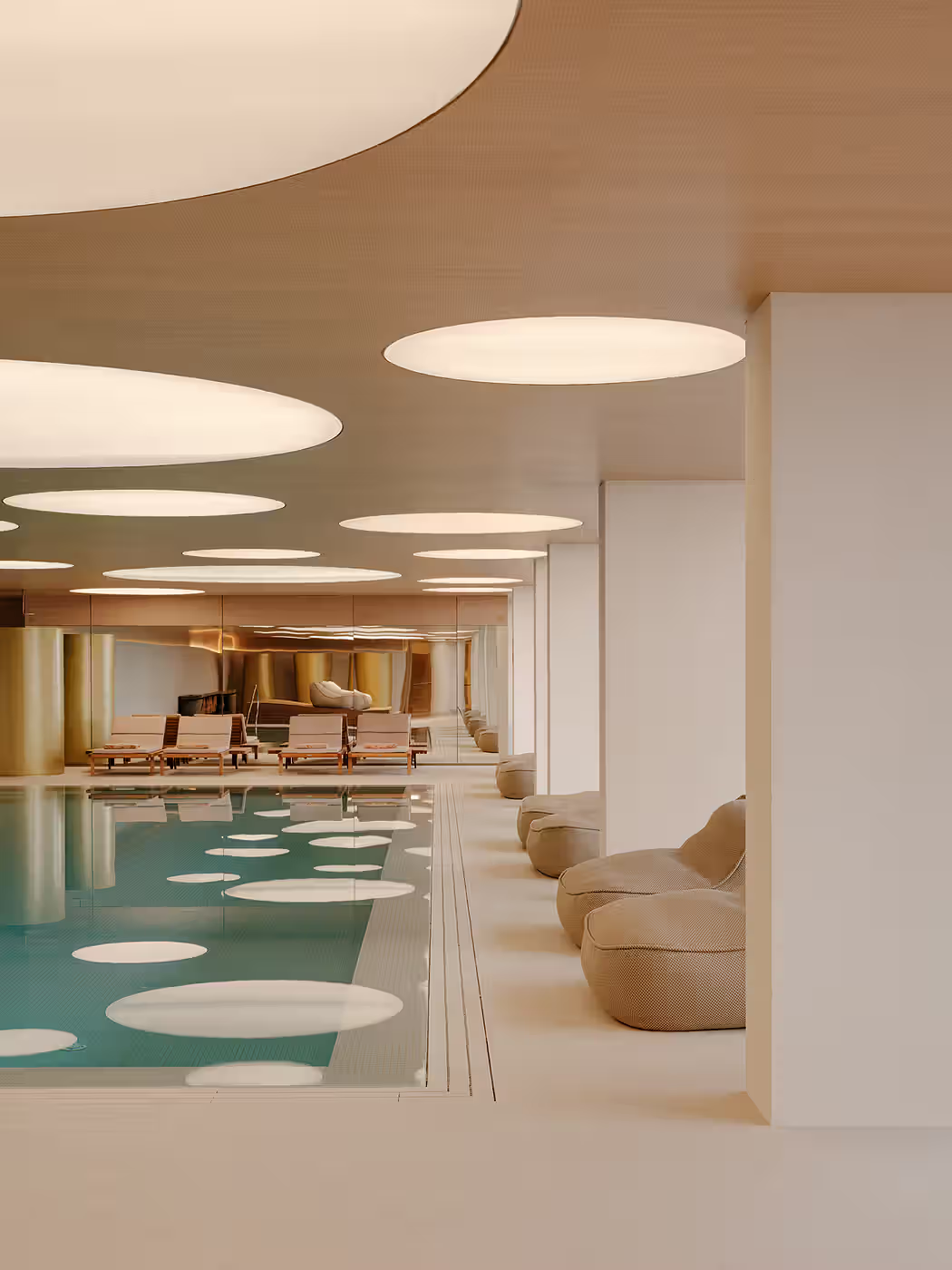
What Studio Arthur Casas has delivered at Hotel Villa Dubrovnik is a renovation that treats the constraints of a protected building not as limitations to be worked around but as the precise conditions that make a certain kind of design both necessary and possible. The exterior belongs to the city. The interior belongs to the people who inhabit it, and those people, whether for a night or a week, inhabit it as guests of a landscape and a material culture that the design has done everything possible to bring inside.