
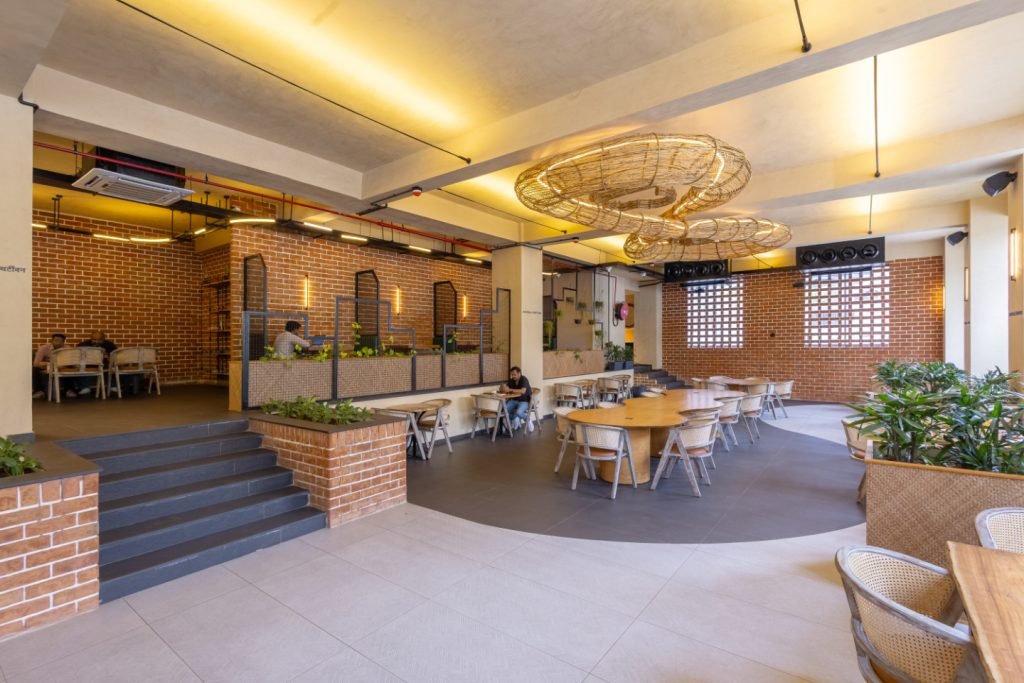
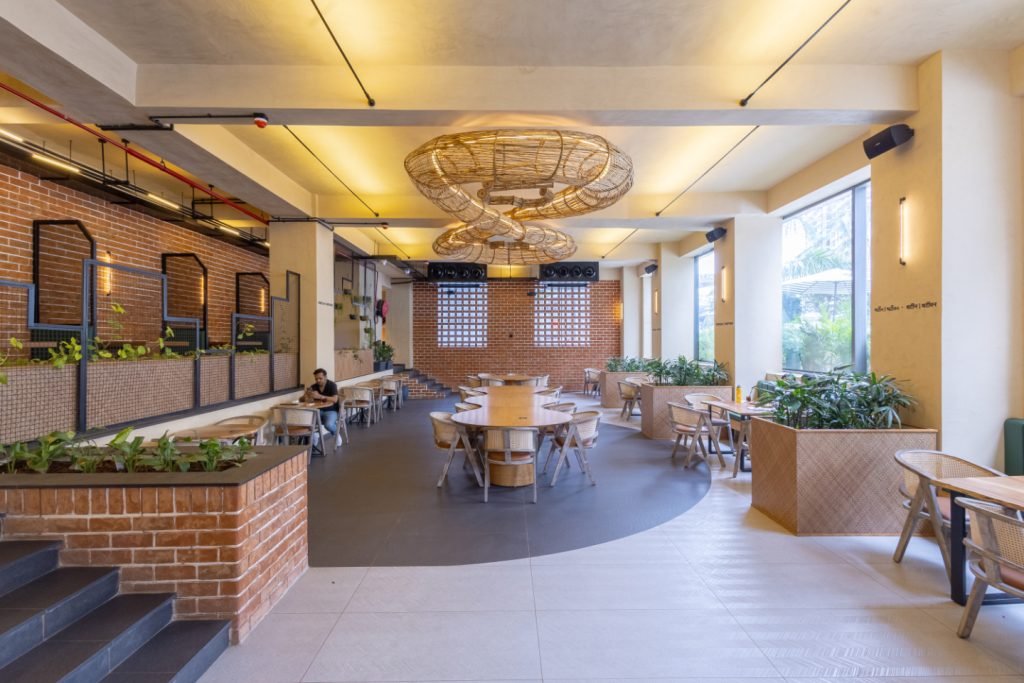
The name comes from the address. Thirteen and thirty-one, flipped and mirrored, are the two numbers that give the lounge its identity and run through the design as a thread rather than a logo. The most visible expression of this concept is overhead: a large woven rattan installation suspended from the ceiling in overlapping rings of different scales, lit from within with warm LED strips, with the numbers 13 and 31 worked into the form of the woven loops. It hangs above the main dining zone, drawing the eye upward upon entry with its warm, handcrafted design against the off-white plaster ceiling—an unforgettable focal point. There are actually two of them, staggered at slightly different heights and positions. The effect from below is something between a sculptural installation and a lighting fixture, occupying enough visual territory that the rest of the room organizes itself underneath.
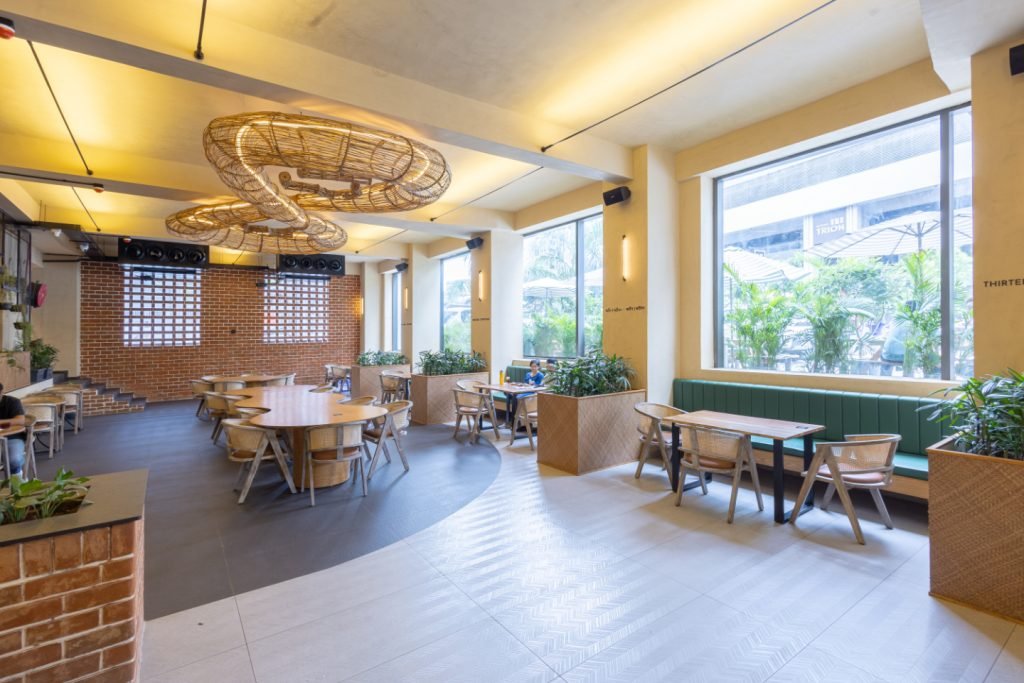
In 2025, Studio Imagine designed 1331 Lounge on the Sarabhai Campus in Vadodara, transforming 3,430 square feet into a multifunctional cafe and lounge that accommodates various activities seamlessly. Someone working alone on a laptop in a booth, a group of six around a communal table, two people at a window seat with no intention of leaving quickly: the space accommodates all of them, and it does so through design rather than through size.
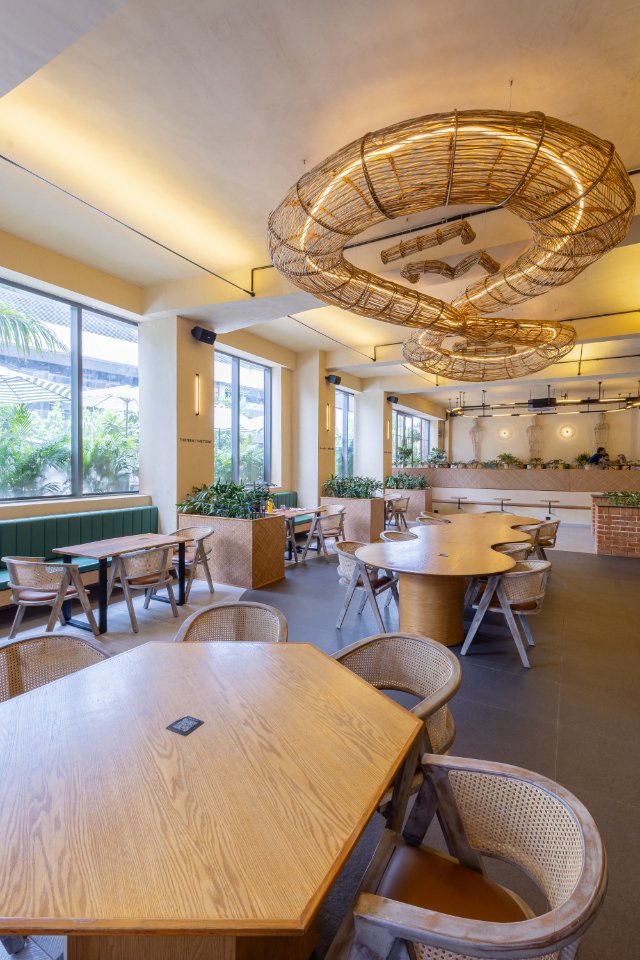
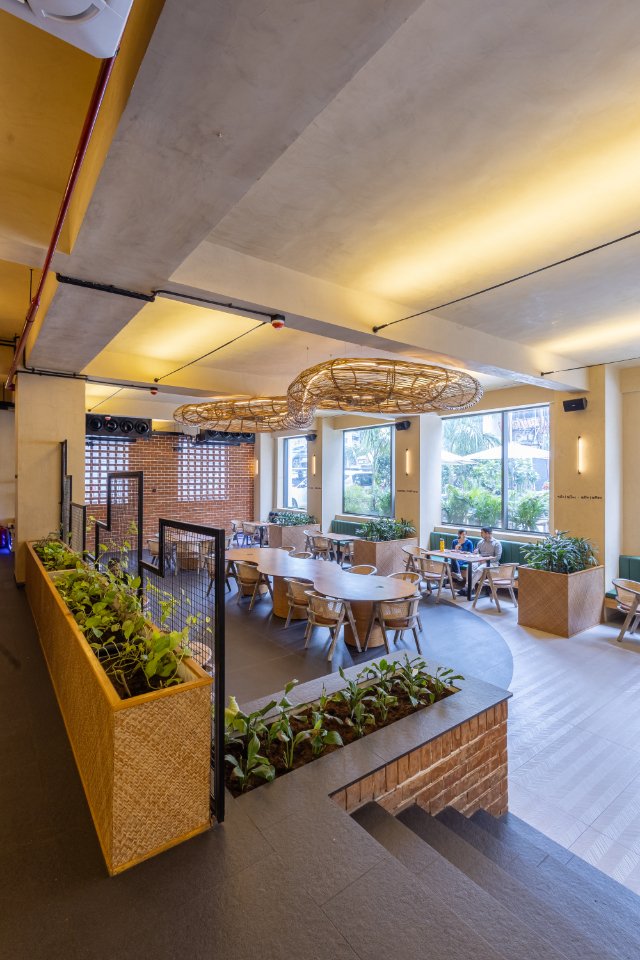
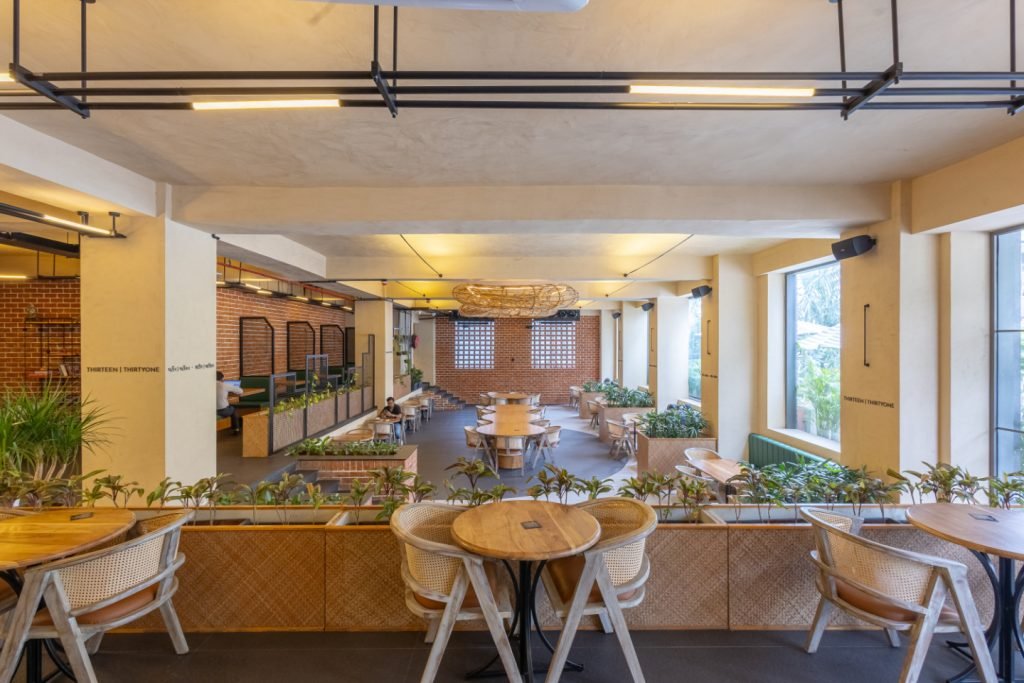
The floor plan works across two connected levels. A short run of dark stone steps, their base edged in exposed brick, separates the lower zone, where the main communal dining sits on a curved dark grey floor, from the upper level, which shifts to large-format light herringbone tile and carries smaller tables close to the full-height windows. The curve of the dark floor zone on the lower level is one of the more quietly effective moves in the plan. It draws a boundary around the central communal tables without walls or partitions, giving the main dining area a defined territory within the open space so that the room feels organized without feeling divided. The organic-edged solid wood communal tables sit within this curved zone, surrounded by a mix of cane-back chairs and lighter folding chairs, the combination keeping the seating from reading as too uniform or too deliberate.
The upper level on the herringbone tile is a different atmosphere. The full-height windows here look out to the palm-lined campus exterior, the outdoor planting close enough and dense enough to read as part of the interior, the light coming through green-tinted and generous. Smaller individual and paired tables sit near the glass, and the quality of this zone, the particular light, the view, and the slightly removed position from the busier lower floor make it the part of the cafe where people tend to stay longest.
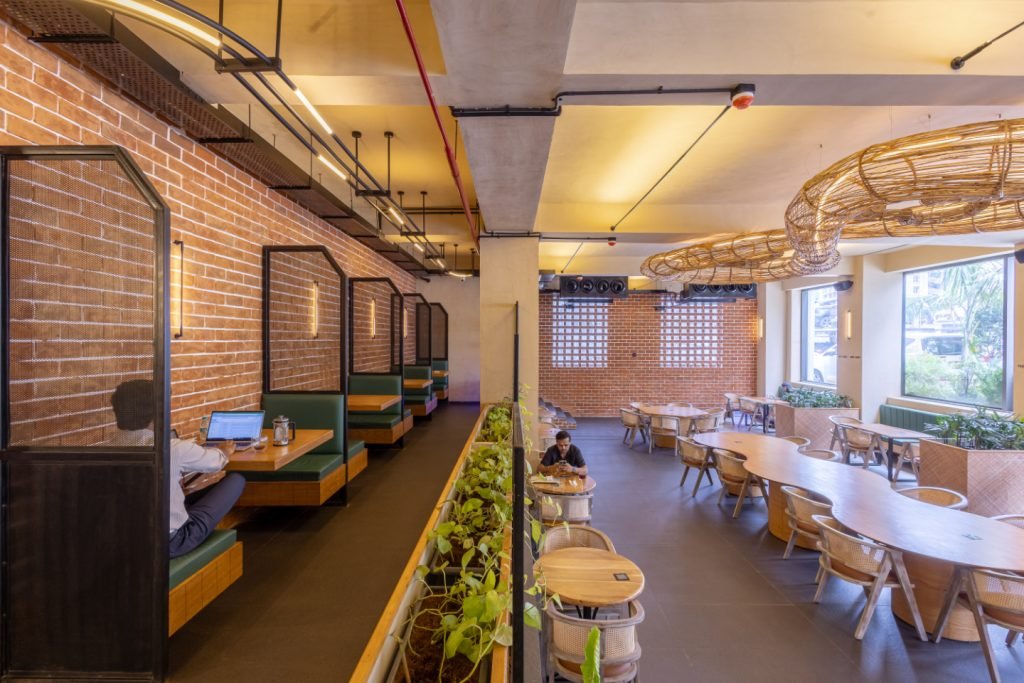
The rear wall of the space is full-height exposed brick, warm red, running the entire back of the room and wrapping around into the booth zone on the left. Within the brick, jali sections perforated in a grid pattern are set at intervals, filtering light through while keeping the texture of the wall continuous. It is the room’s warmest and most material surface, and it gives 1331 its character more than any other single element. The brick serves as the anchor around which the rest of the palette is assembled, contrasting with the ochre yellow of the other walls, the warm wood of the furniture, and the dark grey of the floor.
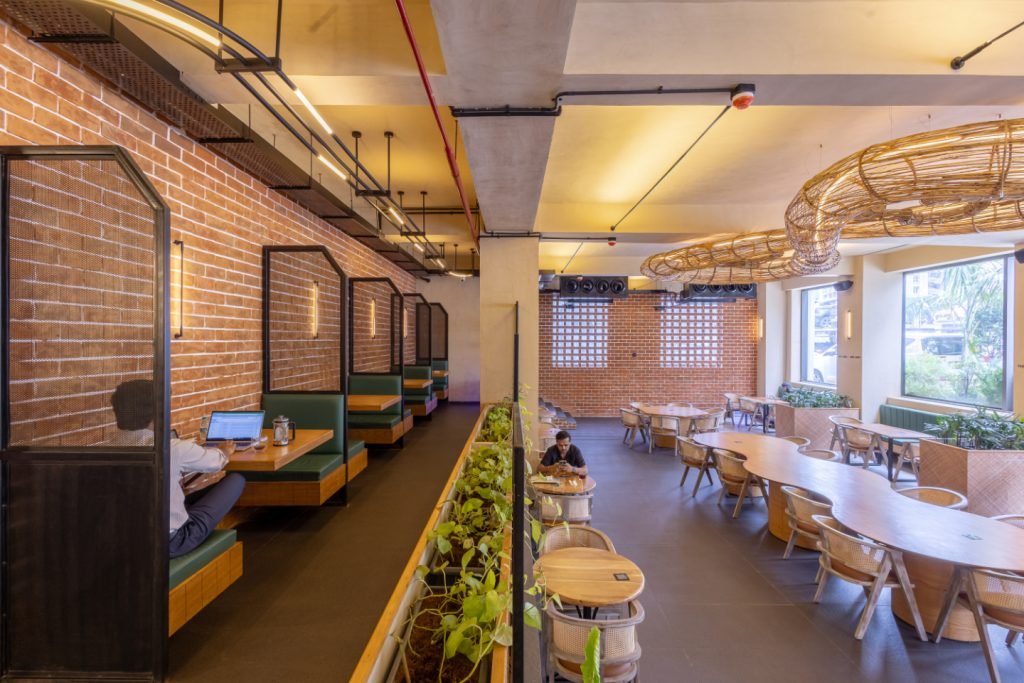
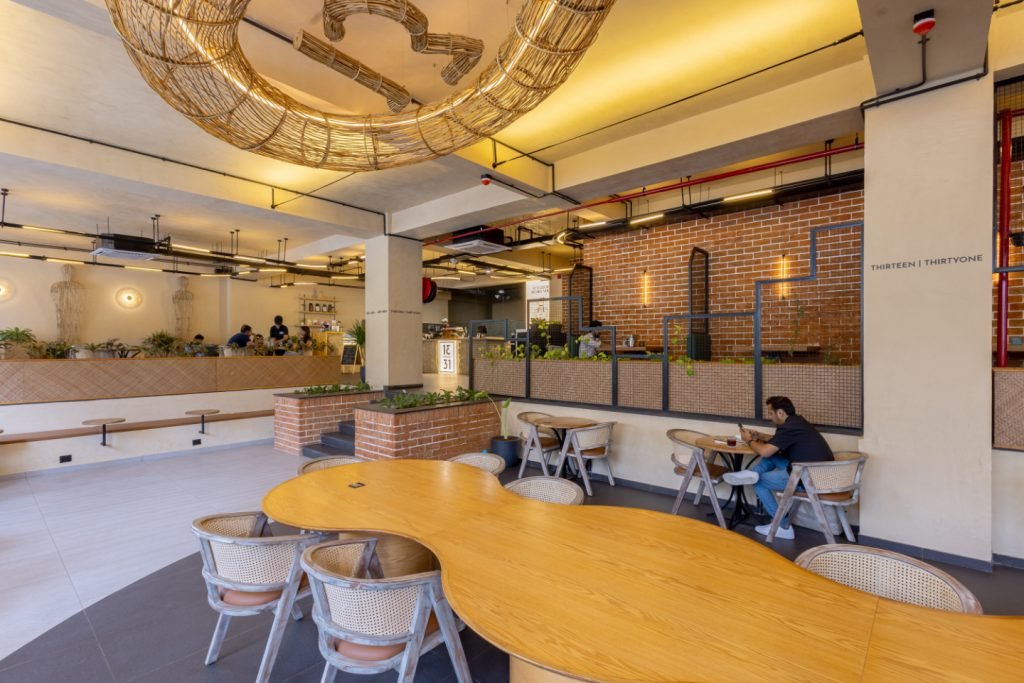
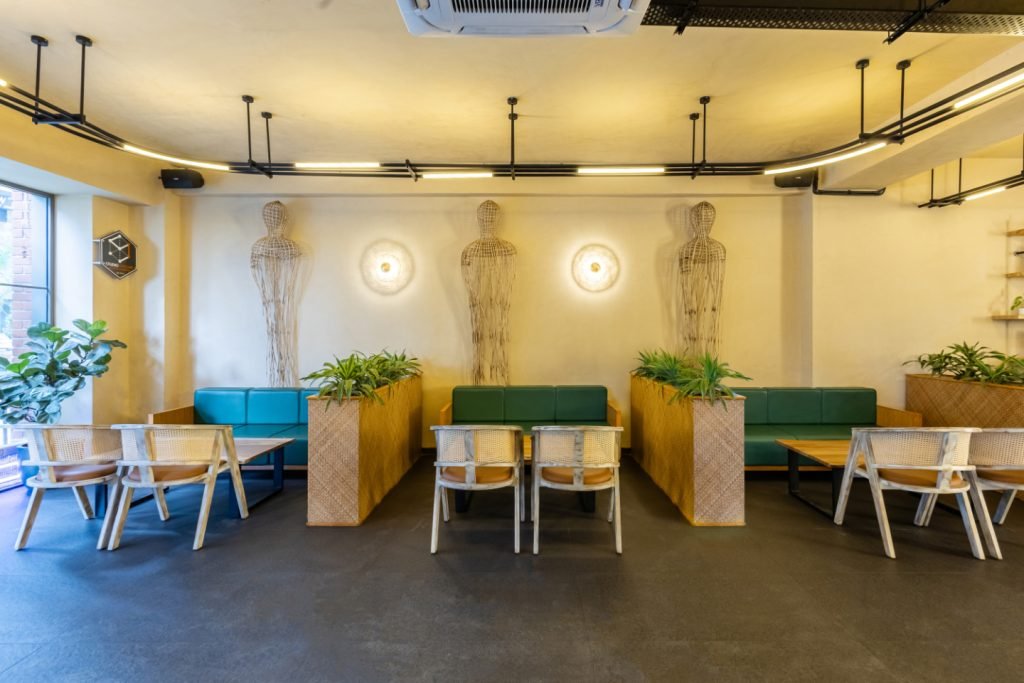
Along the left wall, the booth zone runs the full length of the brick. Each booth is a semi-enclosed enclosure framed in black metal with cane mesh panels on the sides, dark green upholstered banquette seating inside, and a small table in front. The black metal framing and deep green upholstery provide cool contrast in an otherwise warm room, positioning the booths as distinct destinations rather than mere seating options. Above them, a black pipe grid carries linear tube lighting that keeps the booth zone distinctly and separately lit from the warmer pendant atmosphere of the main floor, reinforcing the sense that this is a different kind of place to be within the same room. Through the day the booths fill with people working, the cane mesh panels giving enough visual separation for focus without isolating anyone from the life of the room going on around them.
Between the booth zone and the open dining floor, a long planter runs the full length of the dividing partition, trailing green plants spilling over the edge. Greenery appears throughout the space in the same way: at the base of the brick steps in low planters, in large freestanding boxes near the windows, and in smaller pots on the upper level. The greenery serves as a cohesive design element that connects the interior to the campus landscape, surpassing the effect of the full-height windows alone.
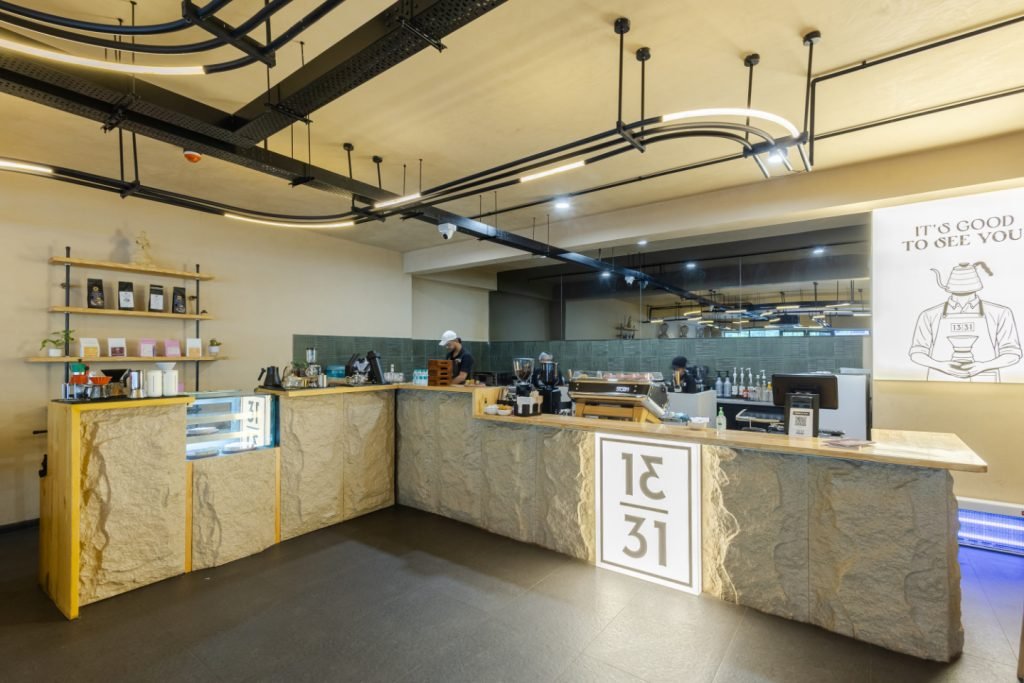
The coffee bar counter sits clad in textured stone with warm wood accents, the 1331 identity marked on its face. On the wall nearby, an illuminated text piece reads “It’s good to see you.” It is a small, unelaborate gesture, and it lands well because the space behind it has already made good on the promise before you reach the counter.
Fact File
Designed by: Studio Imagine (https://www.instagram.com/
Project Type: Cafe Interior Design / Hospitality
Project Name: 1331 Lounge
Location: Sarabhai Campus, Vadodara Year Built: 2025
Project Size: 3,430 sq ft
Principal Architect: Ar. Ajal Shah (https://www.instagram.com/
Design Team: Nehal Sangani and Jalpa Rana
Photography: Jay Gajjar
Materials and Vendors: Finishes: Veneer, Fluted panel, Granite stone, Laminates from Swastik Ply and Veneer / Lighting: Reflection Lights, Kesha Lights / Paint: Dulux, Asian Paints PU paint / Artefacts: Khandelwal Vadodara / Furnishing: Khandelwal Vadodara
This feature has been written on the basis of images and information provided.
