
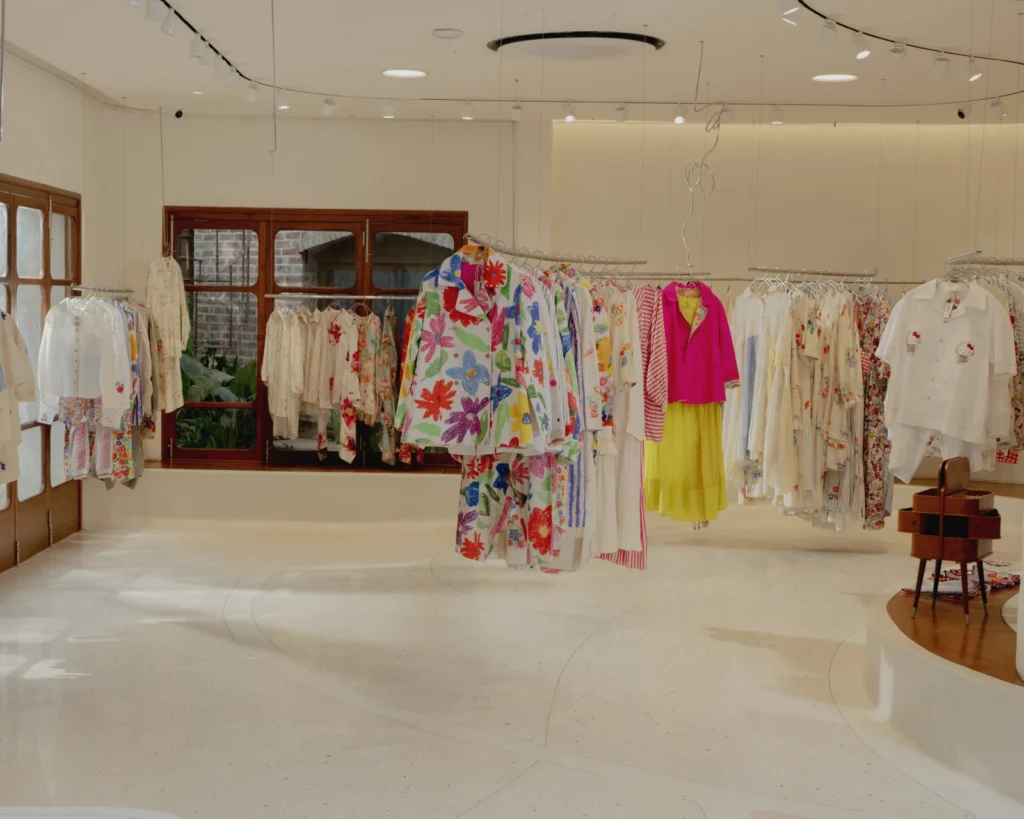
For 17 years, Péro has built its identity without a permanent store. The label’s clothes have appeared through fashion shows, exhibitions and retail partners, but the brand never had a physical address that could bring its wider world of textiles, handcraft and clothing together in one place. Pérodise, Aneeth Arora’s first flagship in New Delhi, changes that.
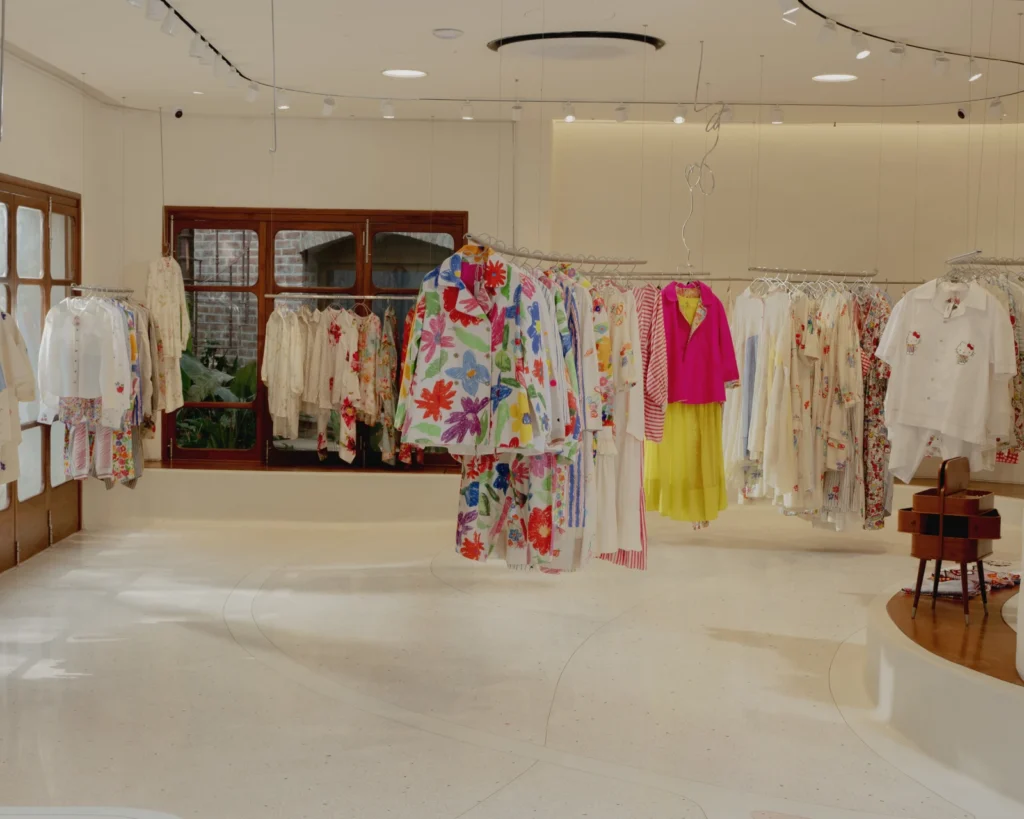
Located in Lodhi Colony Market, the store is not simply a new point of sale for Péro. It gives the collection room to exist beyond the boundaries of a fashion season. Arora has approached the space as an extension of the way Péro develops its clothes, bringing together different materials, techniques and makers to create something that feels assembled rather than manufactured as a single, uniform statement.
That approach is also visible in the collection presented inside. Alongside the current season, Pérodise carries Péro Classics, a continuing line of pieces that return across seasons, as well as the label’s Limited Edition jackets. These highly worked jackets are produced as individual seasonal pieces and, at the new flagship, become a permanent part of the offering. Bandhani also has a continuing presence through the Dot line, reflecting the importance of the technique within Péro’s textile vocabulary.
The idea is significant because the store is not organized entirely around newness. A customer can encounter a current collection alongside pieces that have remained part of Péro’s language over the years. Archival garments and older references can return to the floor, while one-off pieces can be shown without having to fit into the commercial structure of a particular season. The result is closer to an evolving wardrobe than a conventional seasonal boutique.
For a label whose clothing is defined by close attention to textiles and making, the setting becomes an important part of how those clothes are understood. Péro’s garments often reveal themselves through embroidery, surface treatment, handwork and unusual combinations of materials. At Pérodise, the surroundings follow a similar logic. The store asks visitors to look closely.
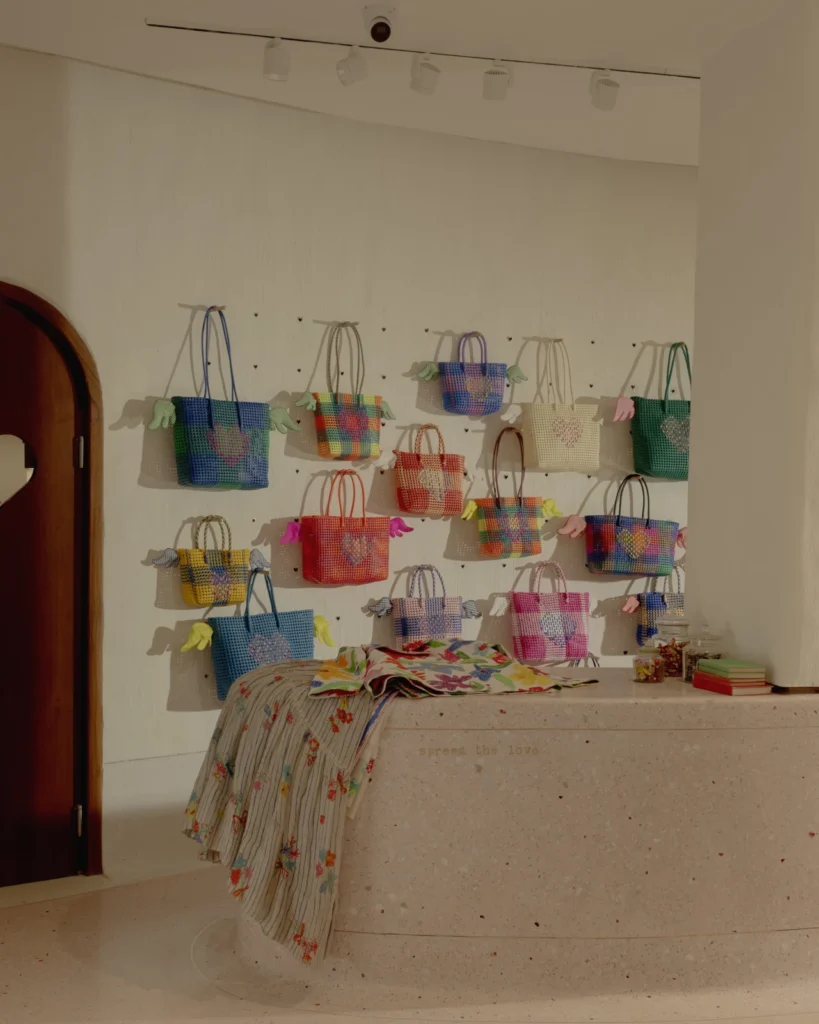
The approximately 4,000-square-foot space combines an indoor area with a large outdoor courtyard. Designed with Milan-based Conzatti Solanki Architects, the layout moves away from the hard geometry associated with conventional retail. Curved terrazzo surfaces become counters and benches, while the interior opens into the courtyard through folding doors.
The architecture has been developed around softness and movement, qualities that also appear in Péro’s clothing. There are few hard corners, and the transition between different areas is deliberately fluid. Instead of walking through a straightforward sequence of racks, customers move between spaces, discovering the collection gradually.
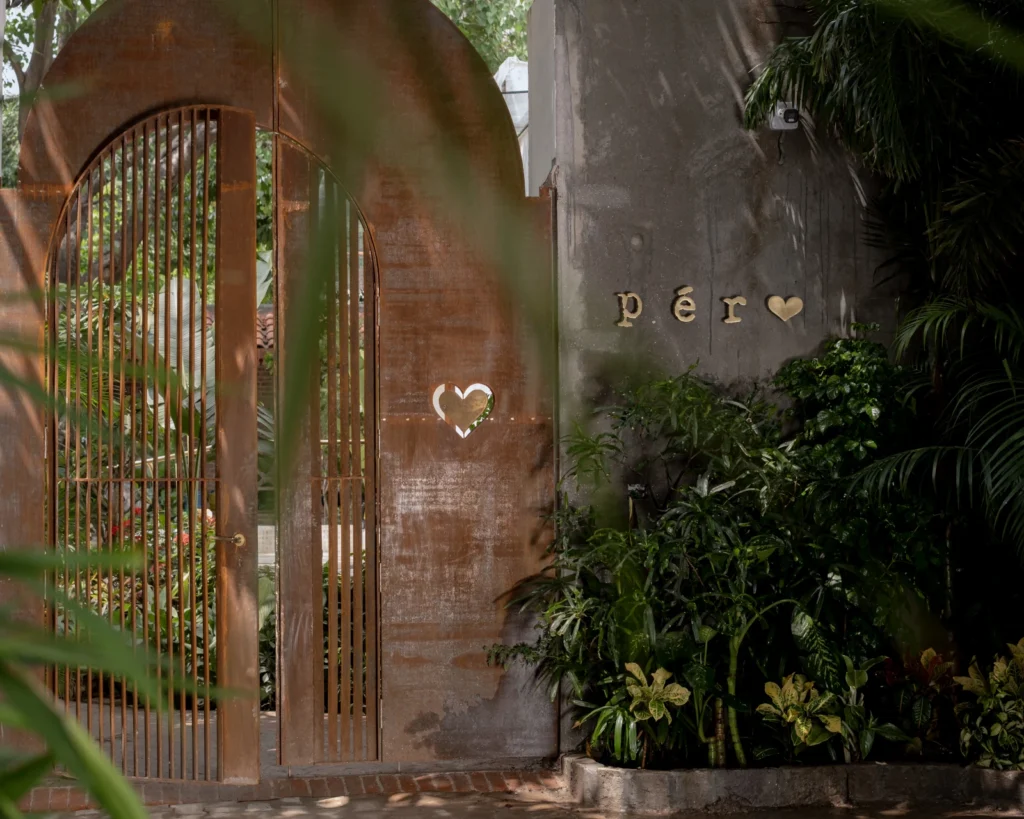
Materials are equally important. Terracotta tiles made in Odisha appear across the canopies, while copper bells from Kutch are incorporated into the rain chains. Terrazzo flooring has been laid by hand and incorporates brass detailing, hand-cut lettering and blown-glass hearts. The hangers have been developed with a metal craftsperson and shaped around Péro’s heart-and-wings motif.
The use of these materials does not function simply as decoration. They establish a direct relationship between the store and the methods behind the clothes. Péro has long worked through networks of artisans and textile specialists, with materials passing through different hands before becoming finished garments. Pérodise extends that process into the architecture, bringing together stone, brick, wood, metal, terracotta, glass and terrazzo through different forms of craftsmanship.
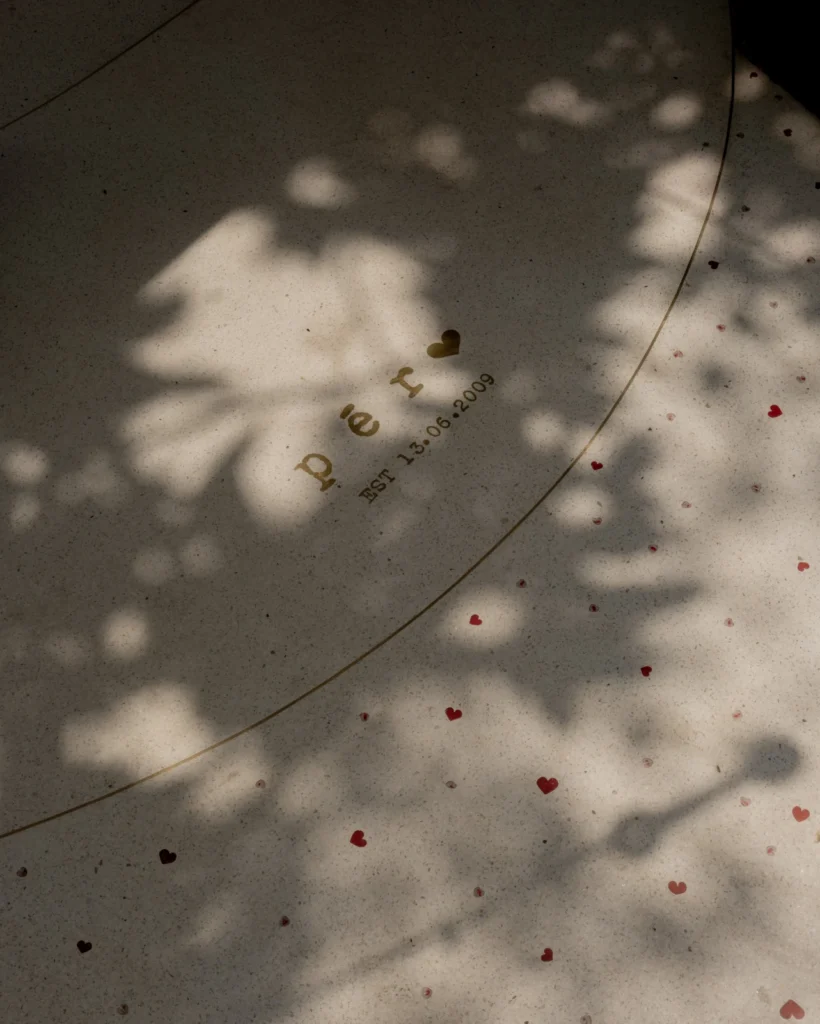
The heart motif is perhaps the clearest example. It began as a small embroidered heart placed somewhere on Péro garments, almost as a detail to be discovered by the wearer. Over time, the symbol became associated with the label and developed into part of its wider visual language. At Pérodise, the heart appears in glass, metal and flooring rather than embroidery, allowing a familiar element from the clothes to move into the physical environment.
The courtyard adds another dimension to the experience. Greenery was important to Arora from the beginning of the project, and the store has been designed to maintain a relationship between the interior and outdoors. The result is considerably removed from the enclosed, highly controlled environment of a typical luxury fashion store. There are places to sit, spaces to pause and areas where the architecture becomes part of the experience rather than simply a backdrop for merchandise.
That distinction changes the nature of shopping at Péro. The customer is not being moved rapidly from one product display to another. The space encourages a slower examination of clothing and its details. A jacket can be considered alongside the materials and objects around it, while the architecture provides enough visual interest to make the visit about more than purchasing a garment.
The store is also designed to change according to what Péro wants to present. Clothing rails can be removed, while systems within the walls and ceilings allow garments and other material to be suspended differently. This makes the space suitable for exhibitions, talks, presentations and events, allowing Pérodise to operate as a gathering place as well as a retail address.
This flexibility is particularly useful for a label that has accumulated 17 years of work. Rather than treating previous collections as closed chapters, Péro can bring selected pieces back into the store, place archival work alongside new collections and develop installations around particular textile techniques or collaborations. The physical address gives those stories somewhere to remain visible.
There is also a practical difference between seeing Péro through a multi-brand retailer and entering a space created entirely around the label. In a conventional retail environment, the clothing has to compete with other designers and with the visual language of the store itself. At Pérodise, the surroundings have been developed specifically around Péro’s vocabulary of craft, material and detail. The collection therefore becomes easier to read as a whole.
That may ultimately be the most important function of the new flagship. Péro has never been a label that depends entirely on seasonal trends. Its identity has been built through recurring techniques, textiles, silhouettes and details that return in different forms. Pérodise gives those elements a permanent context.
The store also signals a different understanding of luxury shopping, one that places time and discovery alongside the product. The materials are handmade, the displays can change, the courtyard allows the experience to slow down, and the collection is not restricted to what happens to be new that month. For Péro, the physical store becomes a way of allowing customers to spend more time with the clothes and with the ideas behind them.
After 17 years, Péro finally has a permanent address. But Pérodise does not feel like a conventional expansion into brick-and-mortar retail. It is more closely aligned with the way the label has always worked: through accumulated detail, handcraft, different materials and a willingness to let things develop gradually. The clothes remain at the center, but the architecture gives them a setting in which their material language can be understood more fully.
Brand Website: Péro
FACT FILE
Project: Pérodise, Péro Flagship Store
Typology: Retail/Commercial
Location: Lodhi Colony Market, New Delhi, India
Total Area: Approximately 4,000 sq ft
Indoor Area: 1,500 sq ft
Outdoor Area: 2,500 sq ft
Architects: Conzatti Solanki Architects
Architects: Paola Conzatti and Kalpesh Solanki
Design Approach: Fashion retail and craft-led spatial experience
Key Materials: Terrazzo, terracotta, stone, brick, wood, metal, brass and blown glass
Craft Elements: Odisha terracotta tiles, Kutch copper bells, hand-laid terrazzo and hand-beaten metalwork
