
The idea of the office has changed considerably over the past decade. Work is no longer confined to a desk, a fixed seating arrangement or a room planned around a single purpose. Teams move between individual tasks and shared discussions, offices accommodate different patterns of attendance, and the expectations placed on workplace environments have expanded beyond providing a functional place to work. Furniture, often treated as a long-term fixture in office planning, now has to respond to spaces and working habits that are continually evolving.
It is against this changing landscape that ATTUNY, the workplace furniture brand from Bengaluru-based Dot Workplace Solutions Pvt. Ltd., makes its debut. Drawing on the company’s 13 years of experience in furnishing workplaces across India, the brand brings together a range of modular furniture designed for contemporary offices, with an emphasis on movement, varied ways of working and the changing needs of a new generation of professionals.

The launch marks a new chapter for Dot Workplace Solutions, which has built its experience through workplace projects and a close engagement with the people who plan, manage and use these environments. ATTUNY has emerged from conversations with clients, architects and workspace planners, as well as observations of how offices are being used. The intention was not simply to introduce another range of office furniture but to reconsider the relationship between furniture and the spaces it occupies.
Traditional office layouts tend to be planned around a particular organizational structure. Desks, meeting tables, partitions and seating are positioned to serve an arrangement that may work well at the time of installation, but can become restrictive as teams grow, departments change or the nature of work shifts. A space designed primarily for individual tasks may later need to support collaboration, informal meetings or more flexible working arrangements. Reconfiguring the environment can then involve considerable effort, even when the furniture itself remains in good condition.
ATTUNY approaches this challenge through modularity. Rather than treating each piece of furniture as an isolated object with one prescribed function, the brand considers how individual elements can work together and be rearranged as requirements change. The approach gives organizations greater scope to reconsider their layouts without having to begin again each time their working patterns evolve. It also reflects a broader shift in workplace planning, where the office is increasingly expected to accommodate different activities throughout the day.

There is another consideration behind the brand’s approach: the experience of the Indian office user. Much of the furniture available in the market has historically drawn on designs developed for Western workplaces, and the needs and usage patterns of Indian professionals have not always received the same attention. ATTUNY’s development process involved discussions with Indian workspace architects and planners to understand how people use office furniture, what they expect from it and where existing solutions fall short. This emphasis on listening to local users gives the brand’s design direction a distinctly Indian context, even as it addresses workplace concerns shared by businesses internationally.
The result is a collection of furniture intended for a range of settings, from focused individual work to collaborative areas and informal spaces where people can meet or take a break from their desks. Its eight collections share an underlying interest in adaptable environments, but each approaches the workplace from a different point of use.
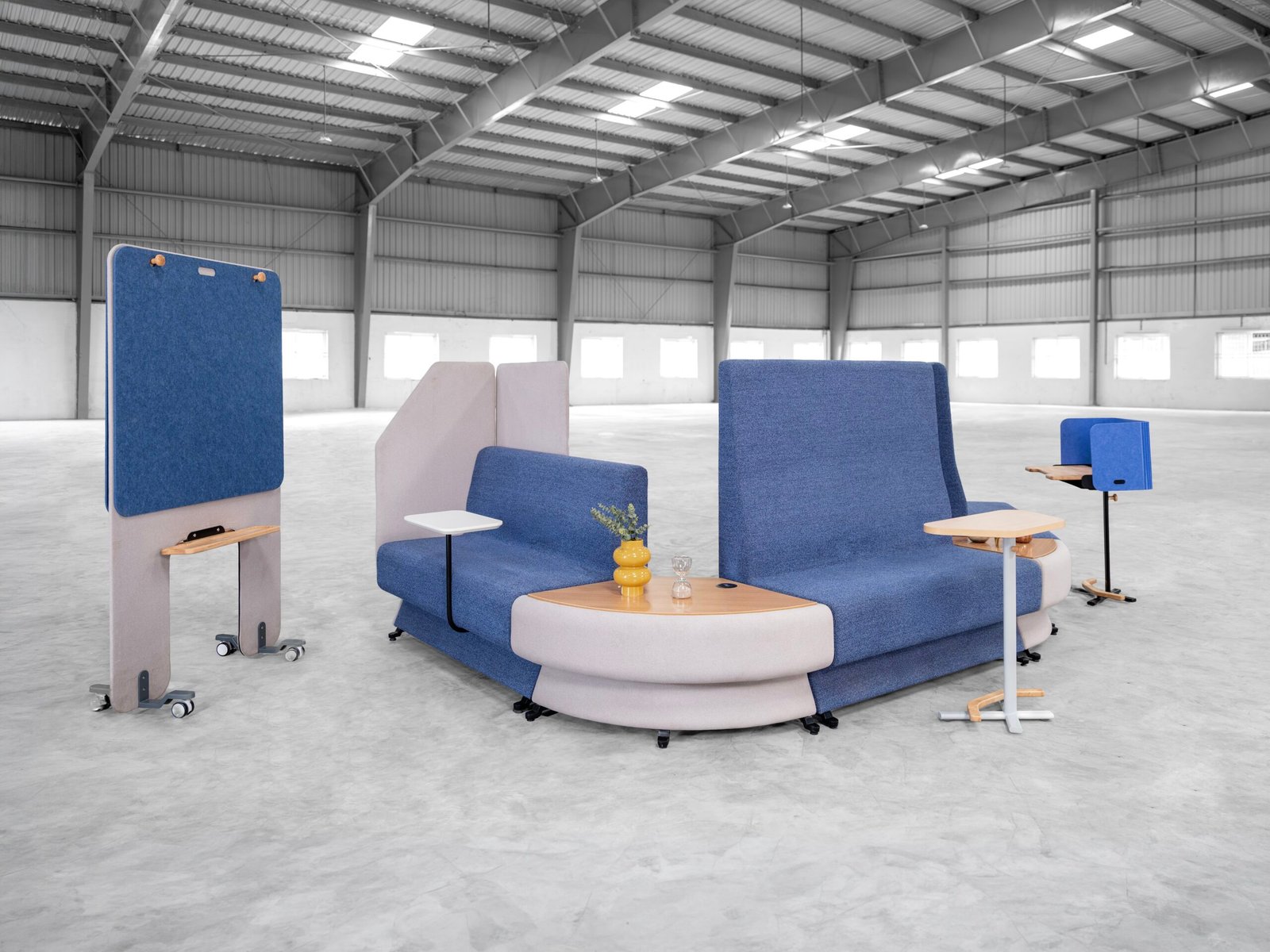
SYNC, for instance, brings together modular sofas, benches, pods and connecting elements to create seating arrangements that can be configured around the available space. Its components can be grouped, separated or repositioned, allowing a workplace to move between more open social settings and quieter areas. The collection also incorporates practical features such as integrated power and charging access, recognizing how closely everyday work is now connected to personal devices.
Other pieces address the need for smaller, more focused work settings. MONO offers a compact workstation format, while AXIS is designed to move between individual and collaborative use. WING, with its mobile screen and writing surface, introduces another way of dividing or using a space without relying on permanent partitions. These pieces are part of a wider effort to give workplaces options beyond the conventional arrangement of desks and meeting rooms.
The range also considers the spaces that sit outside formal workstations. Seating collections such as 3B and LYNC bring a more relaxed character to office interiors, while ROOT and STEM are intended for settings such as reception areas, cafés and shared spaces. Their inclusion reflects the fact that the contemporary workplace is not made up exclusively of task chairs and desks. Waiting areas, informal meeting points and places for conversation contribute to the atmosphere of an office and influence how people experience it.
Comfort remains an important part of this conversation. A workplace may be visually well planned, but its furniture has to support the physical experience of spending time there. Seat proportions, back support, working heights and the relationship between a person and the furniture all influence everyday use. ATTUNY’s stated focus on Indian users brings these considerations into its design process, although the brand’s approach is best understood as an effort to respond to local usage patterns rather than as a claim of independently established ergonomic superiority.
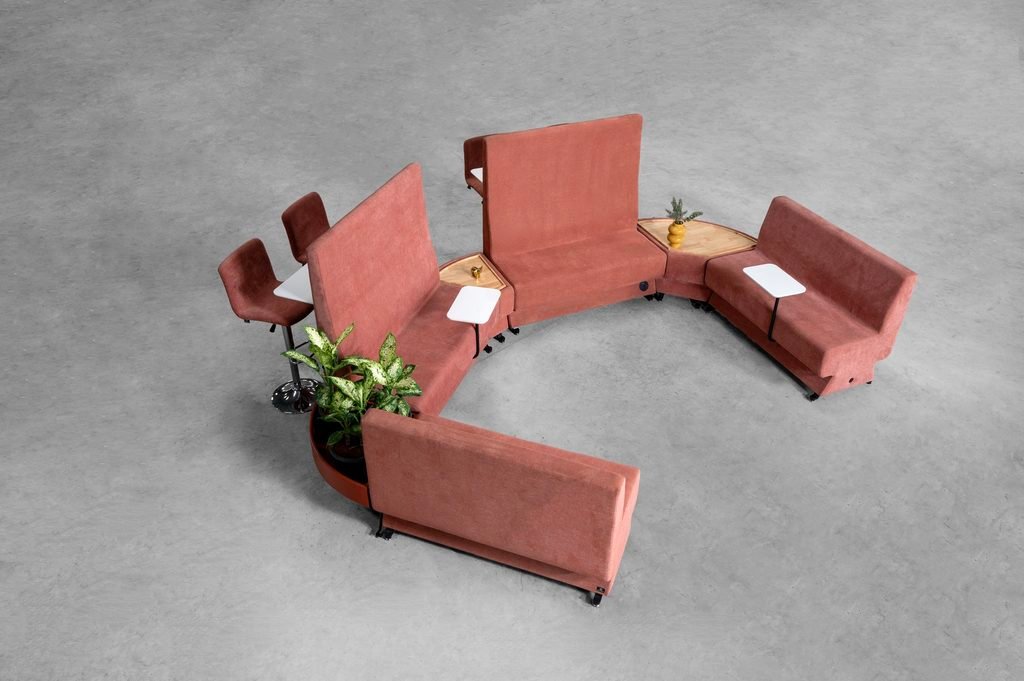
Material choices also contribute to the character of the collection. Rubberwood and solid timber appear alongside upholstered surfaces, PET panels and metal frames, creating a combination of materials suited to different functions and visual requirements. The use of wood introduces warmth into environments that can otherwise feel dominated by hard surfaces, while upholstered elements bring a softer quality to seating and informal areas. Metal structures and engineered components provide the framework for pieces intended to be moved or reconfigured. The balance between these materials allows the collections to sit within a variety of contemporary office interiors without relying on a single visual language.
Manufacturing takes place at the company’s facility in Jigani, Bengaluru. For ATTUNY, this local manufacturing base is part of the brand’s identity and its understanding of the Indian workplace market. The company’s experience in delivering workplace projects provides the background against which the new range has been developed, bringing practical knowledge of office environments into the process of designing furniture.
For Shankar Reddy, Managing Director of ATTUNY, the relationship between furniture and workplace culture is central to the brand’s thinking. As he puts it, “People move with the spaces they are in. If the furniture cannot move, neither can the culture.” The observation captures the premise behind ATTUNY’s modular approach: the office should not be expected to remain unchanged while the people and businesses within it continue to develop.
The arrival of ATTUNY comes at a time when organizations are reconsidering what they want their offices to offer. The workplace is expected to support concentration as well as interaction, provide a sense of comfort without losing its professional character, and accommodate change without requiring a complete redesign. For younger businesses in particular, where teams and working arrangements can evolve quickly, the ability to use space in more than one way has become an increasingly relevant consideration.
ATTUNY‘s debut introduces a brand built around these changing expectations. Rather than presenting the office as a fixed arrangement of furniture, it proposes a more responsive environment in which individual pieces can be brought together and adapted to different needs. Its success will ultimately depend on how well these ideas translate into everyday use, but the thinking behind the collection reflects an important shift in the way workplace furniture is being considered: not simply as equipment placed within an office, but as part of the environment that shapes how people work, meet and interact.
