
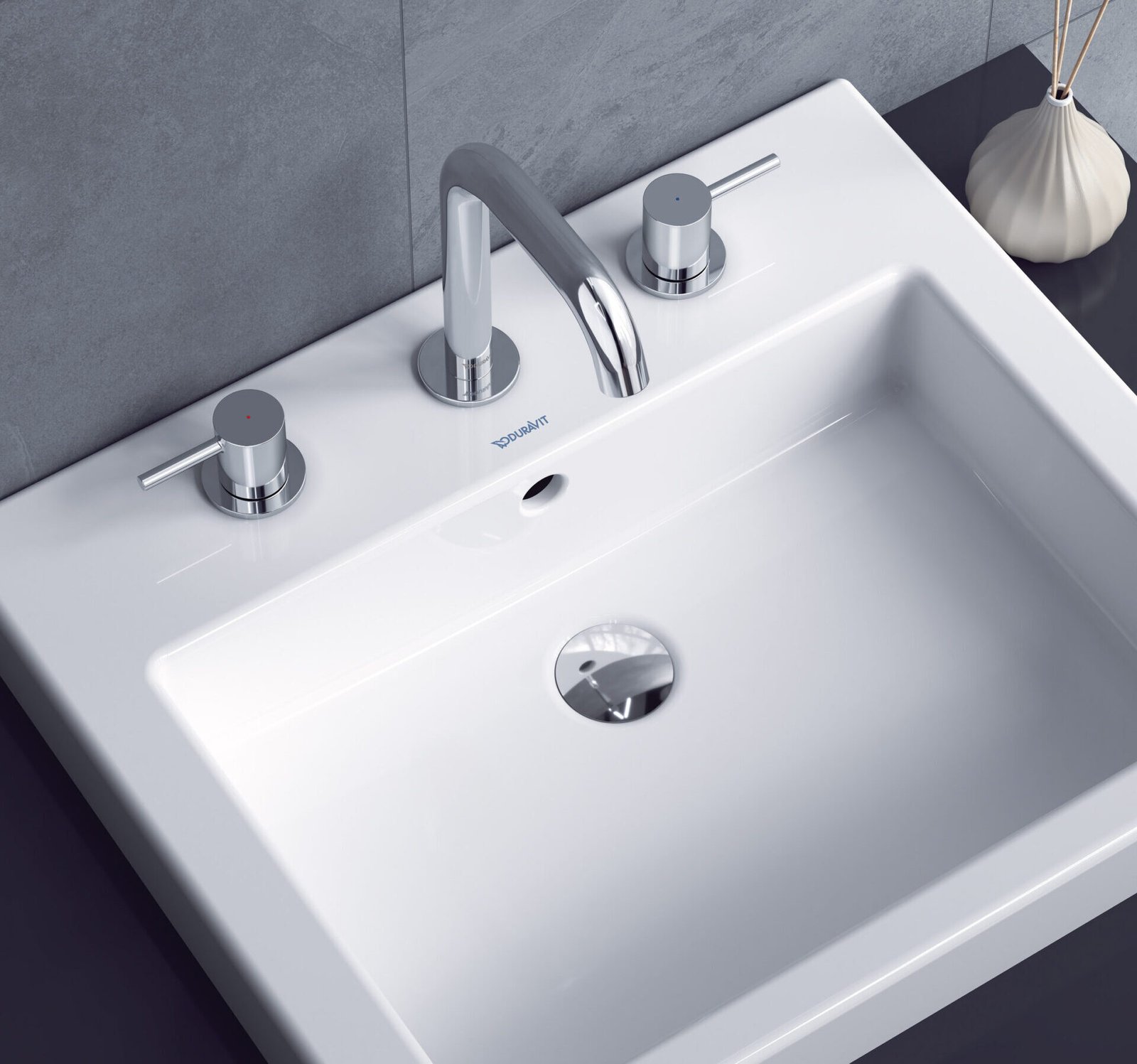
Duravit’s Circle faucet series is built from a single geometric idea carried through without exception: cylindrical bodies, rounded handles, and no sharp edges anywhere across the range. Duravit ties the shape back to the circle as a symbol of balance and infinity, language that shows up in most minimalist product launches, but here it happens to describe the object accurately rather than just decorating the press copy. The restraint shows up in the smaller details as much as the overall shape. The gap between the faucet body and its handle has been kept deliberately tight, close enough that the fitting reads as one continuous form rather than parts assembled together, with no visible seams and no hardware left exposed to interrupt the line.
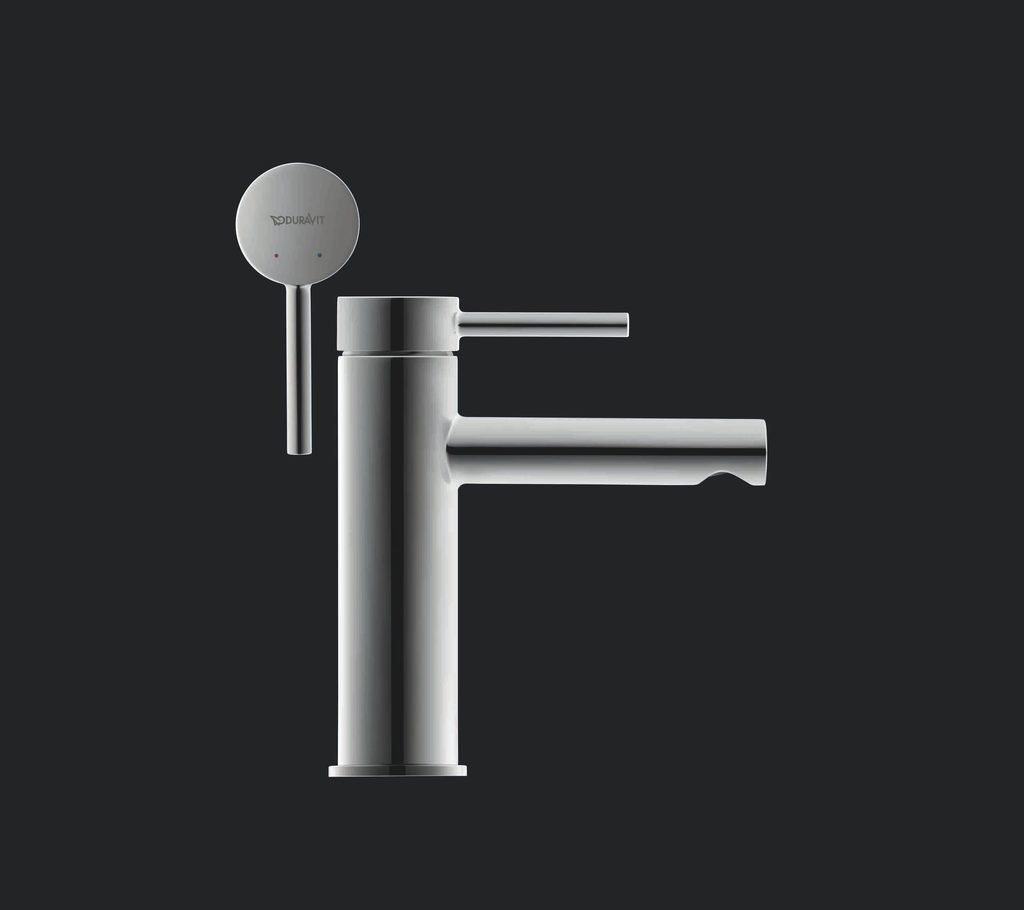
The rounded geometry isn’t purely visual. Without corners or recesses, the Circle series is easier to keep clean, since there’s nowhere for limescale or grime to settle into a crevice, and Duravit backs that up with an EasyClean stream shaper, designed to let dirt and limescale wipe away before they build into residue. The technical hardware stays hidden rather than on display. A flow regulator sits concealed inside the fitting, keeping the exterior line uninterrupted, and the sink mixers run Duravit’s AirPlus system, which mixes air into the water stream for a fuller flow without increasing water use, a detail that affects how the faucet feels in daily use more than how it looks.
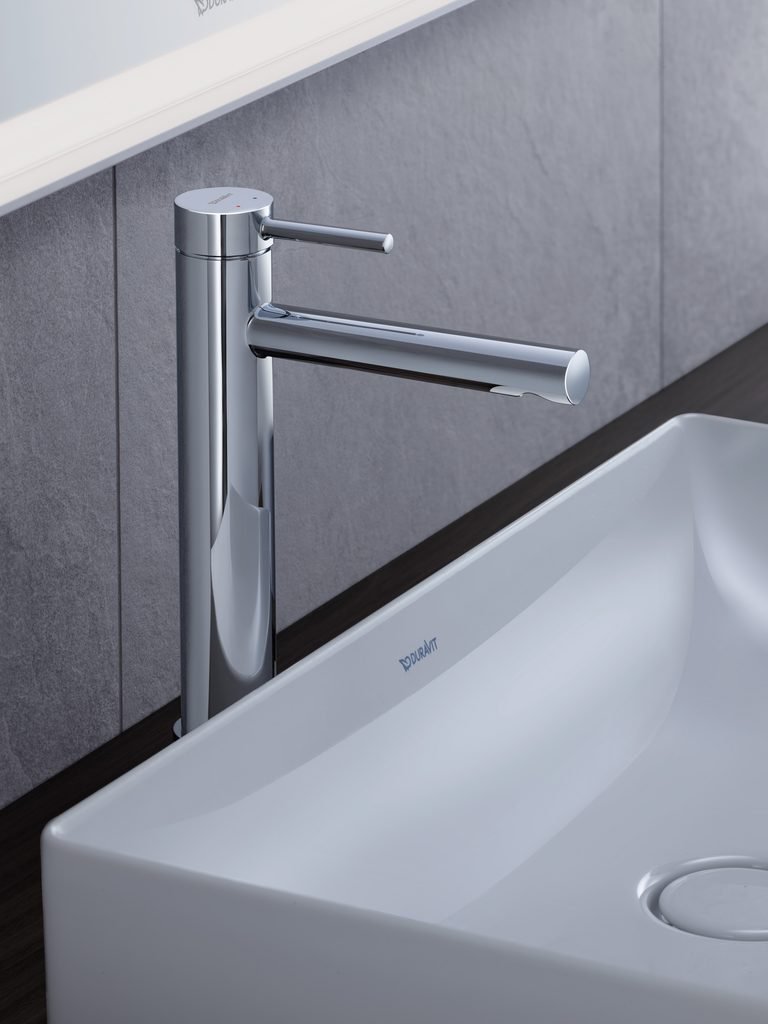
The series covers a wide range of bathroom layouts rather than a single fixed format, with single-lever mixer taps available in S, M, and L heights, alongside a concealed installation mixer, a standalone cold-water faucet, and a 3-hole faucet. That range matters for anyone specifying the series across a full bathroom, since a minimalist collection only works as a coherent look if it can actually match whatever basin or wall configuration is already in place.
Duravit was founded in 1817 in Hornberg, in Germany’s Black Forest, and now operates in more than 130 countries. The Circle series was developed by Duravit’s internal design team, working within a broader studio roster that includes Cecilie Manz, Philippe Starck, Antonio Citterio, Christian Werner, Sebastian Herkner, and Patricia Urquiola. Separately, the company has set a target of full climate neutrality by 2045, aiming to get there without relying on carbon offsets.
