
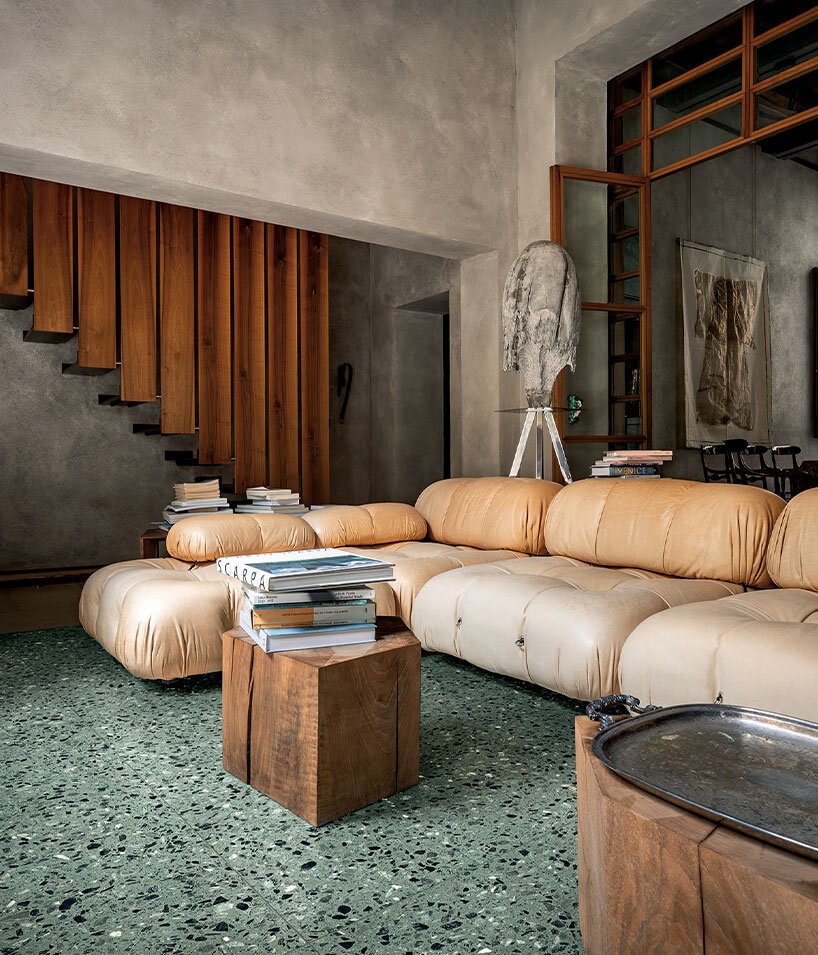
Florim extends its Sensi surface collection with SensiVenezia, a porcelain stoneware series designed by Matteo Thun and Benedetto Fasciana. Drawing on the material character of Venice, the collection reinterprets traditional Venetian terrazzo through a combination of mineral aggregates, subtle glass details and a palette informed by the city’s architecture and landscape.
The collection takes its visual cues from Venice’s canals, historic buildings and surrounding lagoon, translating these references into twelve colors named after Venetian landmarks, including Arsenale, Fenice, Rialto and Giudecca. Rather than reproducing the appearance of aged stone literally, SensiVenezia uses variations in aggregate size, tonal depth and surface texture to give the material a contemporary architectural expression. The design also draws on the compositional sensibility associated with Carlo Scarpa, whose work brought together traditional materials and carefully considered detailing.
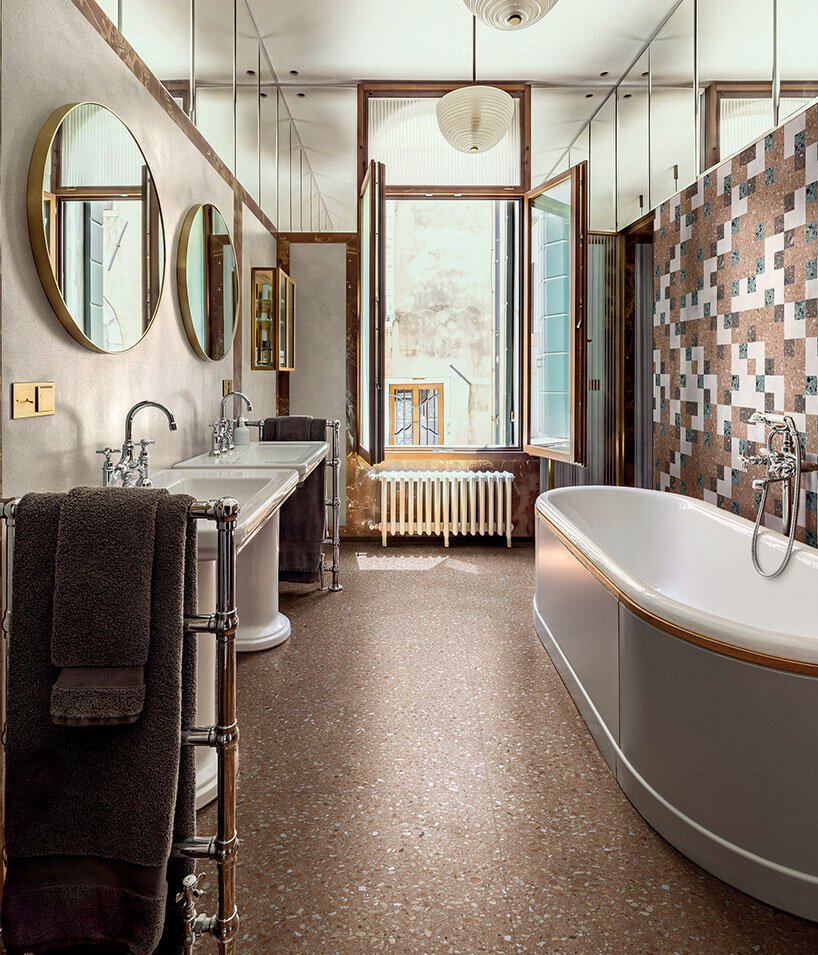
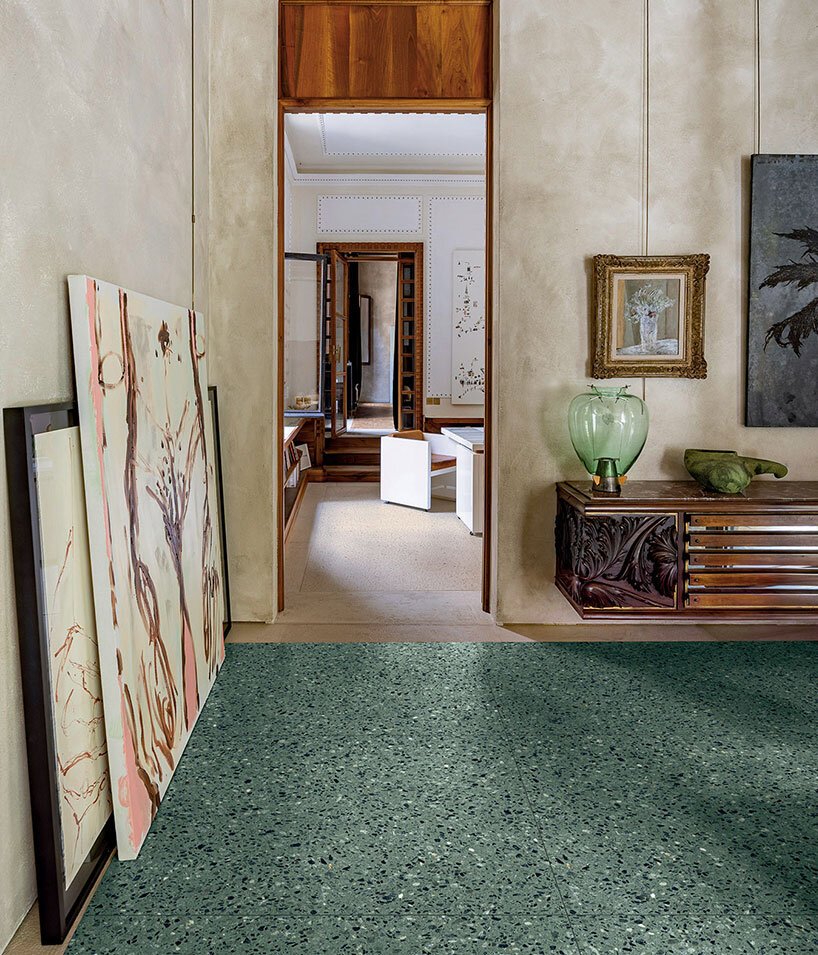
Two finishes offer different interpretations of the collection’s terrazzo surface. The uniform matte finish creates a consistent appearance across an installation, while the softer finish brings greater tactile variation, with marble and glass details adding depth to the surface. Both are intended to work across residential, hospitality and commercial interiors, where the choice of finish can influence the character of a room as much as its color.
SensiVenezia is available in 9 mm and 20 mm thicknesses, with modular formats and large-format slabs measuring up to 120 × 120 cm. The larger dimensions allow for fewer joints across floors and walls, giving the aggregate pattern greater continuity. The collection also includes Scacchiera, a 30 × 30 cm mesh-mounted decorative element arranged in a geometric pattern that recalls the structure of woven textiles.
Developed within Florim’s continuing collaboration with Matteo Thun and Benedetto Fasciana, SensiVenezia brings regional material references into a contemporary surface range. Its defining feature is the balance between the irregularity associated with traditional terrazzo and the consistency required of porcelain stoneware, allowing the visual language of Venetian craftsmanship to be used across a range of architectural interiors.
