
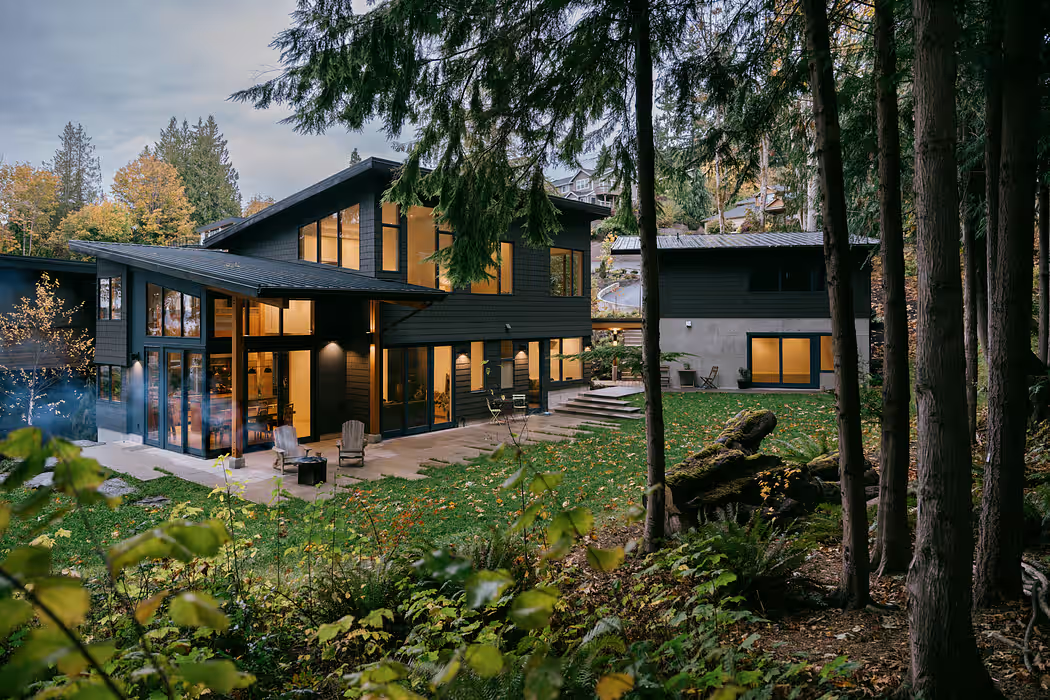
CAST Architecture Builds a Family Home Around a Meadow on a Wooded Bluff Above Puget Sound
Fact File
Architecture: CAST Architecture
Type: Residential, Private House
Year: 2025
Photography: Peter Bohler
On a wooded bluff just north of Seattle, within the city limits of Edmonds, there is a clearing in the trees that opens to one of the more extraordinary views available from private land in the Pacific Northwest: Puget Sound in the foreground, the Olympic Mountains beyond it, the water and the peaks visible across a sweep of landscape that the surrounding Douglas fir and cedar frame rather than obstruct. When CAST Architecture first visited the site, they found a secluded forest glade with these vistas perched atop a high seaside bluff, and the design challenge they faced was not how to take advantage of the view but how to take advantage of it without taking it apart—how to build a family home on the site while keeping the clearing that made the site worth building on at all.
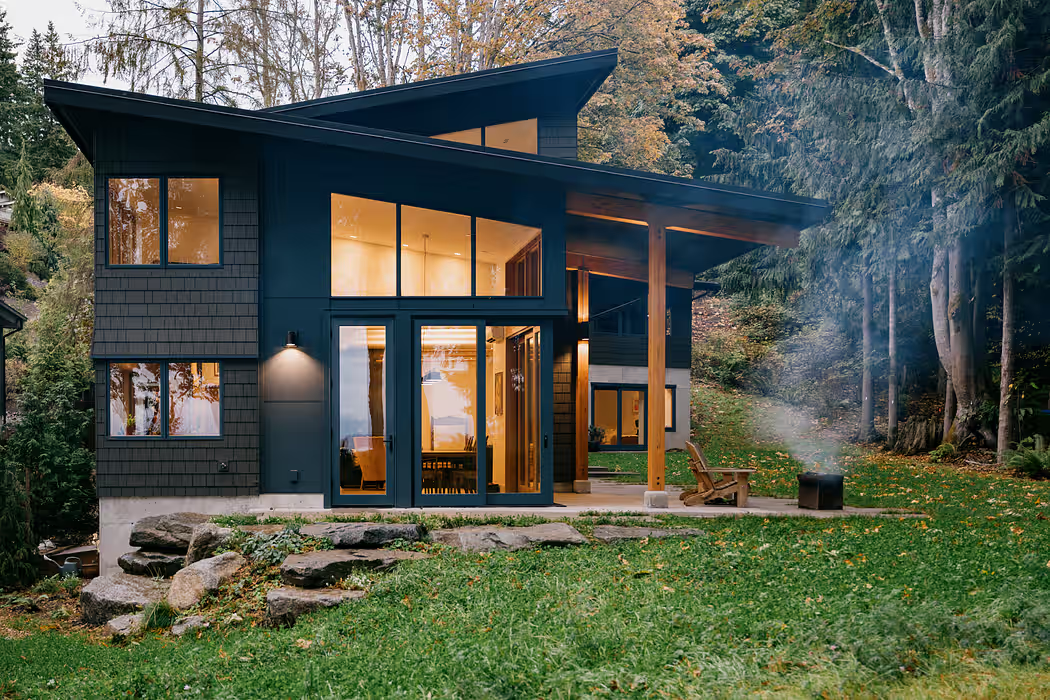
The answer is a plan organized around an absence. The house is composed of two wings that cradle the meadow between them, holding it as the project’s most important room rather than filling it with structure. The wings are kept close to the perimeter of the site, leaving the center unbuilt and the clearing intact so that the meadow reads from within the house not as the space between buildings but as the primary space around which the buildings have been arranged. It is a planning decision that requires considerable restraint and produces, in the completed building, a quality of relationship between the architecture and the landscape that a more conventional siting could not have achieved, the house belonging to the clearing rather than the clearing belonging to the house.
The approach to the building is deliberately withheld. Rather than revealing the house on arrival, the design sequences the experience so that the clearing and the view are discovered progressively rather than announced immediately. A covered bridge with a green roof connects the upslope garage and office to the main house, doubling as a front porch and marking the threshold between the arrival sequence and the domestic interior without making that threshold feel abrupt. Between the two structures, a gentle stair pulls visitors down through the gap and toward the meadow, establishing the balance between shelter and exposure, compression and release, that the project sustains throughout its interior organization. The site required considerable technical resolution before the architecture could begin: located on a steep slope in a landslide-prone area, the project demanded a twenty-month land-use and building permit process led by an expert team of engineers addressing vehicle access, fire access, stormwater management, erosion mitigation, and potential earth movement. The clearing and the view are there because someone spent twenty months ensuring they could be responsibly built upon.
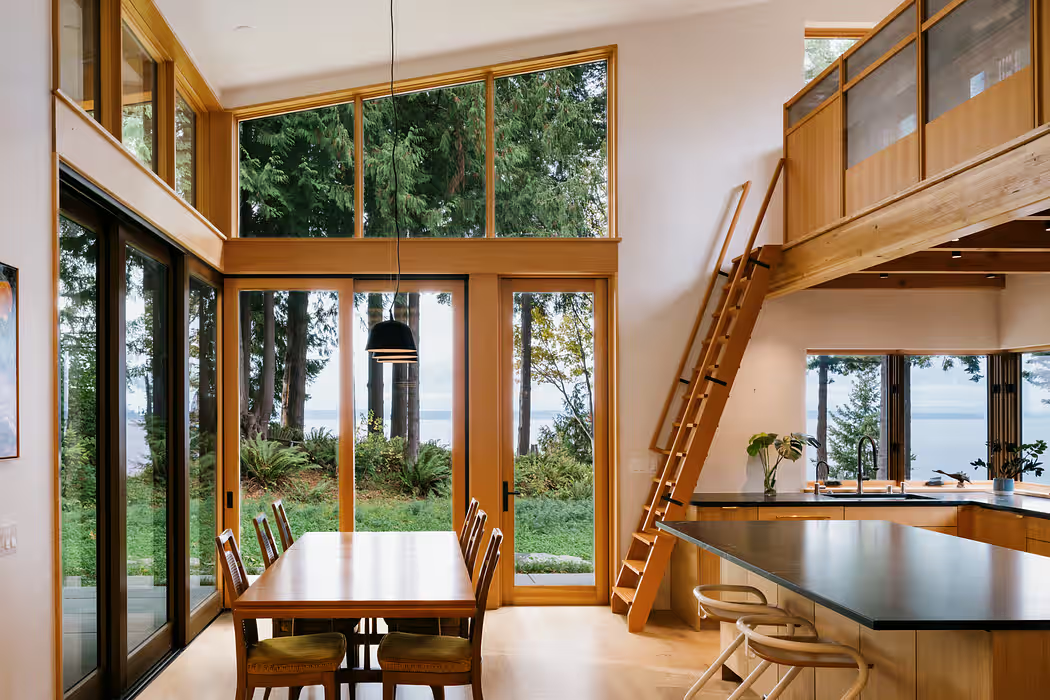
Inside, the floor plan is efficiently organized and closely tuned to the routines of a family’s daily life, each room sized to its purpose without the excess that a view site can encourage when the temptation to make every space a viewing platform overrides the need to make every space functional. The house opens fully to the Sound and the mountains, but it also maintains a close relationship to the trees and planted ground around it, the two conditions in productive tension rather than resolved in favour of either. The most striking moment in the plan is an open-corner dining area defined by double-height windows at a corner left deliberately free of structure, so that the room reads less as an enclosed box than as an extension toward the landscape, the corner dissolving into the view in a way that connects the act of sitting at a table to the act of looking across water at mountains. An outdoor extension of the great room offers a more intimate and sheltered threshold between the interior and exterior than the main deck or meadow, creating a domestic middle ground.
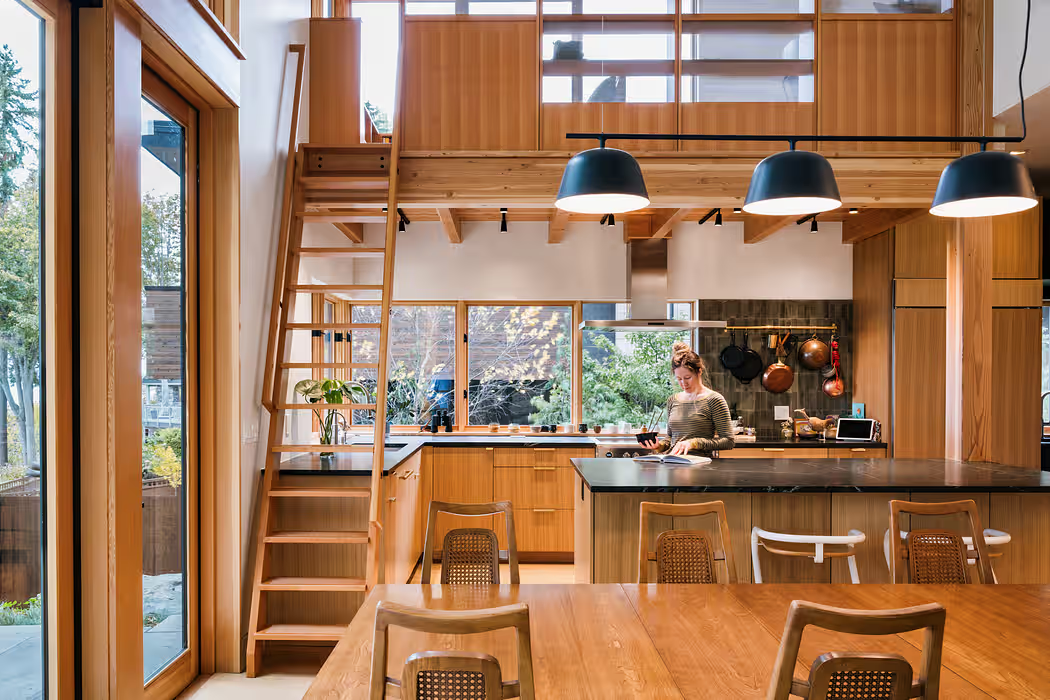
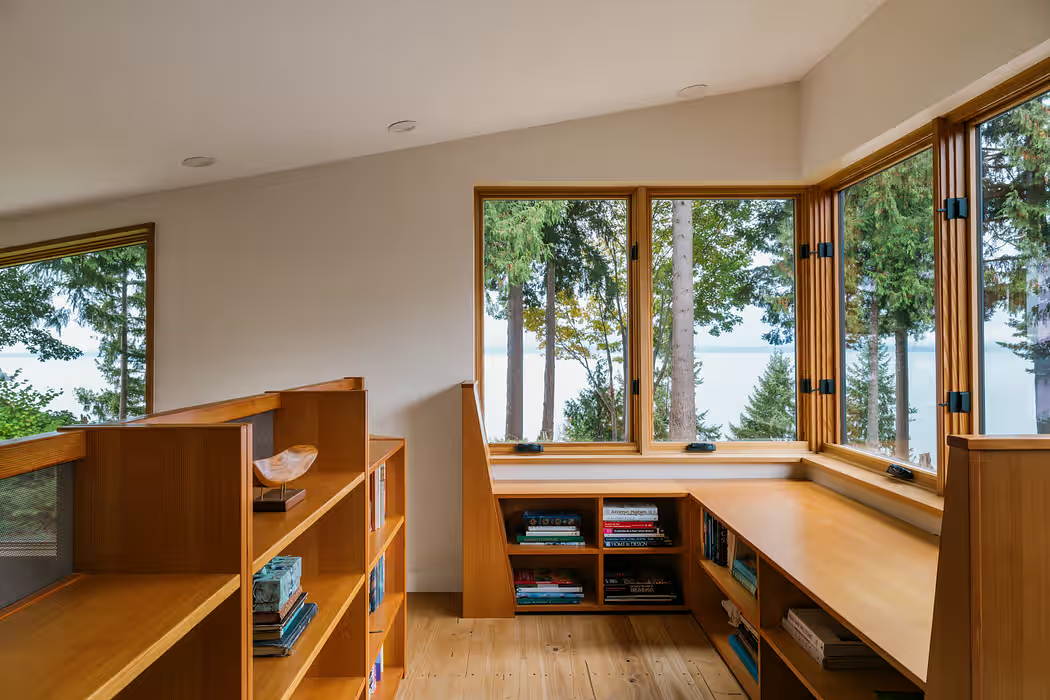
Smaller gestures keep the experience of the house from becoming only about the panorama. A window seat along the stair offers narrower, more specific views through the trees, the kind of framed glimpse that a large unbroken window cannot provide and that gives a house the quality of having multiple relationships to its landscape rather than one sustained confrontation with it. The second-floor primary suite sits in the canopy, its elevated position giving it a character that the practice describes as having treehouse vibes, an image that fits the project’s consistent closeness to the site’s mature trees, which are as much a part of the design as the views they frame and the clearing they surround.
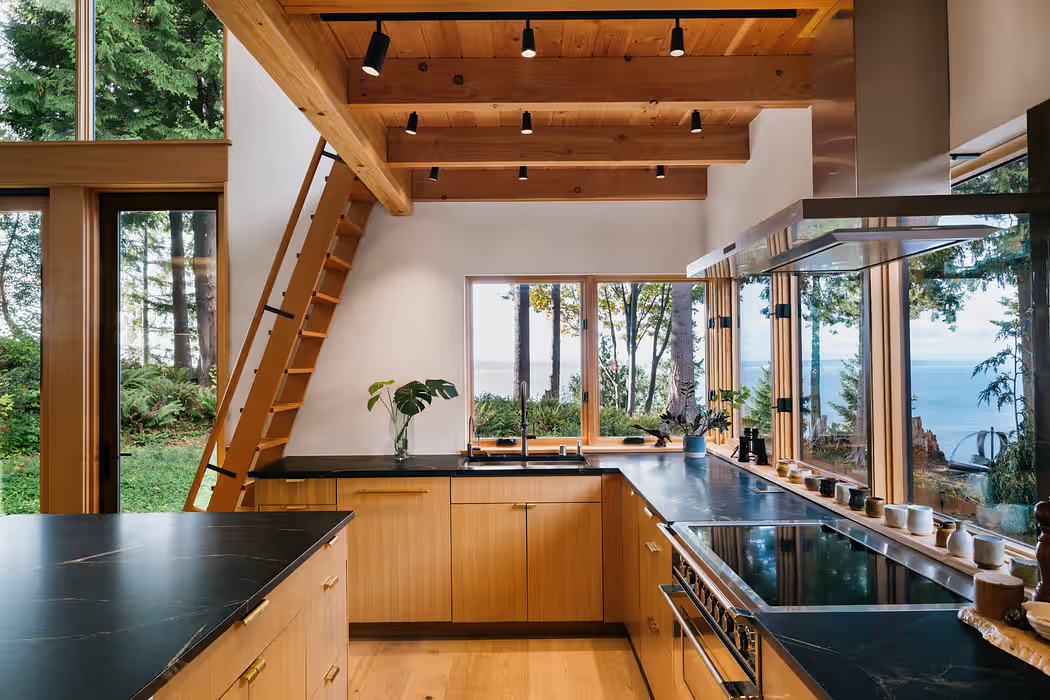
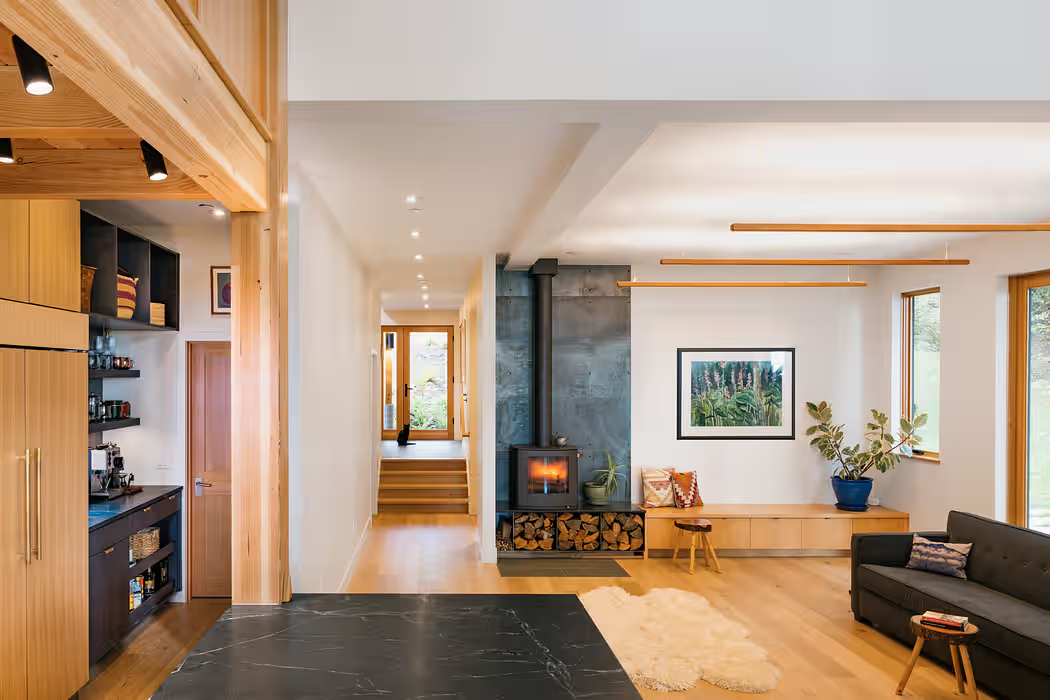
The material palette inside is warm without being heavy. Clear-finished fir runs across much of the interior, giving the light-filled rooms a warm cast during the grey Pacific Northwest winters when natural light is limited and the quality of the interior surfaces plays a larger role in creating the atmosphere. In the kitchen, white oak cabinets bring a lighter tone alongside the fir, and the combination of the two species within the interior reflects the same material logic that governs the exterior, where the house is clad in materials chosen for their relationship to the wooded setting rather than their contrast with it. The house is compact compared to similar homes in the area. This decision reduces both the carbon impact of construction and the ongoing energy consumption during occupancy. The project’s environmental ethic extends from preserving the clearing to the sizing of the conditioned space within it.
What CAST Architecture has built on this wooded bluff above Puget Sound is a house organized around the discipline of not building where it was not necessary to build, and the result of that discipline is a site that retains the quality that made it worth designing for in the first place. The meadow is still there. The trees still frame the water and the mountains. The house sits at the perimeter of the clearing, looking inward at what it preserved and outward at what the land already had. The experience of being inside it is that of a building that understood its own limits clearly enough to stay within them.
