
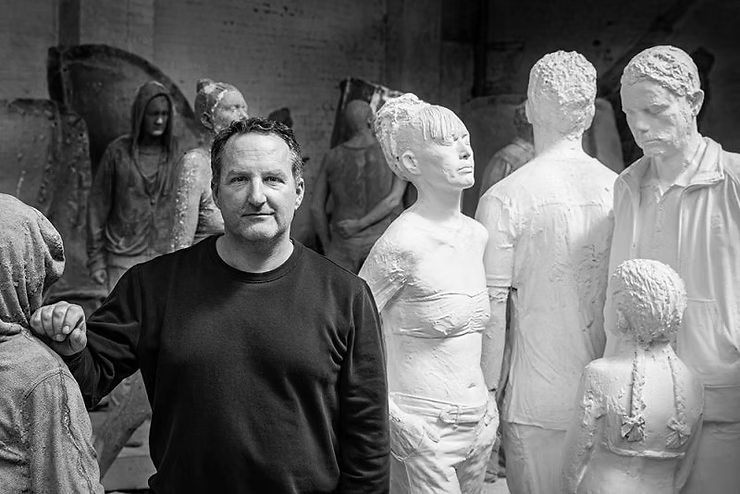
He was a trained diver before he was a sculptor, which perhaps explains why his relationship with the ocean is less about conquest and more about conversation. Jason deCaires Taylor speaks to Shweta of Design Diary International about surrender, authorship, and what it means to make art that is designed, from the very first day, to disappear.
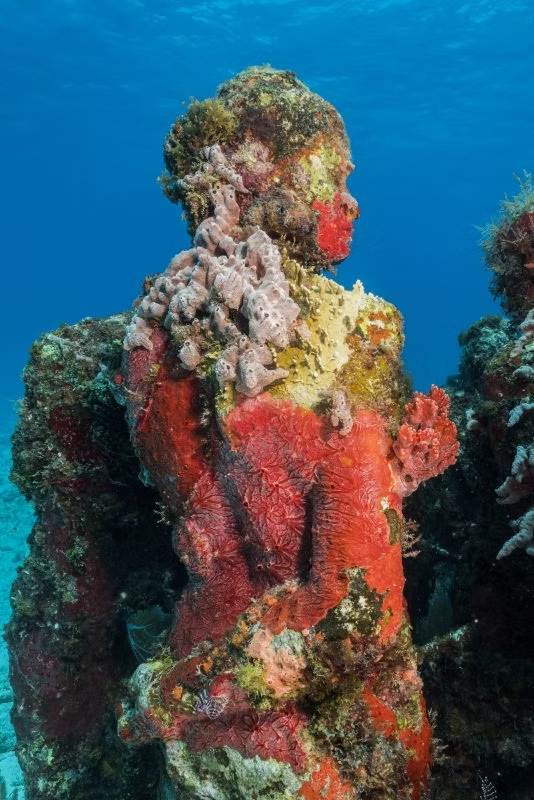
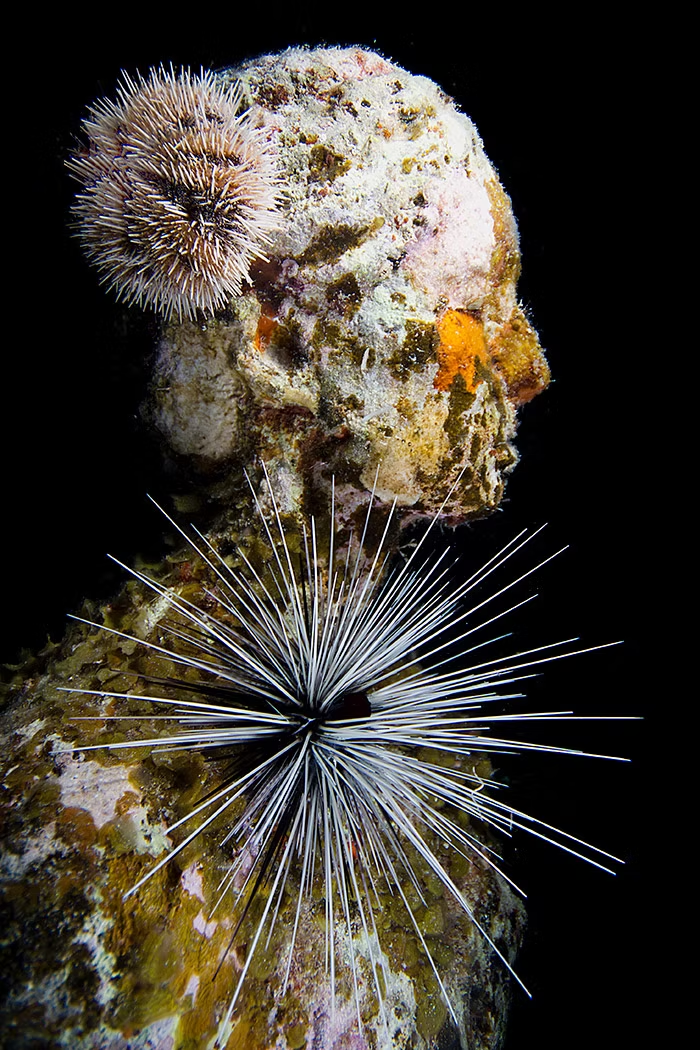
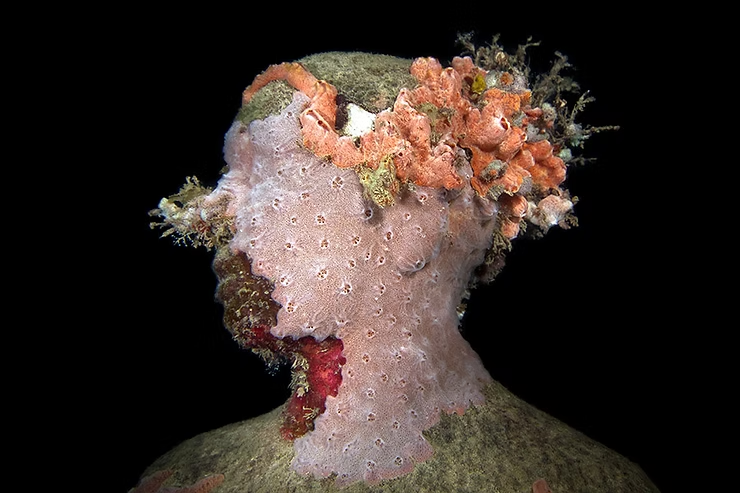
Most artists spend their careers fighting time. Jason deCaires Taylor has built his entire practice around giving in to it. His sculptures do not resist the ocean. They wait for it, softening and darkening over months and years as algae forms across their surfaces, as fish begin to shelter in their cavities, and as sponges and corals settle into every crevice until the original form is so thoroughly overwritten by living growth that the hand of the artist becomes almost impossible to find. This is not accidental. It is entirely the point. Where most monumental art insists on its own permanence, Taylor’s practice is built around a considered and deliberate surrender, an understanding that the most interesting thing a sculpture can do underwater is become a home for something that was not there when it was placed.
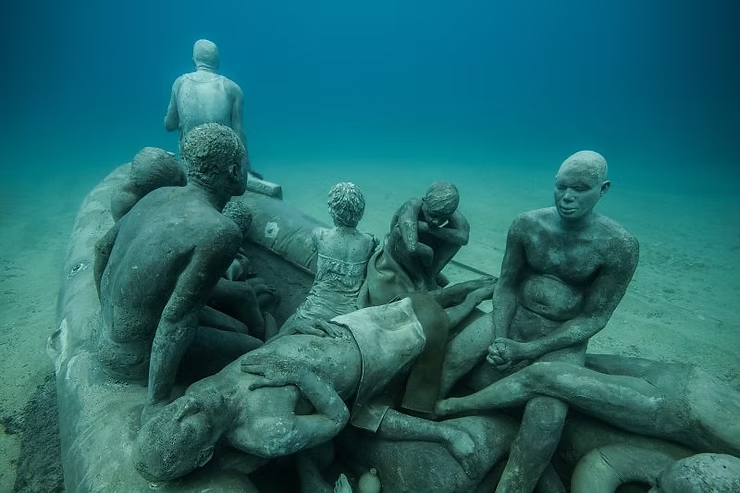
He describes his sculptures not as finished works but as beginnings, as catalysts for a process that the artist can initiate but not control. Once a piece is placed on the seabed, he says, the dialogue begins, and from that moment the ocean takes over as both curator and critic, reshaping intention so thoroughly and so continuously that what eventually remains is not the work he made but something the sea has made from it, something that carries his original idea somewhere inside it the way a reef carries the memory of the structure it grew from. This willingness to step away from ownership is performed boldly. It is the structural logic of everything he does, the premise from which every material choice, every formal decision, every collaboration with marine biologists and environmental engineers proceeds.
Because the material choices in Taylor’s work are not peripheral to its meaning but are the meaning itself. Each figure is cast using pH-neutral, marine-safe cement formulations developed in close consultation with scientists, where mineral content and surface roughness and porosity are calibrated not for visual effect but to encourage biological colonization, to make the sculpture as hospitable as possible to the marine life it is intended to support. The work is infrastructure as much as it is art, a fact Taylor is entirely comfortable with and which distinguishes his practice from almost anything else operating in the same visual territory. From the beginning, he says, he has been mindful of what he places in the marine environment, and the standard he holds himself to is clear: the materials have to give something back. Over time, as the sculptures transition from inert forms to living reef systems, they begin to draw visitor attention away from the fragile natural reefs nearby, redirecting human presence toward structures that can absorb it without being damaged by it. The long arc of that transformation, from cast form to living habitat, defines his practice more completely than any single installation.
Among his works, A World Adrift carries a particular emotional weight that sets it apart from the ecological logic of the broader project. The installation depicts children balanced on fragile, origami-like boats drifting across the sea, figures rendered with a stillness that holds childhood innocence and genuine precarity in the same moment, wonder and unease sitting side by side without either resolving into the other. Taylor describes the work as a meditation on the inheritance of conditions between generations and the fragile balance between ecosystems, climate, and the future that today’s children will face. The children in the work are observant and resilient, not depicted in crisis but not depicted in safety either, poised in a calm that the sea around them does not quite guarantee. It is a portrait of a generation living with consequences it did not create while still holding the capacity to imagine its way through them, and the power of the piece lies precisely in its refusal to offer any resolution to that tension. Hope and fragility share the same frame, and neither wins.
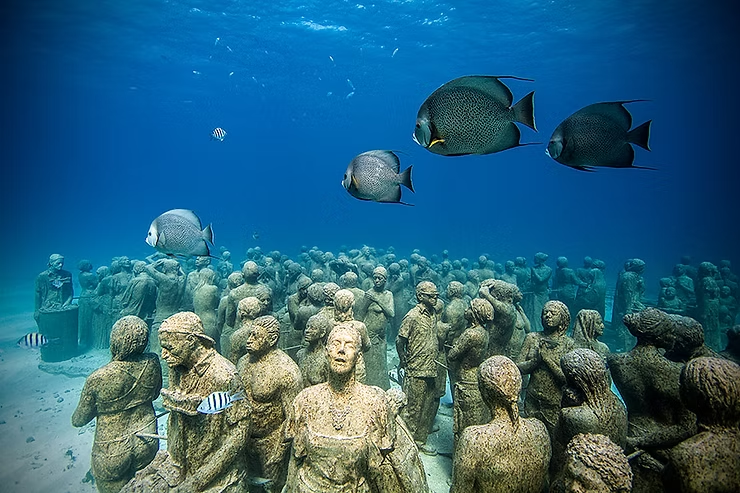
Over two decades Taylor has expanded the ideas behind individual works to a scale that few artists working in any medium have attempted. Early projects in Grenada proved that submerged sculpture can serve as both an artistic experience and an ecological intervention, benefiting both human visitors and the marine environment. Larger projects followed, among them the Museo Subacuático de Arte off the coast of Cancún, one of the largest underwater art installations ever created anywhere in the world, and Ocean Atlas in the Bahamas, a single monumental work of considerable scale and presence. These sites are often described as museums, but Taylor is careful with the term because it implies a relationship to objects that does not quite describe what these places are. They are not repositories of static things. They are evolving environments, living systems that change continuously and cannot be fully understood from a single visit because they are different from one season to the next and one decade to the next, shaped by currents and temperatures and the accumulated growth of thousands of organisms that were not consulted during the design process and are not following any plan.
His vision for these sites extends beyond what they are today. He hopes they will become marine sanctuaries in the fullest sense, places where art and science and conservation meet in a way that makes each more effective than it would be operating alone, where the presence of art draws human attention and generates the kind of emotional connection that scientific data alone rarely produces, and where that connection translates into the will to protect what is being looked at. Technology is increasingly part of how he imagines this future, with virtual dives and real-time ecological monitoring and scientific partnerships beginning to shape both how these environments are experienced and how they are studied, so that culture becomes not something separate from nature but something embedded within it, growing from the same substrate and subject to the same slow processes of change.
Public art at this scale and in these contexts inevitably invites controversy, and Taylor is candid about the scrutiny that some of his installations have attracted, including Alluvia in the United Kingdom, which generated intense debate around interpretation and the nature of public space. He does not experience this as failure. Public art exists in dialogue, he says, and the people who encounter it bring their own histories and beliefs and emotions to it, reading into it things the artist did not place there and sometimes resisting things the artist very much intended. Discomfort in that context is not a problem to be managed but a signal of genuine engagement, an indication that the work is asking questions rather than simply offering reassurance. The ocean itself operates in a similar register, powerful and unpredictable and frequently misunderstood by people who have not spent enough time inside it, and placing art within it is not an attempt to tame it but an acknowledgement of the limits of control, an acceptance that the work belongs to the environment it inhabits more than it belongs to the person who made it.
When the conversation turns to India, Taylor speaks thoughtfully and without easy projection, aware that a coastline carrying deep cultural and spiritual significance as well as extraordinary ecological richness requires a particular quality of listening before any artist attempts to add something to it. The ocean, he observes, has always been both provider and sacred presence in Indian coastal culture, and any work placed there would need to begin from that understanding rather than arriving with an external narrative already formed. He imagines a series of works rooted in ideas of renewal and coexistence, drawing from the communities and traditions of those coastlines rather than imposing a language they did not ask for, where the goal would not be spectacle but resonance, a living gallery where coral and culture might be allowed to grow alongside each other over the years that follow its creation.
What ultimately makes Taylor’s practice singular is its refusal to chase the kind of immortality that most monumental art is designed to guarantee. His sculptures are not made to remain as they were cast. They are made to change, to erode and be colonized, and eventually to dissolve so completely into the environments they inhabit that the boundary between artwork and habitat becomes impossible to locate. In a cultural moment that has tended to equate scale with dominance and permanence with significance, this proposition is genuinely different. Art can exist without conquest; he demonstrates this through the work itself rather than through any argument. It can support life rather than displace it, can be temporary without being insignificant; it can surrender authorship and find in that surrender something more interesting and more lasting than control would have produced. His sculptures are not asking to be preserved in pristine condition. They are asking to be used and altered and absorbed, to be finished by something larger and older and more patient than any human maker, and in that asking they quietly redefine what it means to leave something behind.
