
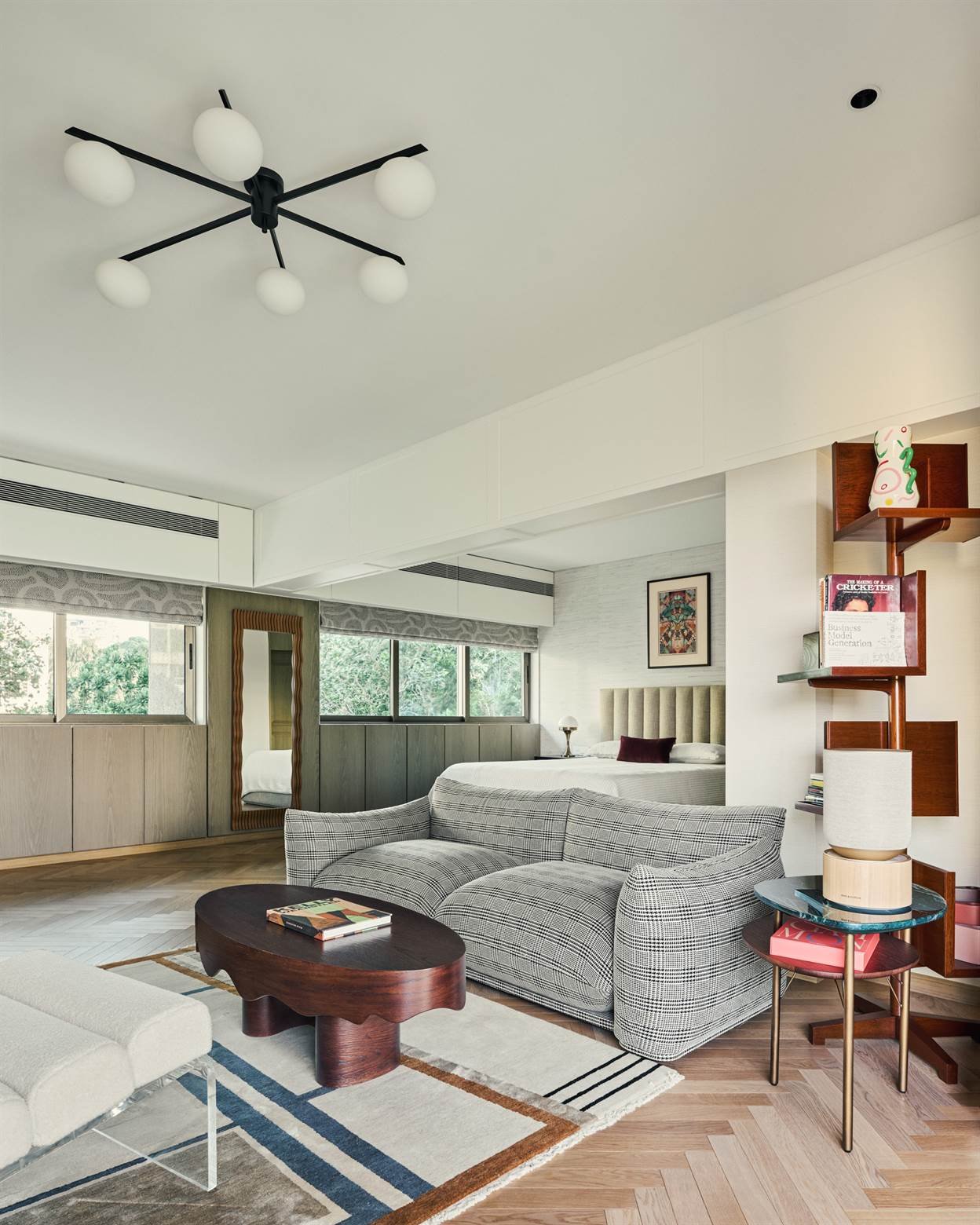
The clients were based in Dubai, and what they wanted in Mumbai was not another home in the conventional sense but somewhere to return to, a place that could hold them briefly and well, that could accommodate a personal art collection without competing with it, and that could offer, within the density of the city, something genuinely close to quiet. Shonali Mahajan and Rustom Cooper of Empire received this brief and approached it not as a decorative exercise but as what the studio calls a sensorial composition, building an environment where atmosphere, proportion, and material intelligence take precedence over anything that needs to announce itself.
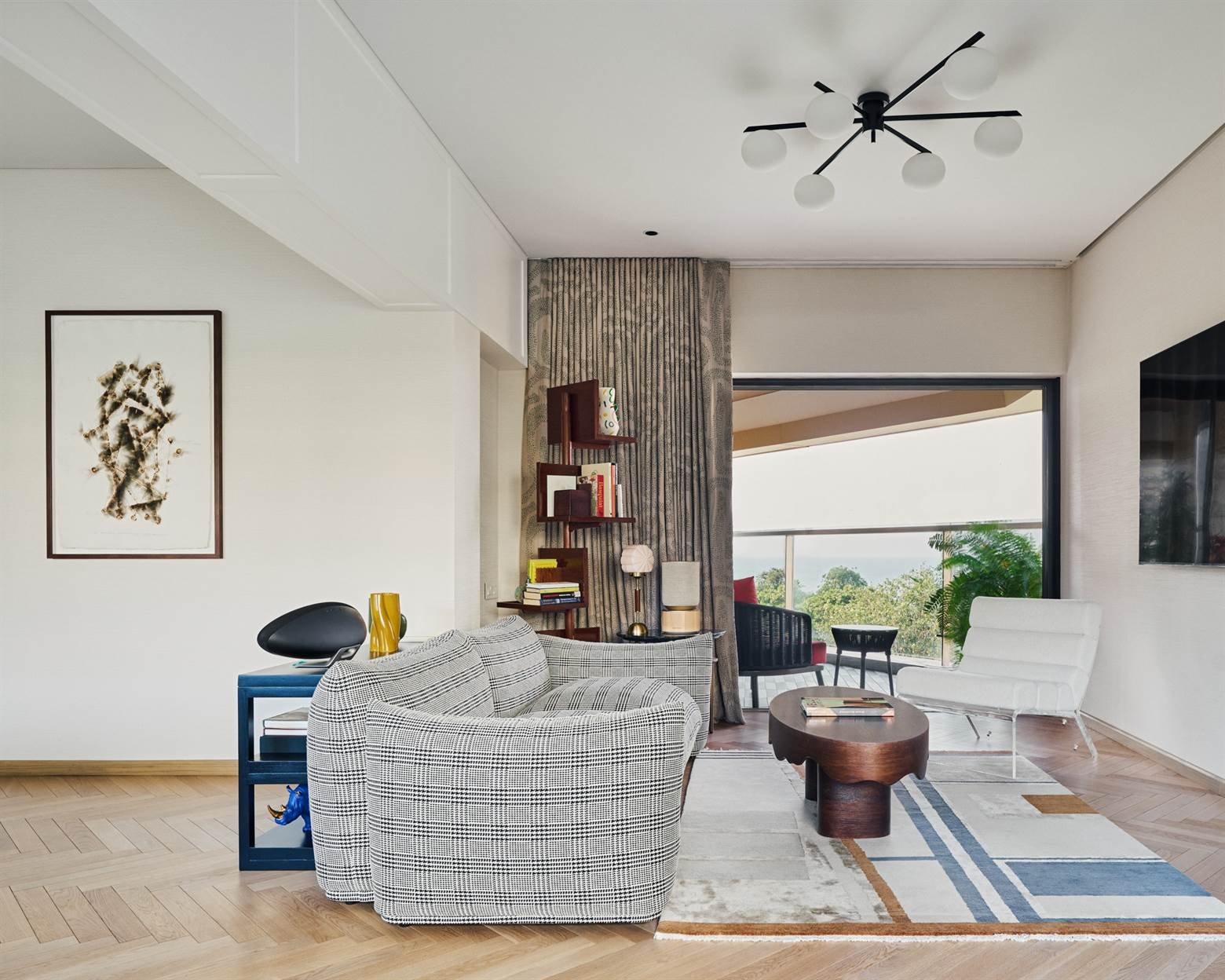
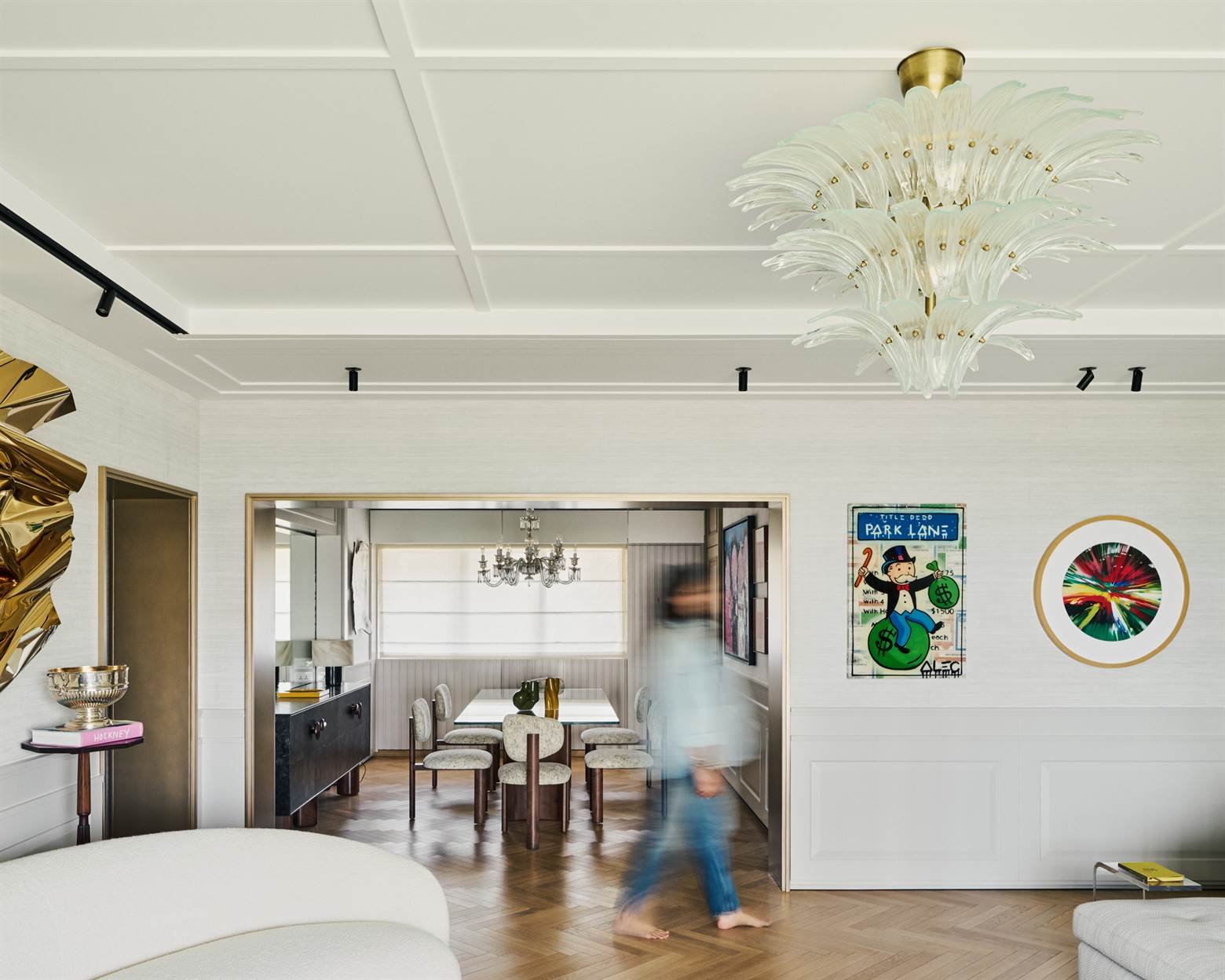
The spatial intent is legible from the moment of entry. An architrave frames the transition from the foyer into the living room, a deliberate pause before the apartment opens into a continuous living and dining zone. There are no partitions. The furniture placement alone defines the spaces, while the herringbone wooden flooring unifies the 2,000-square-foot apartment, adding warmth and acoustic softness that a harder floor lacks. Moving through the apartment, the paneled walls in soft cream and the consistent grain of the wood underfoot create a visual continuity that makes the space feel larger and calmer than its footprint suggests.
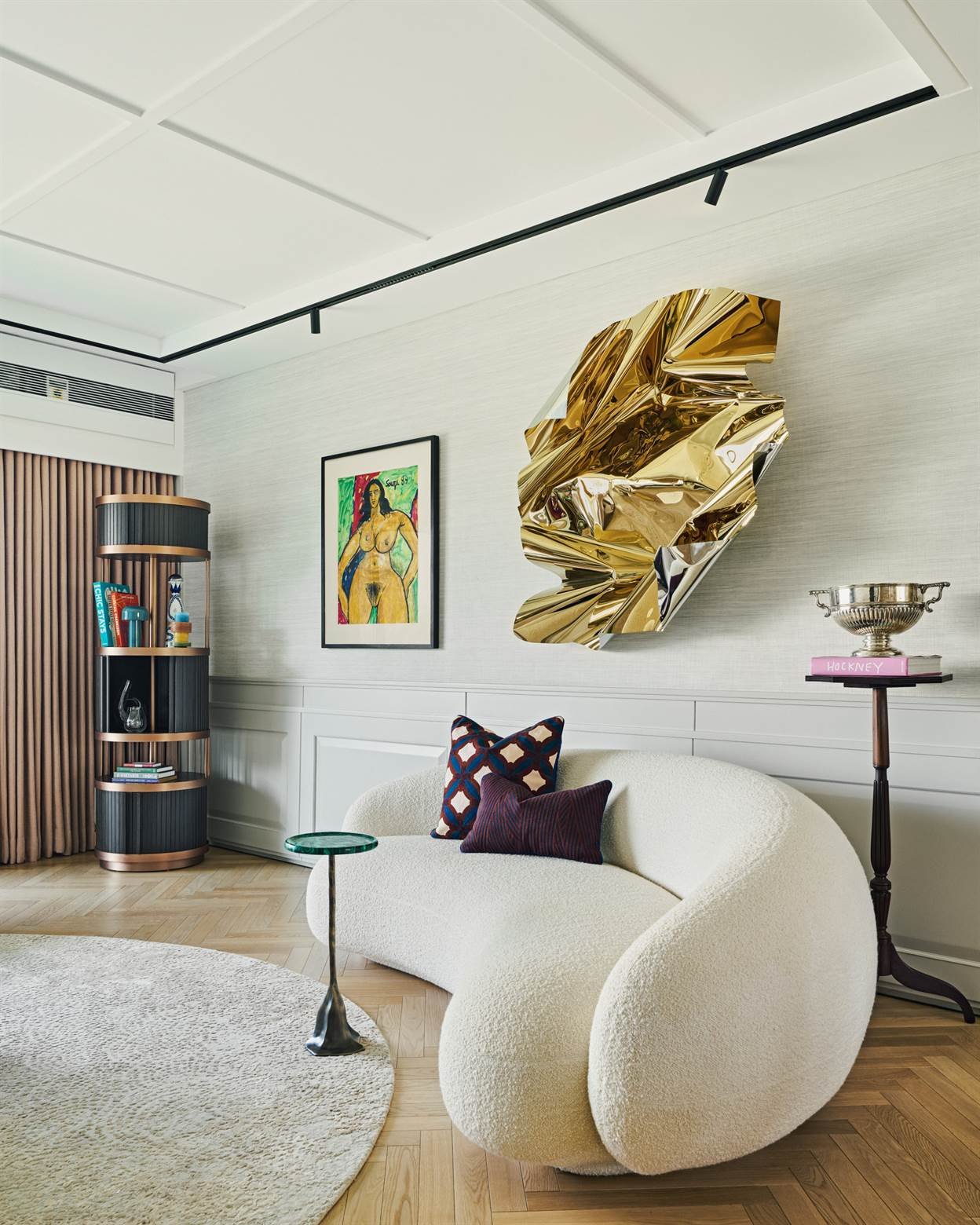
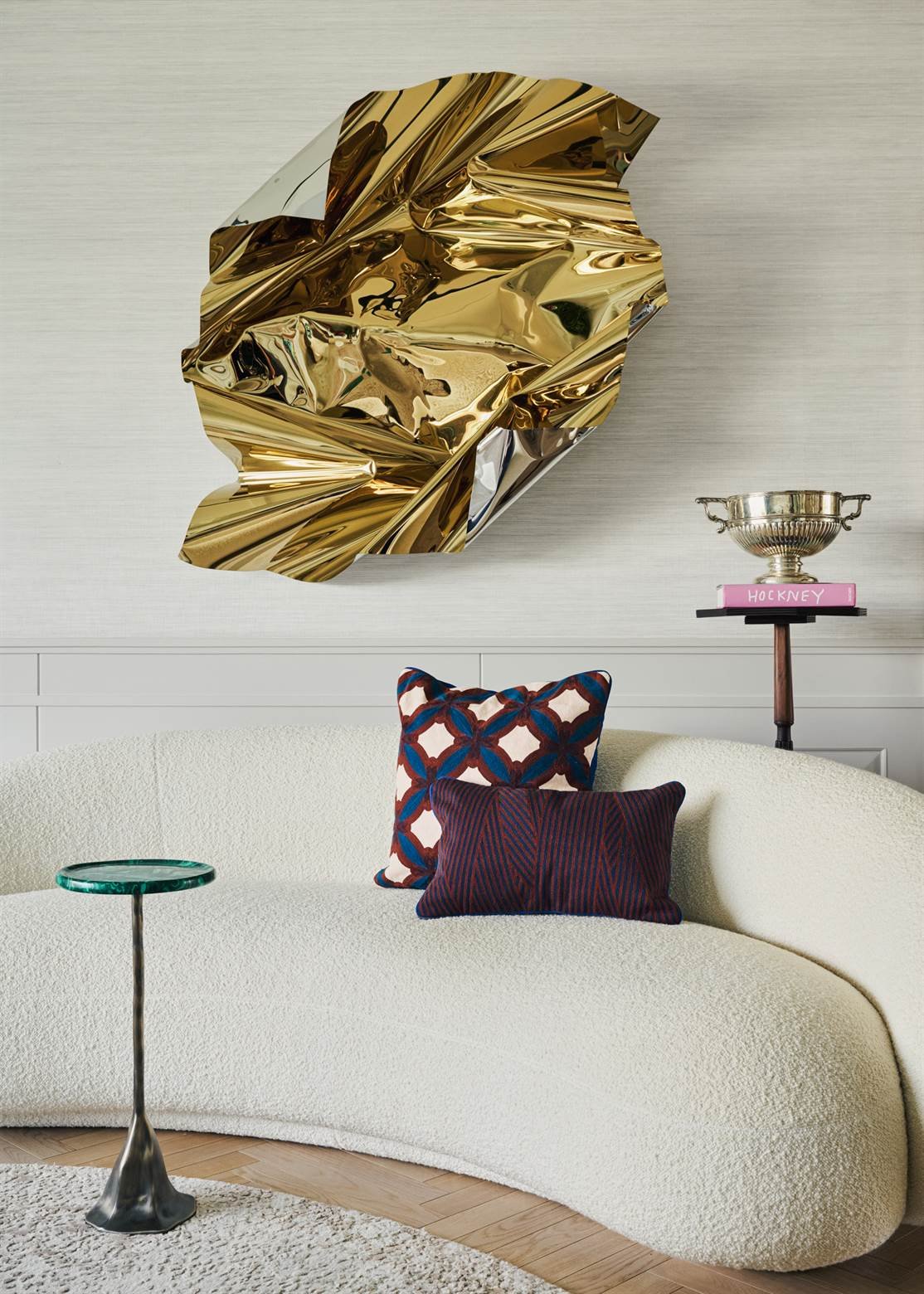
The living area is organized around the Aldo Chaparro sculpture, a large crumpled gold metallic piece that dominates the wall above the seating without overwhelming it, its surface catching light differently depending on where you are standing and what time of day it is. Below it sits a curved, kidney-shaped ivory bouclé sofa, the softness of the form and the texture of the fabric doing precisely what the Chaparro piece does not, absorbing rather than reflecting, settling into the room rather than commanding it.
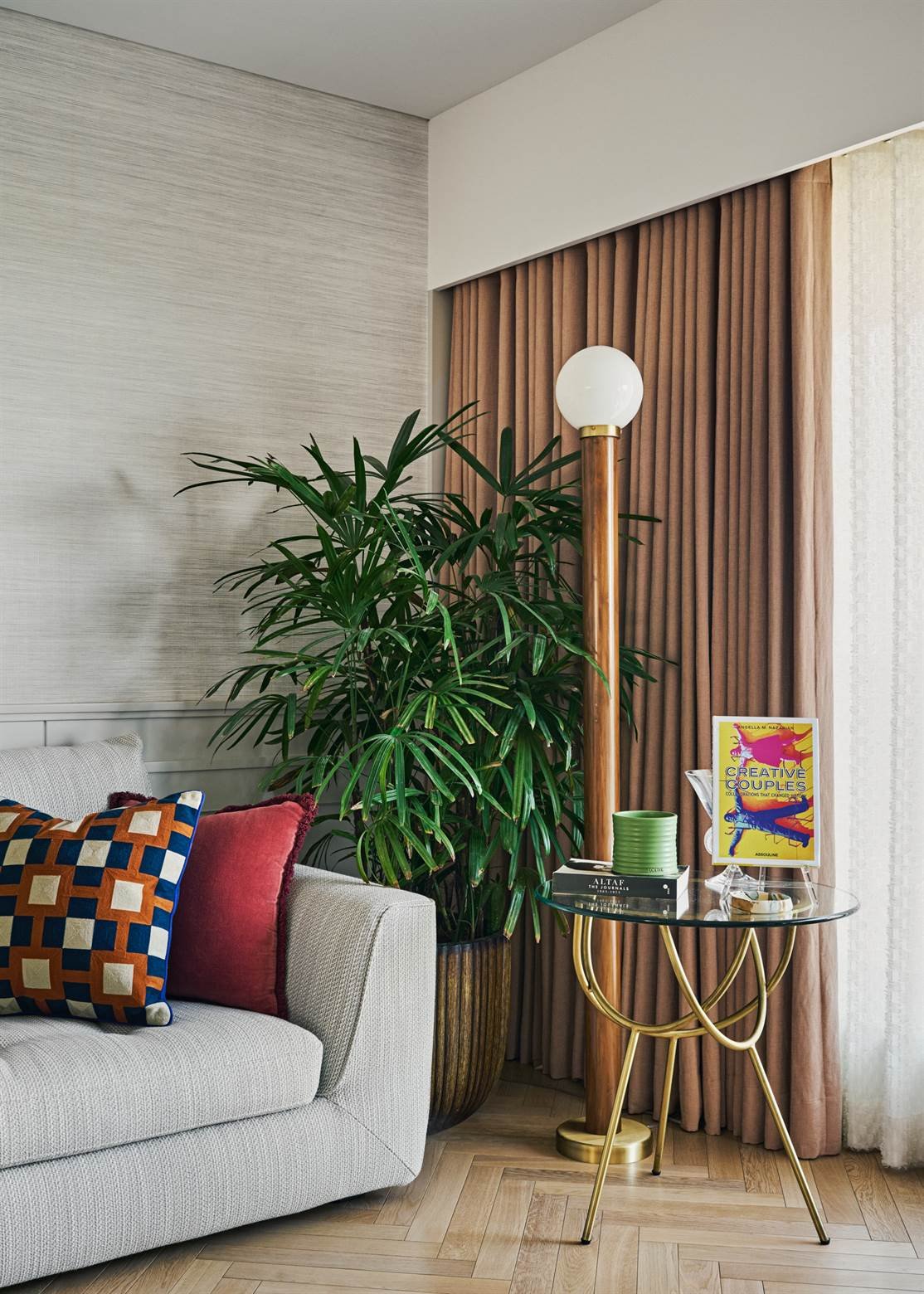
A circular white rug grounds the seating arrangement on the herringbone floor, and a cylindrical bookshelf in dark tones with brass accents introduces a vertical element that draws the eye upward without competing with the art. A framed figurative work hangs alongside the sculpture, part of the same collection and held within the same register of quiet visual authority. The palette throughout is soft greys and warm whites, a ground restrained enough that every piece within it reads clearly without needing to fight for attention.
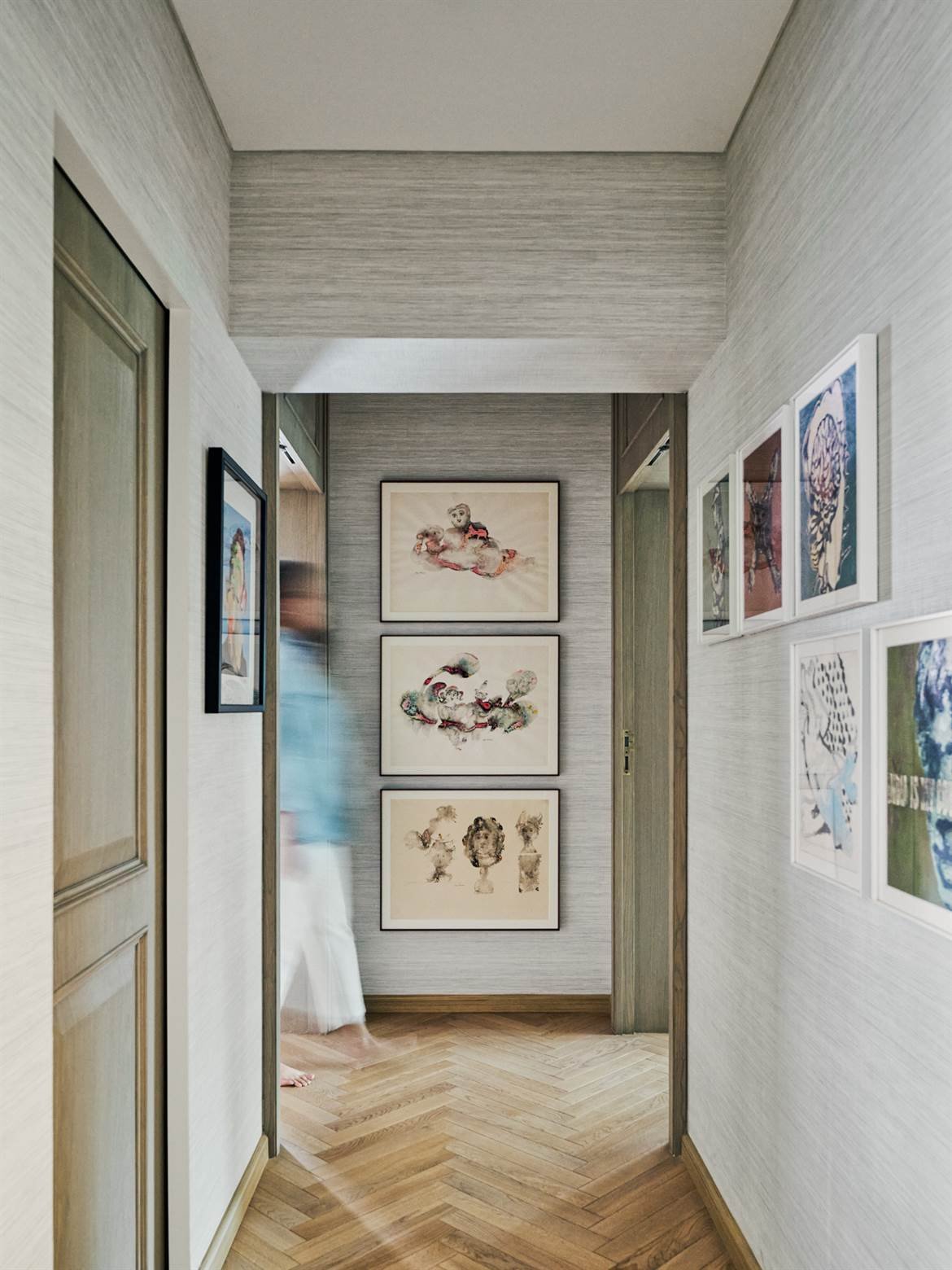
A framed line-drawing in the passage between the living area and the dining space offers a moment of pause, its spare marks on paper a counterpoint to the sculptural weight of the Chaparro beyond. The view through the archway from this passage into the living room, with the gold sculpture and the round brass medallions on the wall visible in the middle distance, gives the apartment the quality of a home that rewards moving through it slowly, of spaces that reveal themselves progressively rather than presenting everything at once.
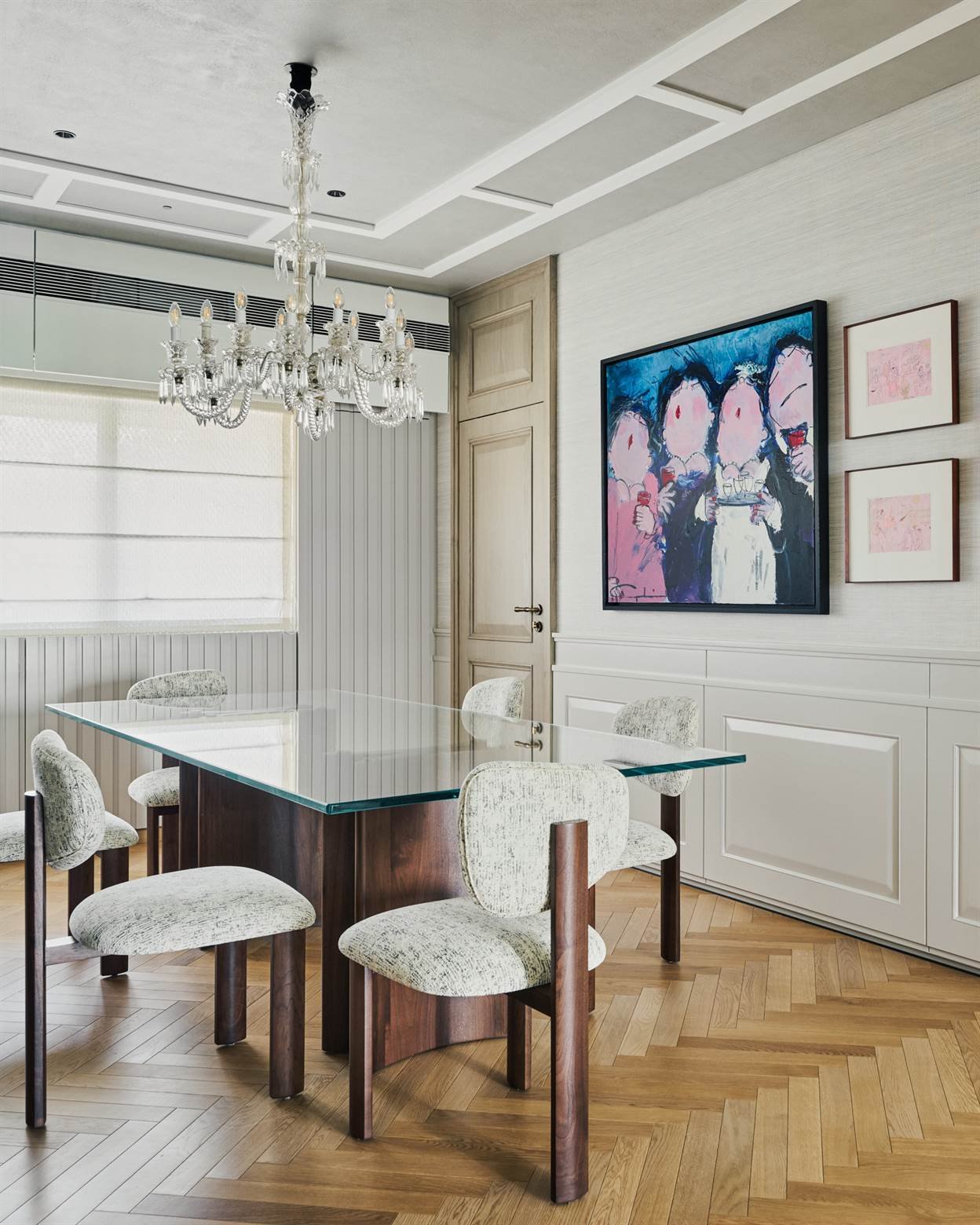
The dining area continues the established palette. A glass-topped table on a dark marble base sits beneath a Baccarat crystal chandelier, the glass of the table and the crystal of the light in conversation without either one being made to compete with the other. Boucle dining chairs in cream and white echo the texture of the living room seating. On the wall, a large blue painting by Gerdine Duijsen anchors the space, its expressive energy contained by the restraint of everything around it, and smaller pink Souza sketches hang beside it, a shift in scale and register that keeps the wall from reading as a single composition and gives the dining room the feeling of a space that has been lived with rather than installed.
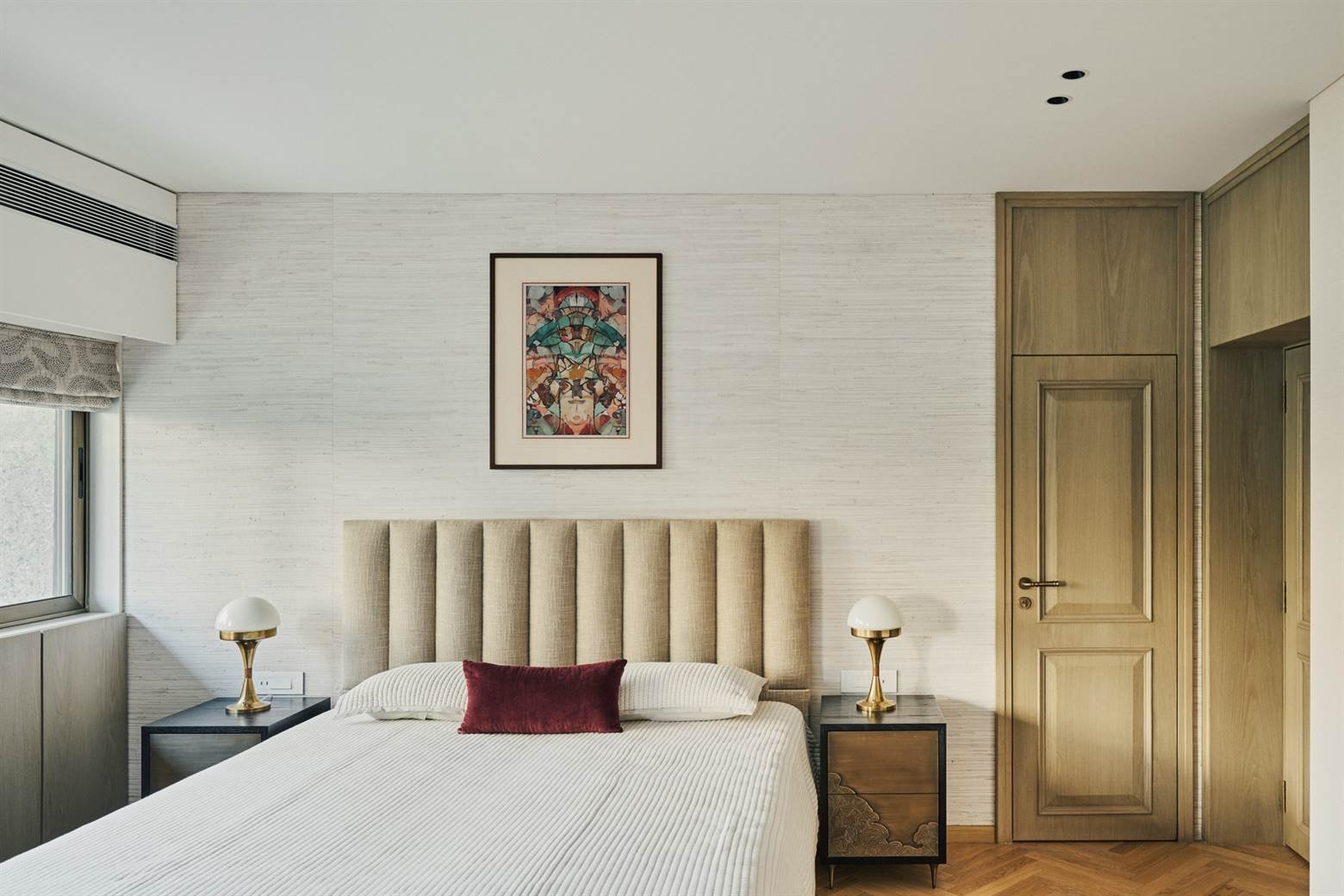
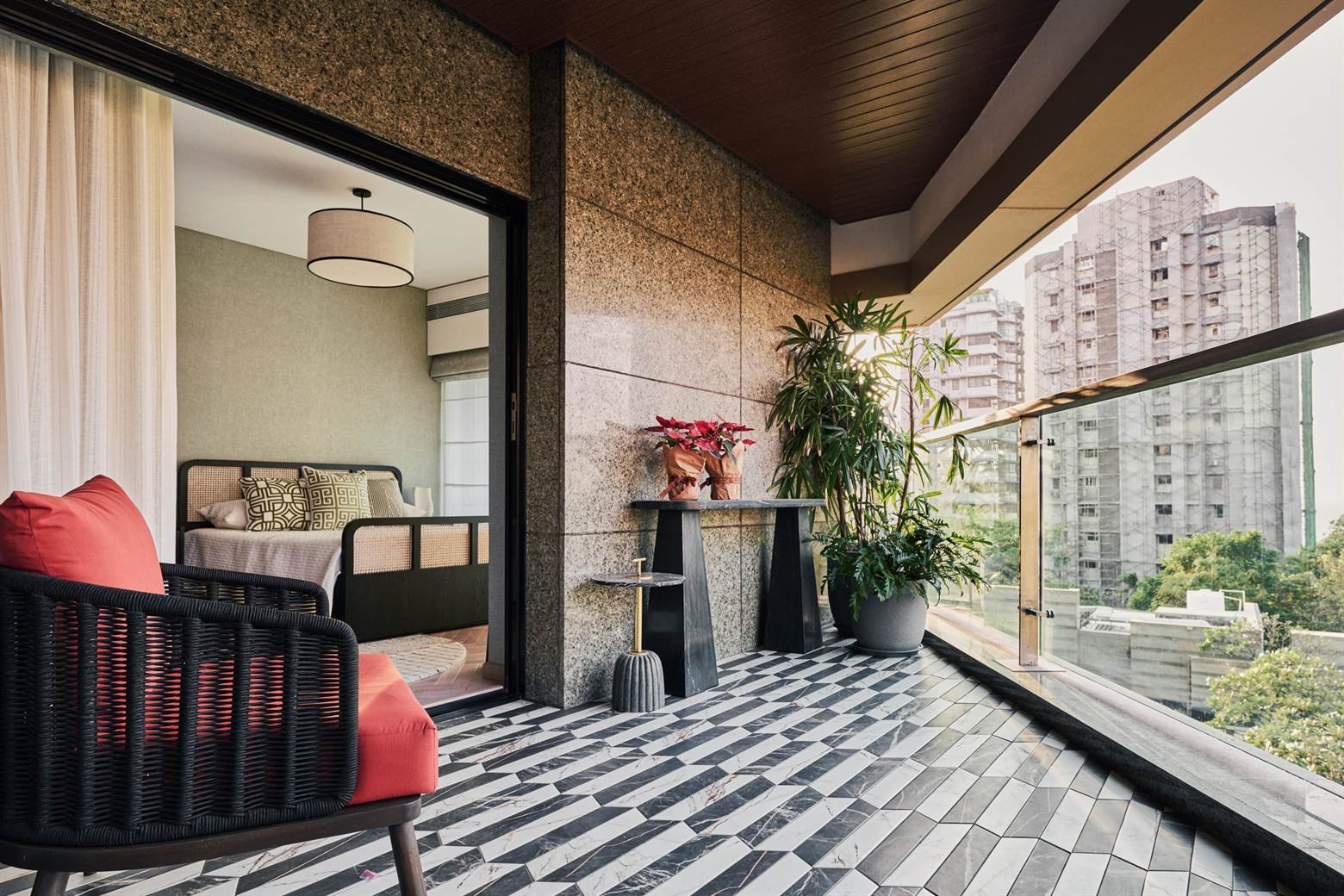
The private areas are approached with the same discipline. The primary bedroom integrates the television zone, walk-in wardrobe, and dressing area into a continuous sequence that prioritises ease of movement, with French fenestrations opening onto the shared balcony, its geometric black and white tiled floor, a dark woven chair with coral cushions, and a glass balustrade framing the Mumbai skyline and the green canopy below. The stone-clad wall of the balcony and the timber ceiling visible through the opening give the outdoor space its own material character, distinct from the interior palette but continuous with it in spirit.
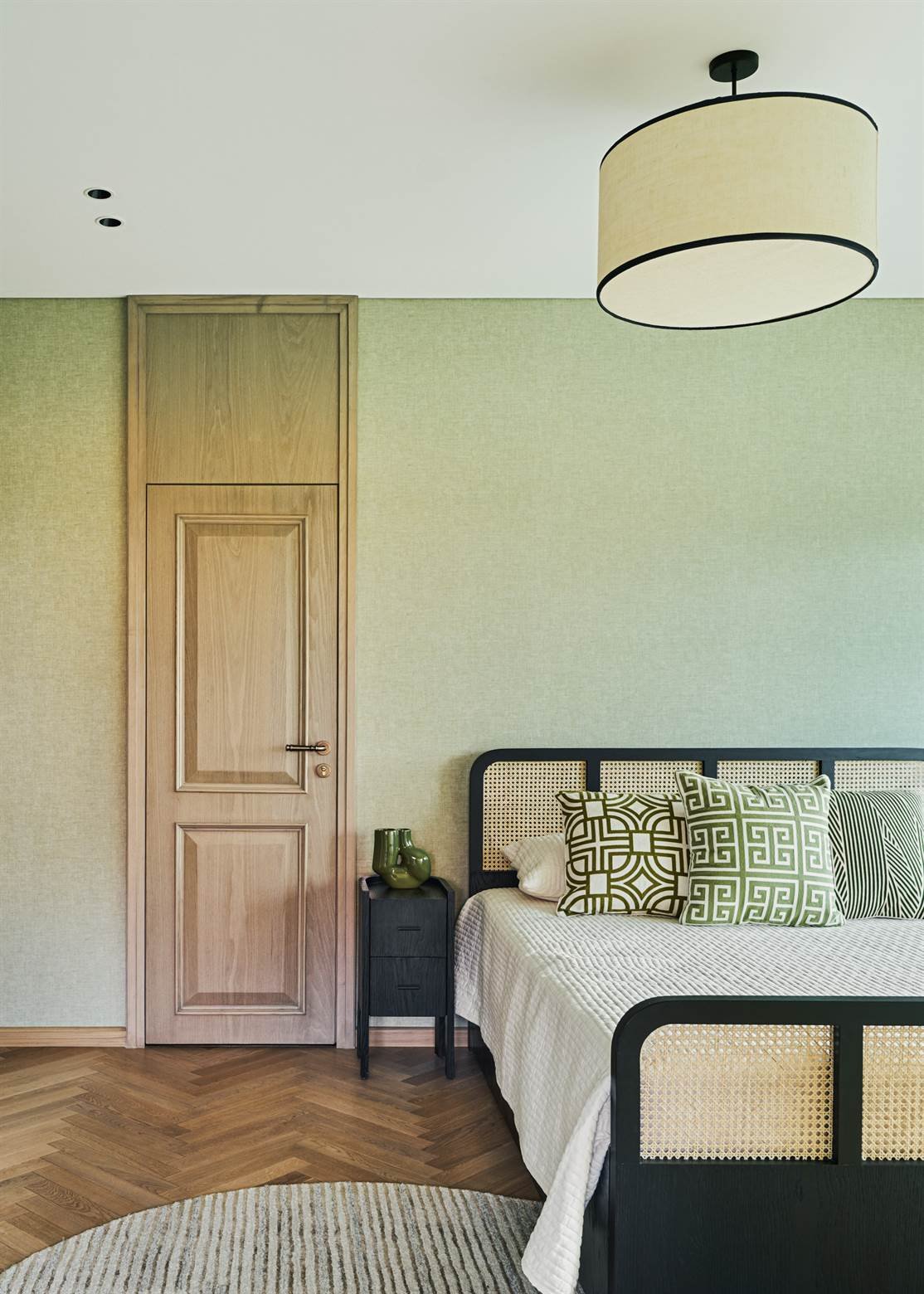
The guest bedroom features a custom black-framed rattan bed and muted light green walls that create a considered atmosphere, enhanced by soft lighting from Terra Trading.
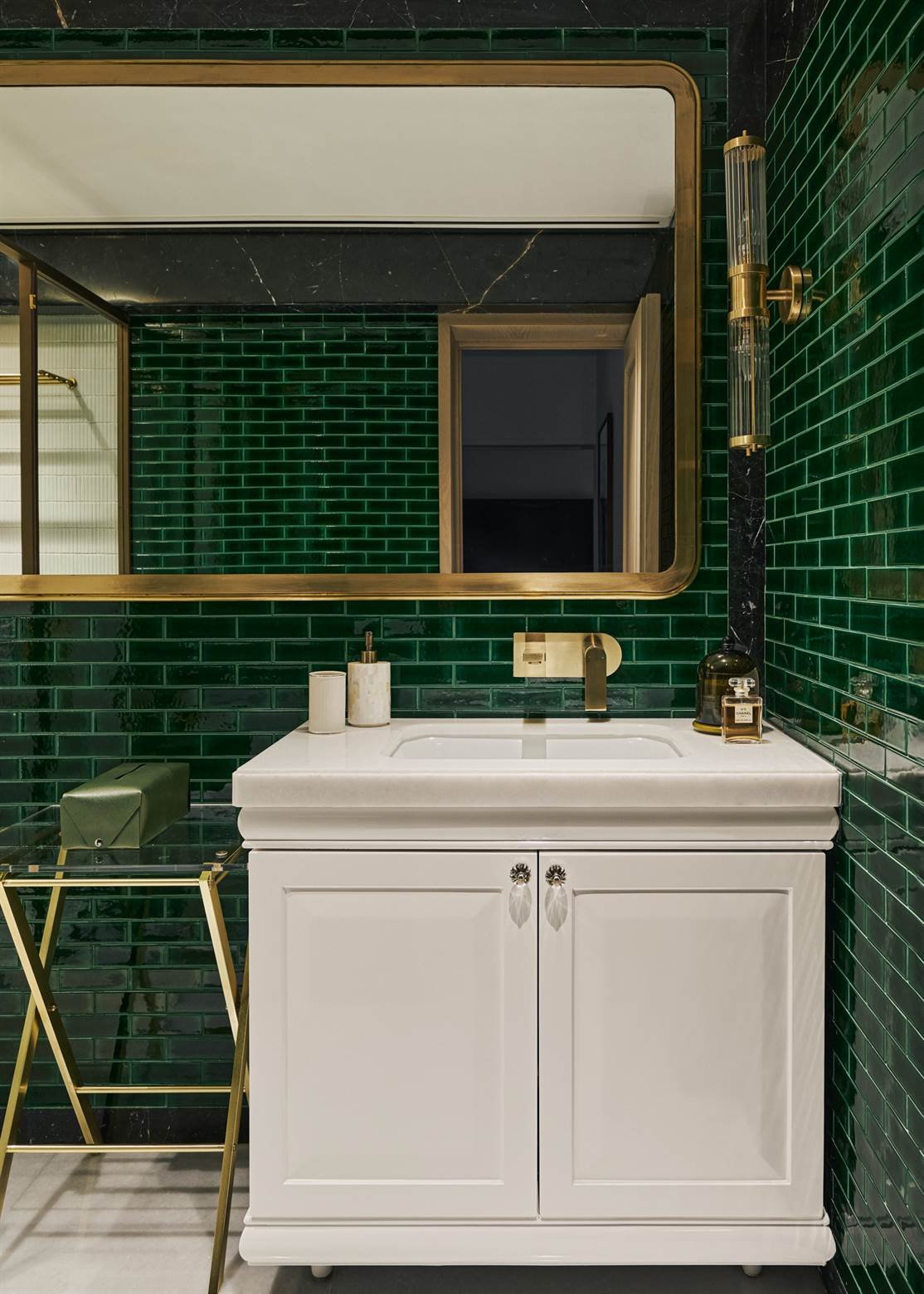
And then the master bathroom, which is the apartment’s single most decisive gesture, is described. Deep emerald green subway tiles cover the master bathroom walls from floor to ceiling, strikingly contrasting with the apartment’s soft greys and creams. A white pedestal vanity with classic cabinet doors and silver hardware sits against this field of green, and a brass-framed mirror and brass fittings throughout introduce a warmth that stops the room from reading as stark. It is a room that operates on entirely different terms from the rest of the apartment, more saturated, more specific, and more prepared to make a statement, and it works because the restraint everywhere else has earned it that permission.
Lighting across the home is designed as a responsive system, with soft indirect illumination tracing the walls and interior planes and smart automation shifting the atmosphere from daylight to evening without interruption. The wooden flooring and textured wallpapers throughout absorb sound and keep the rooms feeling composed rather than reflective, materials chosen for how they perform as much as for how they look.
For a family moving between cities, what Empire has built here is an apartment that does not present itself but receives the people within it, holds their art with enough clarity that each piece can be seen properly, and offers, in return, the particular quality that a secondary home should have above all else: the feeling, on arriving, that you have been expected.
Fact file:
Location: Mumbai, Maharashtra
Built-up Area: 2,000 sqft
Project Completion Year: 2023
Design firm: Empire – The Living Company
Typology: Residential
Photography Credits: Suleiman Merchant
