
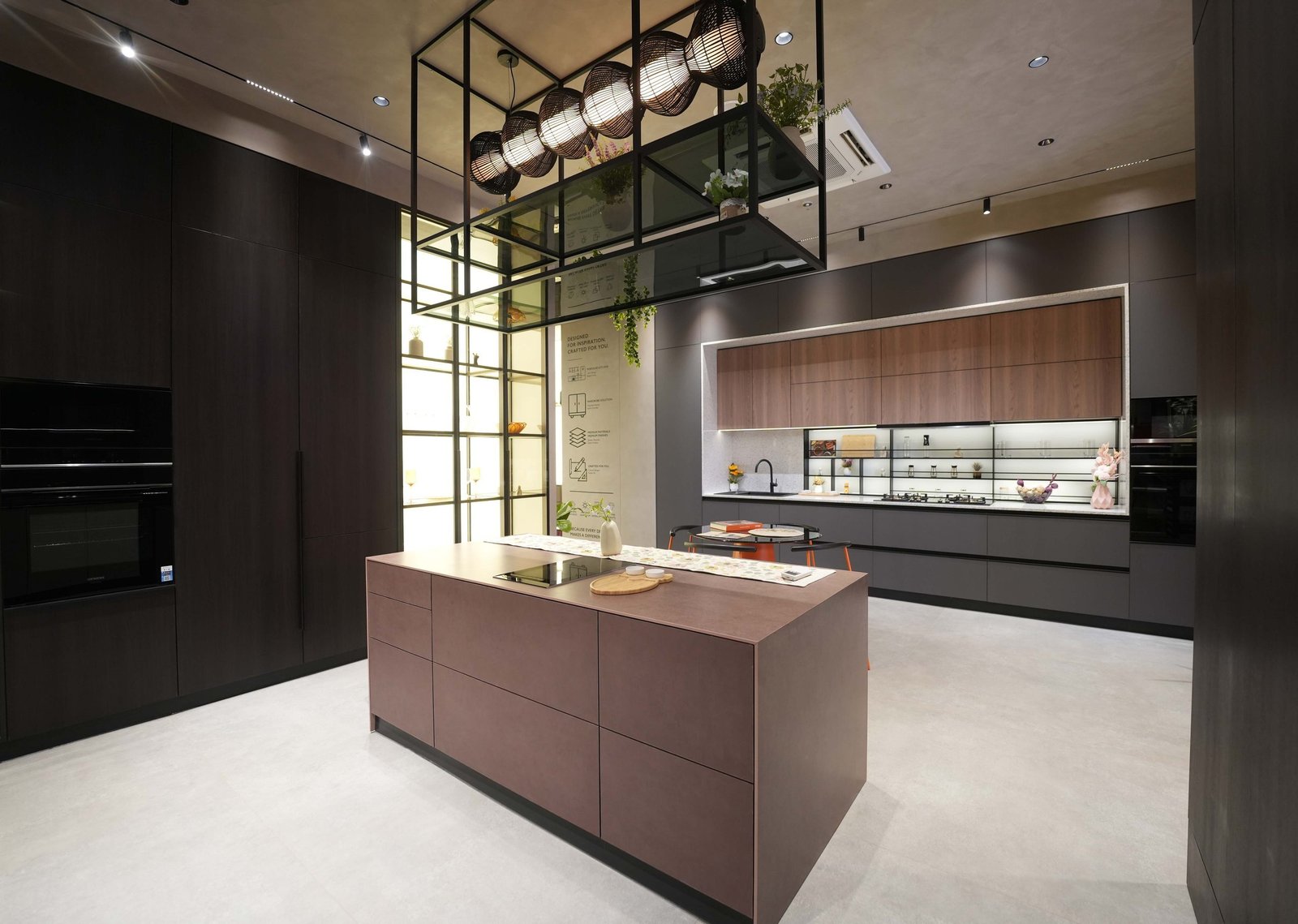
Ahmedabad’s expanding design and residential market has given furniture hardware another physical point of access. Blum India has opened a new experience center on the city’s Sardar Patel Ring Road, creating a space where architects, interior designers, furniture makers and homeowners can test the mechanisms behind contemporary kitchens and storage systems rather than encountering them only as catalogue specifications.
Located on the Bhadaj-Ognaj stretch of the SP Ring Road, the Index Blum Experience Centre brings Blum’s hardware into full-scale working applications. The distinction is important. Hinges, drawer systems and lift mechanisms are rarely the most visible elements of an interior, yet their performance determines how cabinets open, how storage is accessed and how frequently a piece of furniture can be used without friction or compromise.
The new centre presents systems including REVEGO, LEGRABOX, AVENTOS and SERVO-DRIVE in operational settings. REVEGO addresses concealed pocket spaces, allowing an entire functional area to disappear behind furniture fronts when not required. LEGRABOX focuses on drawer systems, while AVENTOS is designed for upward-opening cabinet fronts. SERVO-DRIVE adds electrical opening assistance, activated through a light touch.
Seen together in a working environment, these are less about individual fittings and more about the mechanics of everyday furniture. For a designer planning a kitchen, for example, the relevant question is not simply what a drawer looks like, but how it moves, how much access it provides and how that movement works within the dimensions of the cabinet.
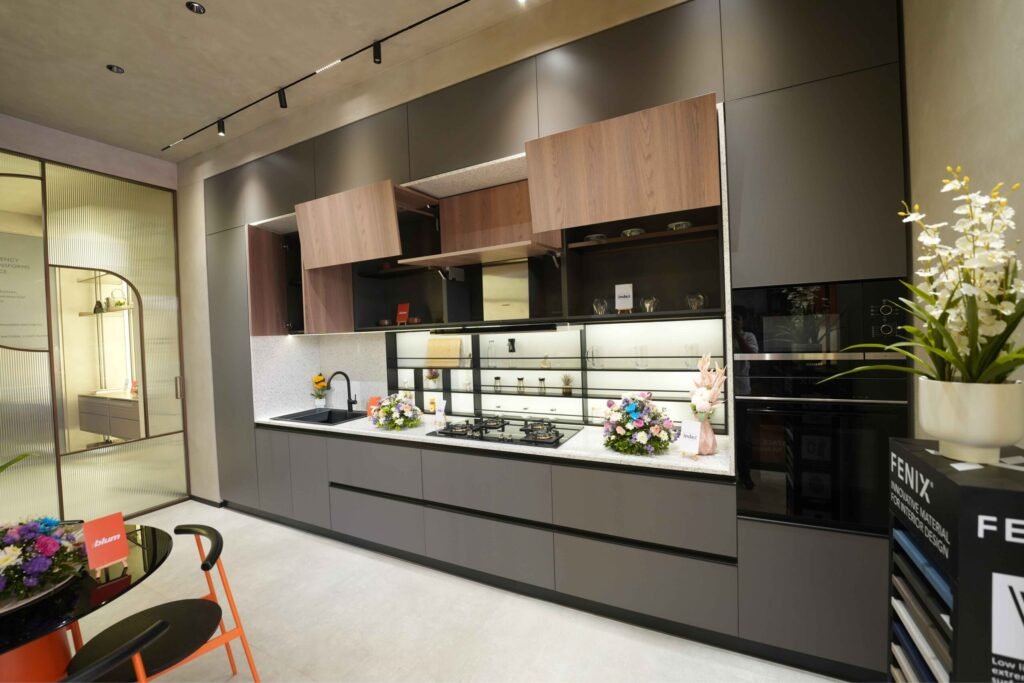
That hands-on approach is the reason experience centres have become useful extensions of furniture and kitchen brands. They allow professionals to examine the relationship between hardware and design before a product reaches a project site.
For Blum, the Ahmedabad opening is part of a broader expansion of its interactive network in India. Rather than functioning purely as a retail showroom, the facility has been set up for product demonstrations and professional visits, with B2B tours available for architects, designers and furniture makers.
The format also reflects a wider shift in how kitchen and furniture hardware is being specified. As residential interiors become more integrated, hardware increasingly has a role in determining the usability of a space. Storage capacity, opening mechanisms, movement and access are design considerations alongside finishes, materials and proportions.
Blum’s presence in Ahmedabad also places Austrian furniture engineering closer to local manufacturers and design practices. Founded by Julius Blum in Höchst, Austria, in 1952, the company produces lift, hinge, drawer and pocket systems as well as motion technologies for furniture. It operates production facilities in Austria, Poland, the United States and China and serves customers across more than 120 markets.
The Ahmedabad centre is ultimately a relatively simple proposition: bring the mechanism out from behind the cabinet door and allow the user to experience it. For a designer, that can make the difference between specifying hardware from a technical sheet and understanding how it actually behaves when integrated into a piece of furniture.
Website: www.blum.com/in/en
