
A major regeneration of Crystal Palace Park in South London has been completed, restoring the site’s celebrated Victorian dinosaur sculptures nearly a century after the glass building that gave the park its name burned down. The project, led by HTA Design with Maylim as contractor, was delivered jointly by Bromley Council and the Crystal Palace Park Trust.
Crystal Palace itself was built for the Great Exhibition of 1851, commissioned by the Royal Society of Arts to showcase British industrial and design ambition. The structure, designed by Joseph Paxton, won out over 245 competing entries by solving an unusual brief: it had to be the largest enclosed building ever attempted while remaining fully dismountable, leave no trace on its site in Hyde Park, extend without losing symmetry, and cover an enormous footprint without disturbing the park’s elm trees. The building later relocated to South London, where it stood until a fire destroyed it in 1936.
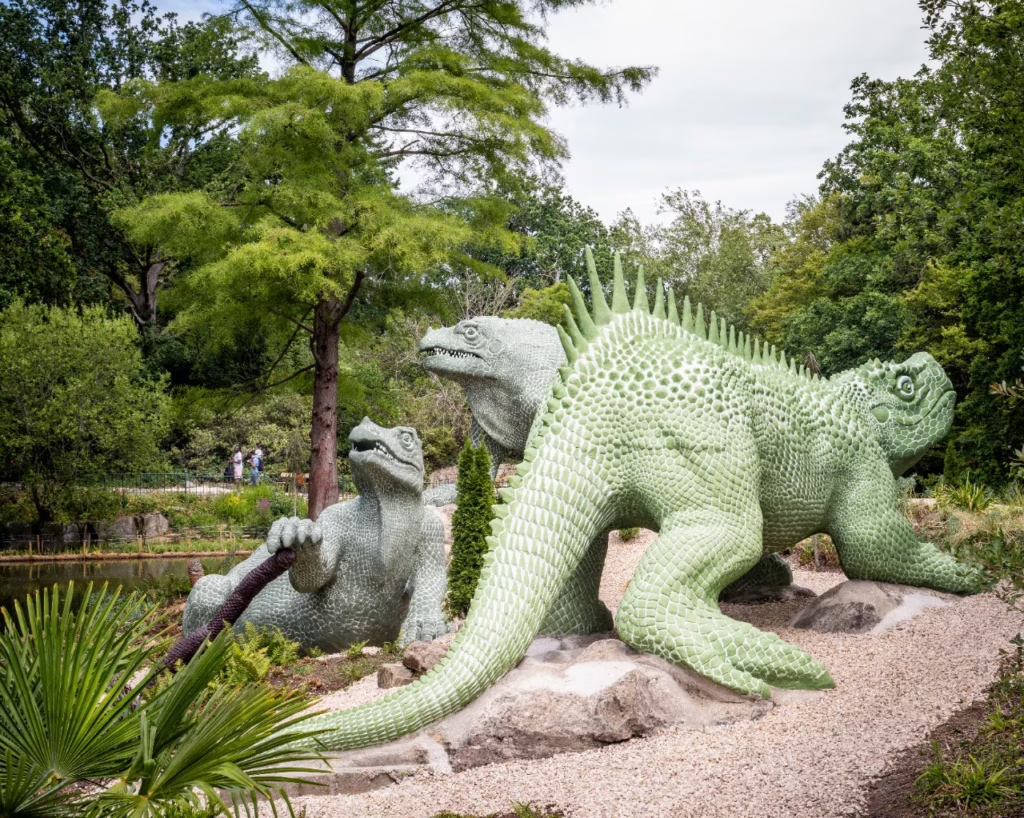
What survived, and what this restoration centers on, is the Geological Court, better known as the Dinosaur Court. Conceived by sculptor Benjamin Waterhouse Hawkins under the scientific direction of paleontologist Sir Richard Owen, the display was built to make geology and palaeontology understandable to a mass Victorian audience, animating the history of life on Earth through full-scale reconstructions rather than diagrams or fossils alone. The sculptures were built between 1852 and 1854 using a combination of brick, iron, clay, and cement, an engineering feat in its own right at the time. They represent fifteen genera of extinct animals in total, though only three of them, Iguanodon, Hylaeosaurus, and Megalosaurus, are true dinosaurs; the rest are marine reptiles and other prehistoric creatures modeled with the same period-accurate curiosity. Unveiled in 1854, they were built using the best scientific understanding available at the time, since substantially revised, and their popularity on debut is credited with sparking the world’s first wave of dinosaur mania. The sculptures were first listed as Grade II in 1973, restored extensively in 2002, and upgraded to Grade I status in 2007, recognizing their significance to both scientific and cultural history despite being, by current knowledge, largely inaccurate.
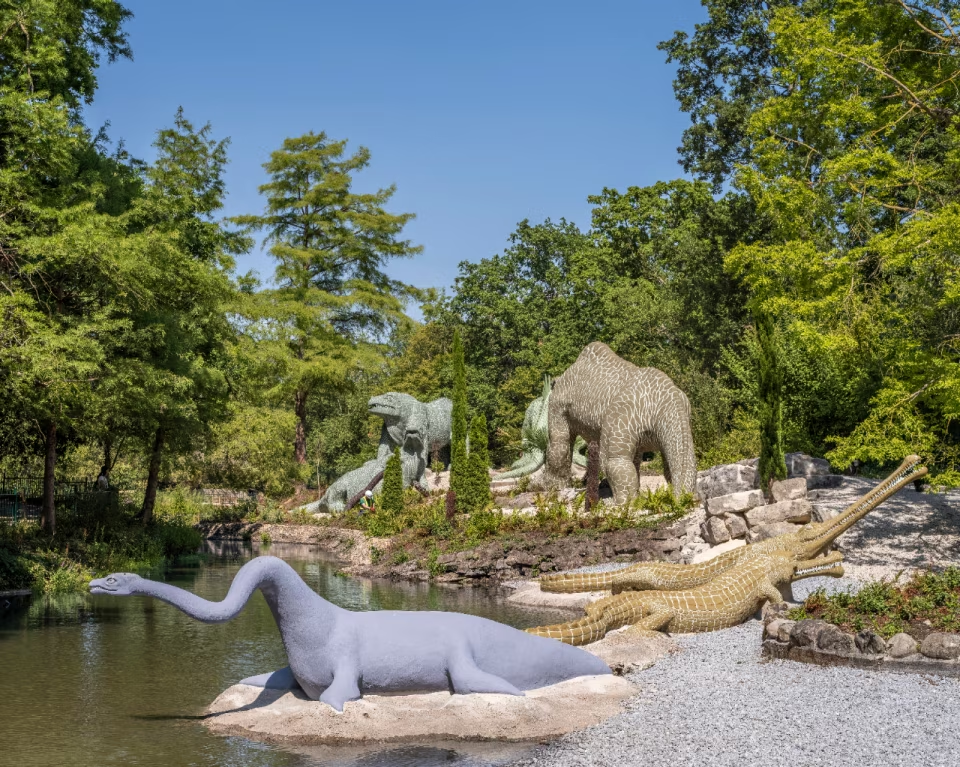
This latest restoration relied on paint analysis, material testing, and 3D printing to repair the sculptures while preserving as much of their original material as possible, work carried out by heritage specialists SSH Conservation and guided by Historic England. As a result, the sculptures have now been removed from Historic England’s Heritage at Risk Register. The surrounding Geological Court landscape was restored alongside them, with the lake desilted and a new circulation system installed to improve the site’s waterfalls. The project was carried out in collaboration with Donald Insall Associates, Alan Baxter Associates, Sally Strachey Heritage Conservators, and the Friends of the Crystal Palace Dinosaurs.
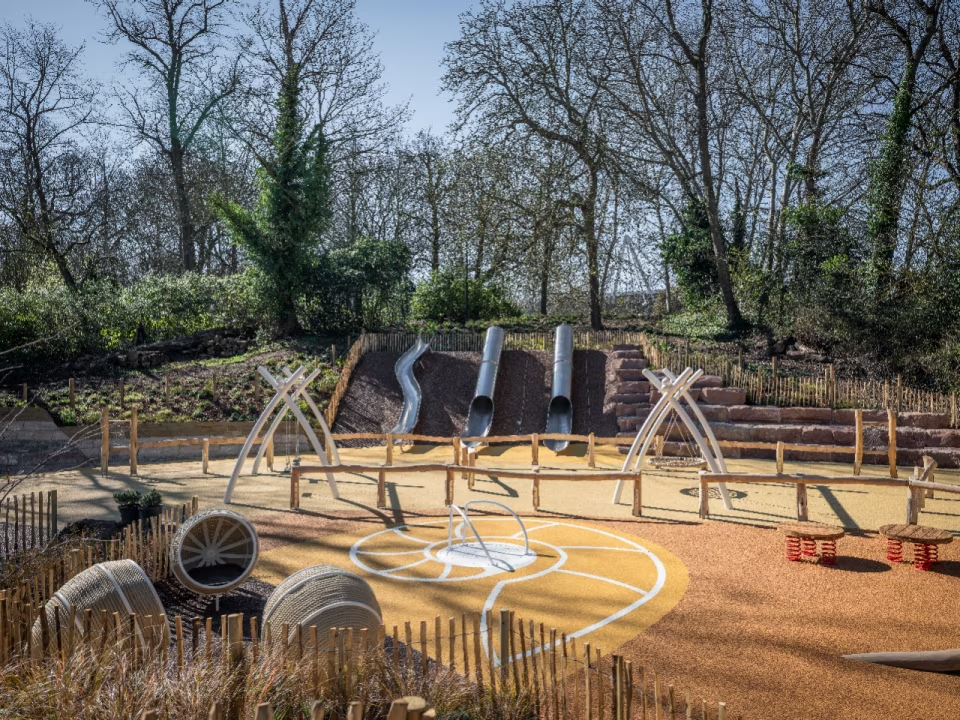
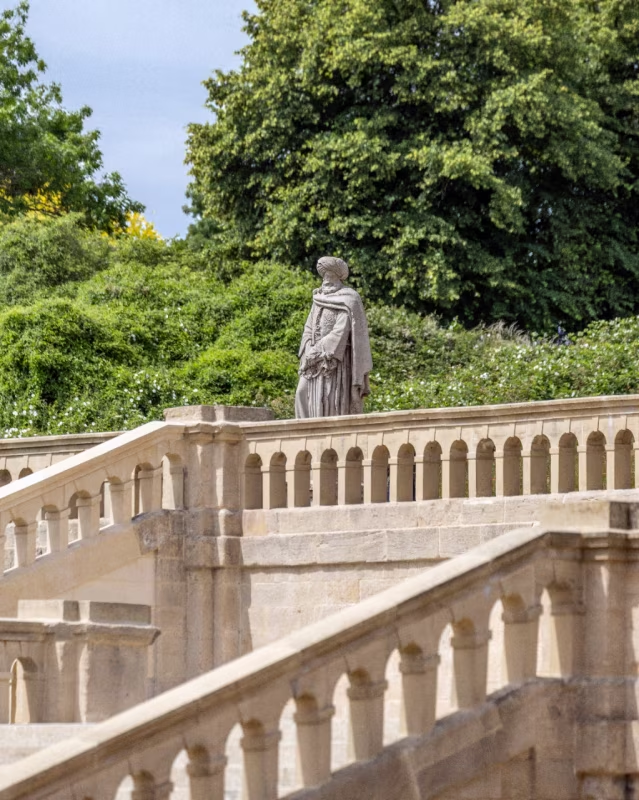
This marks the completion of the first phase of a wider, multi-million-pound regeneration of the park, the largest since the original Crystal Palace burned down. Also completed in this phase: restoration of the Grade II-listed Italian Terraces, a new dinosaur-themed playground, a new visitor center with a permanent exhibition on the park’s 170-year history, restoration of the Grand Centre Walk to its original 96-foot width, and the reinstatement of a bust of Joseph Paxton, relocated to sit at the center of the Italian Terraces. The program was supported by a £5 million grant from the National Lottery Heritage Fund, alongside funding from the sale of neighboring land for housing and contributions from several charitable foundations.
Fact File
Photography: Kilian O’Sullivan; Maylim Ltd
Typology: Public and Cultural, Heritage Restoration (Public and Cultural)
Project: Crystal Palace Park Regeneration (Phase One)
Location: Crystal Palace Park, London, UK
Client: Bromley Council and Crystal Palace Park Trust
Lead Architect: HTA Design
Contractor: Maylim
Heritage Conservation: SSH Conservation (Sally Strachey Heritage Conservators)
Collaborators: Donald Insall Associates, Alan Baxter Associates, Friends of the Crystal Palace Dinosaurs
Heritage Guidance: Historic England
Original Sculptor (1852–54 Dinosaur/Geological Court): Benjamin Waterhouse Hawkins, under the scientific direction of Sir Richard Owen
Original Architect (Crystal Palace, 1851, destroyed by fire 1936): Joseph Paxton
Listing History: Grade II listed 1973, restored 2002, upgraded to Grade I in 2007
Funding: £5 million grant from the National Lottery Heritage Fund, plus proceeds from neighboring land sale and charitable foundation contributions
Status: Phase one completed, 2026
