
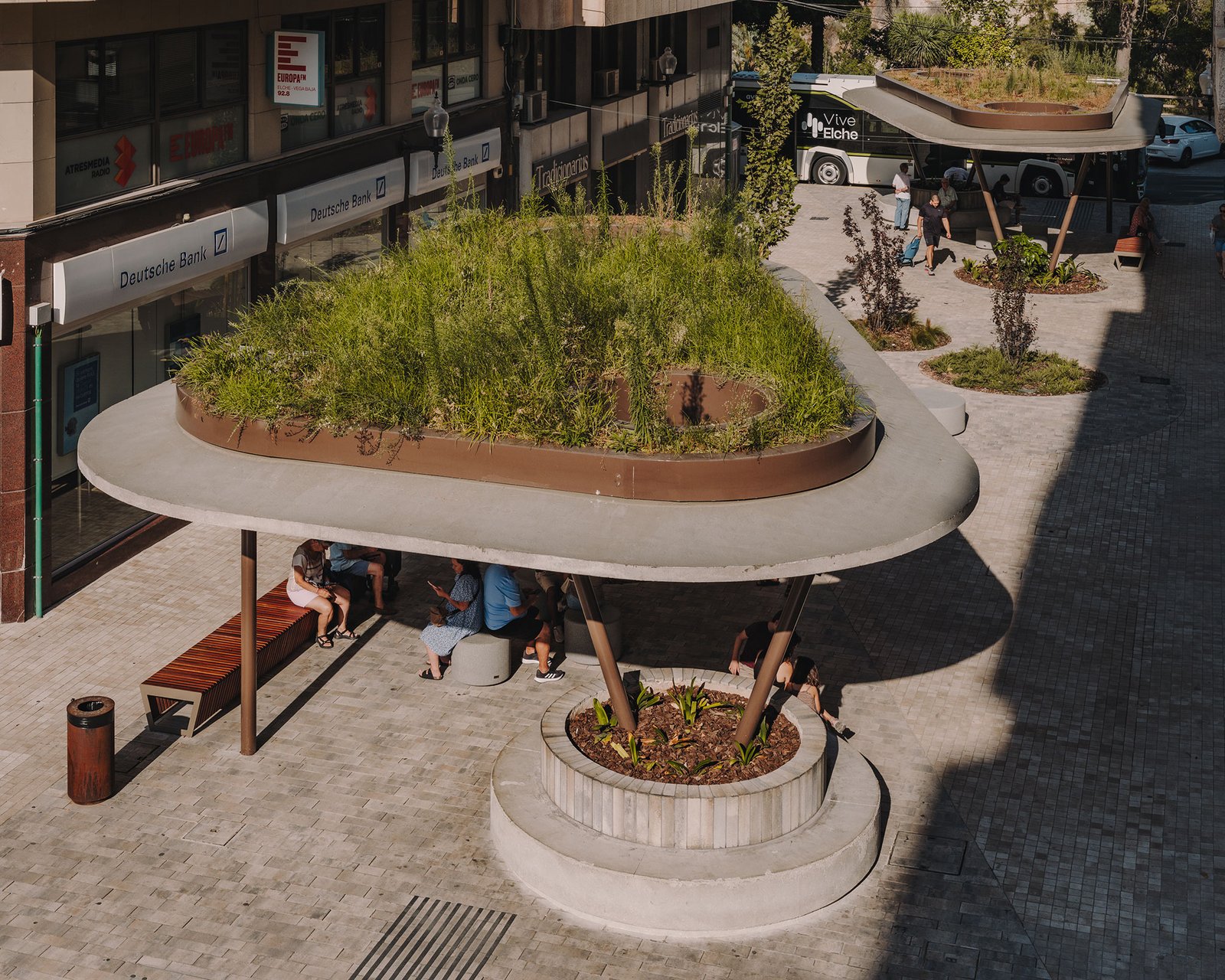
The site sits on a pedestrian street in Elche, close to the Vinalopó River, on ground that ARN / Arquitectos describes as previously lacking spatial or environmental character, a stretch where vehicle traffic once took priority over people on foot. The brief asked for a mobility hub that could fold public transport together with cycling, adding parking, public bicycle stations, a ticket office, restrooms, covered waiting areas and real-time information systems into a street built, in the firm’s words, for lingering rather than passing through.
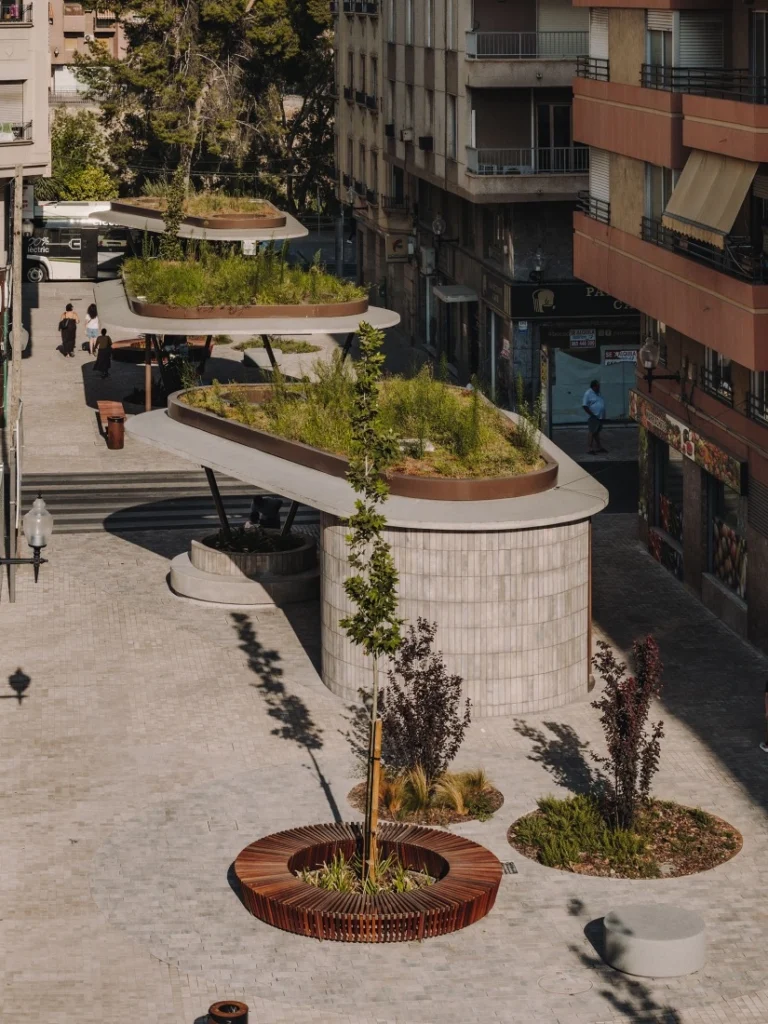
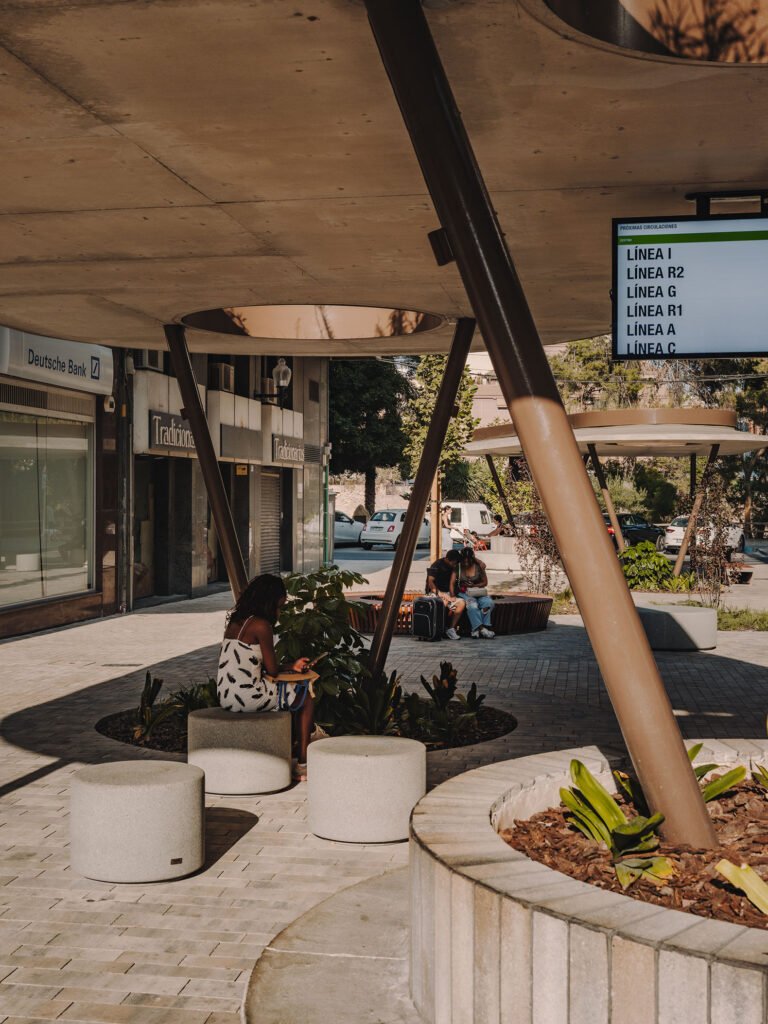
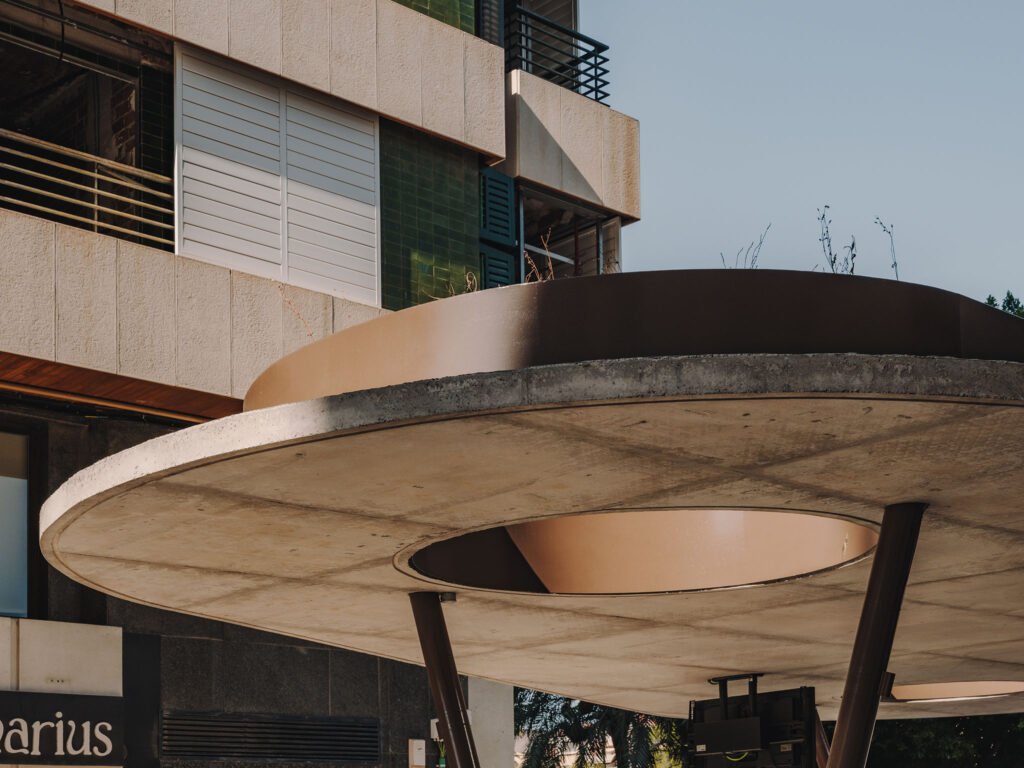
Three concrete pergolas anchor the space, each one a low, wide disc raised on angled steel columns, their undersides pierced with a circular skylight cut. Sedum planting runs along the rim of each roof in a band edged with weathered copper-toned metal, grasses and low shrubs left to grow loose rather than clipped. According to the firm, a green roof of this kind absorbs somewhere around 1.387 kg of CO2 per square metre, alongside working to cool the surrounding air, ease the local heat-island effect and improve humidity in the immediate area. Photocatalytic concrete pavers cover the ground plane throughout, chosen for their ability to break down airborne pollutants underfoot.
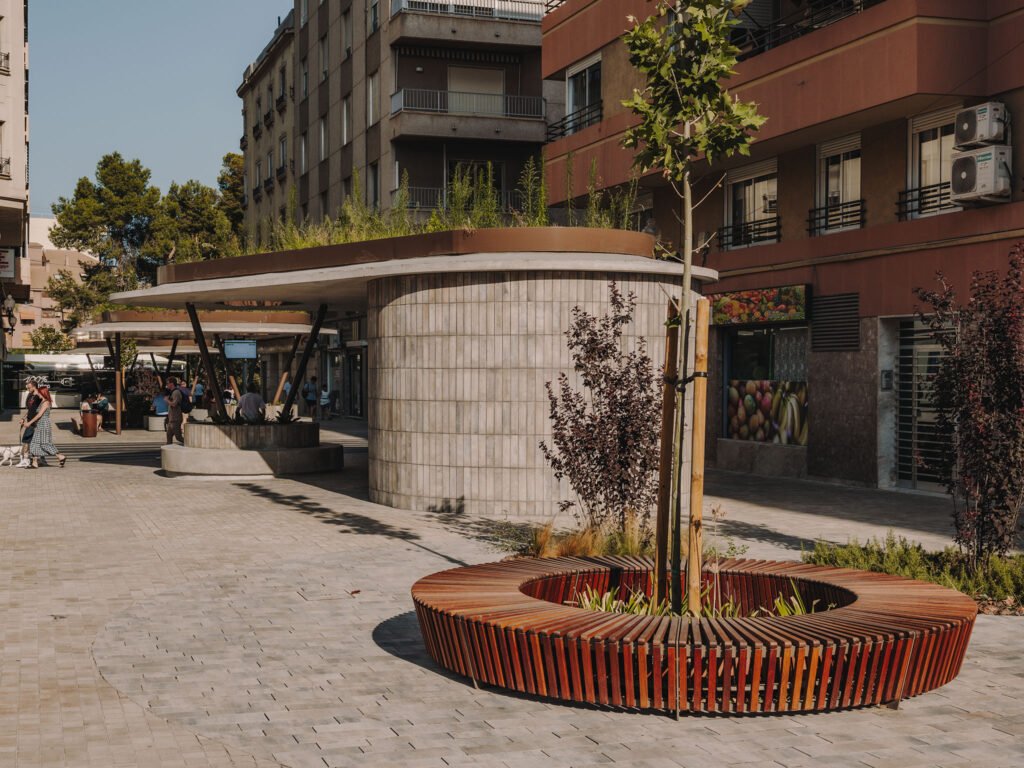
At the base of one pergola, a cylindrical volume clad in narrow, ribbed grey tile houses the ticket office and restroom module. Its curved wall wraps around uninterrupted, broken only by service access, and the green roof above it does double duty here, its evapotranspiration drawing heat away from the enclosed space during warmer months.
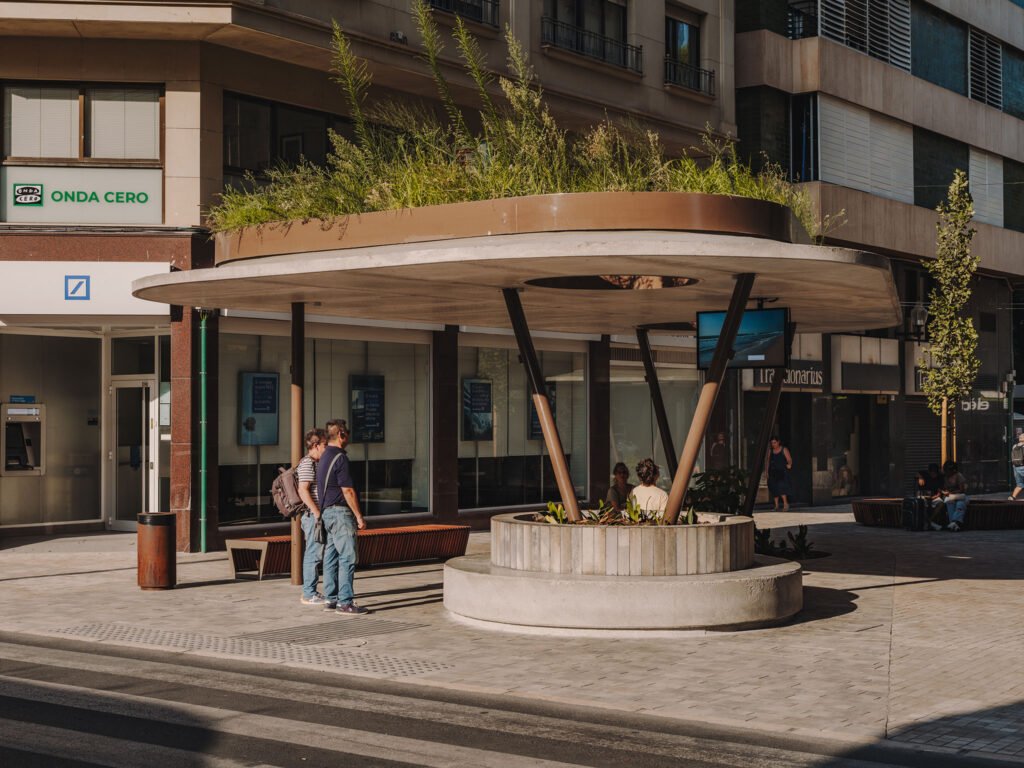
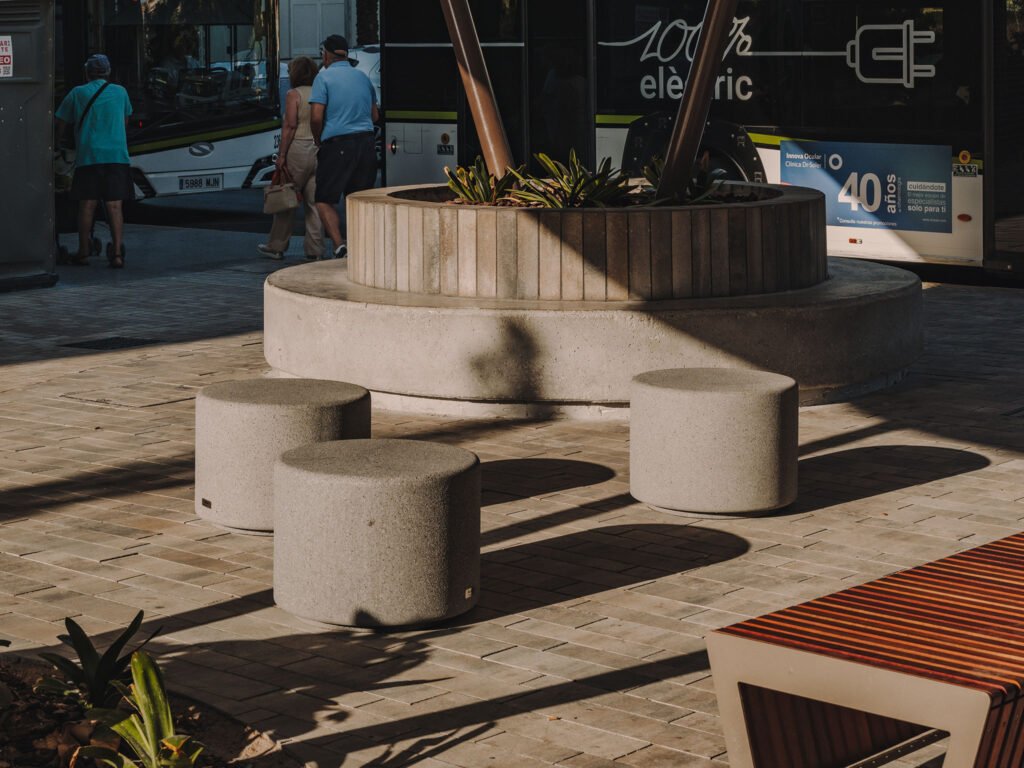
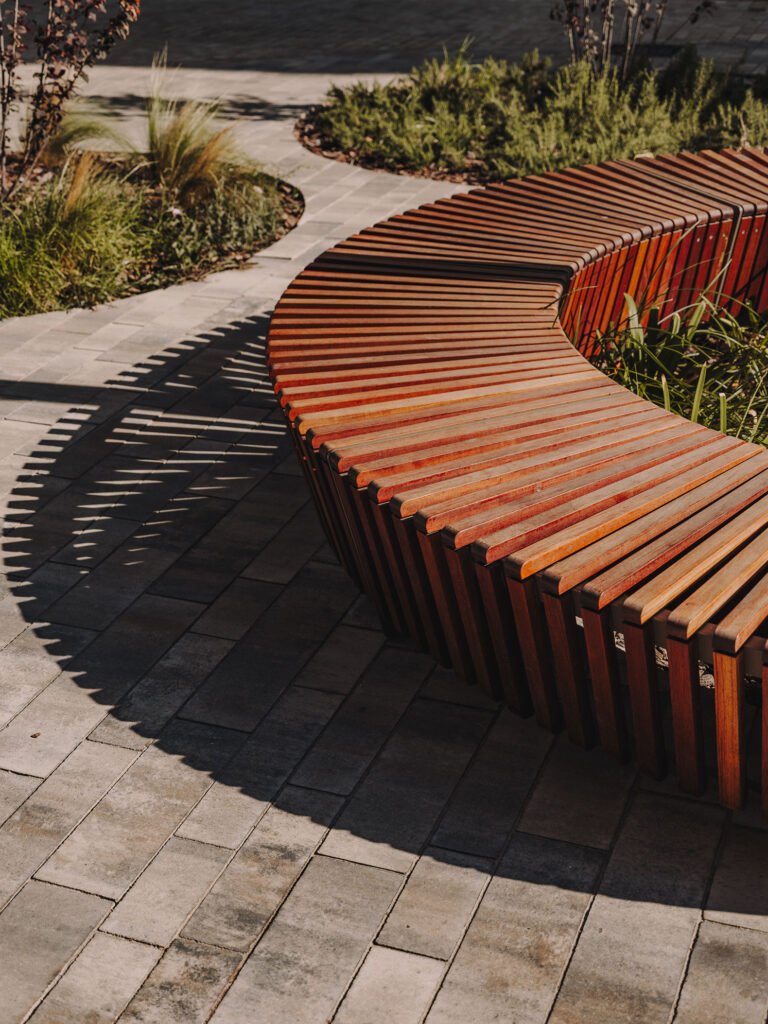
Seating comes in three distinct forms, each built by Escofet. Low, drum-shaped stools in pale cast concrete sit loose in clusters, small and playful enough to invite people to shift them into conversation. Around the base of each pergola, a circular planter-bench in the same textured concrete wraps the support columns, letting people sit in the shade cast overhead regardless of the hour. A third form, a long, curved bench built from close-set timber slats stained in shifting tones of red and amber, rings a planted tree bed at grade, its slatted seat following the bend of the path rather than cutting across it.
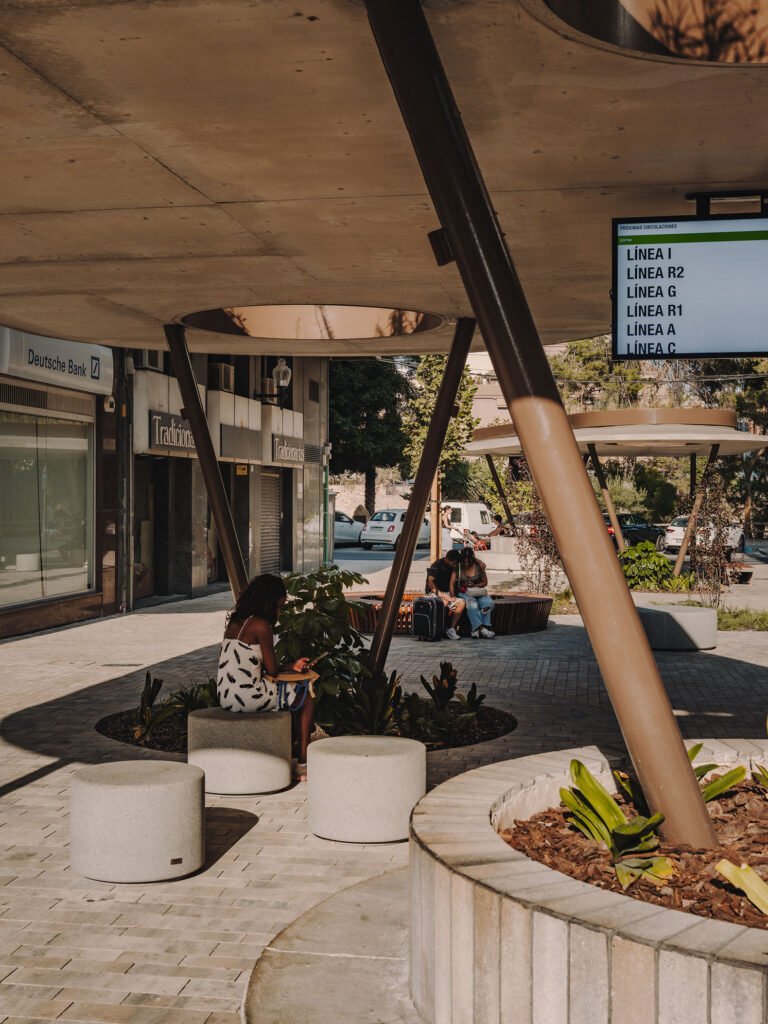
The result threads a bus stop, cycling infrastructure and public seating into a single connected stretch, treating a daily commute less as a point of transit and more as a piece of the city meant to be occupied.
Fact File
Year: 2025
Typology: Public Park, Transport and Infrastructure (Bus) (Public and Cultural)
Firm: ARN / Arquitectos
Design Team: Jose Amoros, Luis Rubiato Brotons, Patricia Navarro Mazón
Collaborating Firms: Benito Design Group, Inc. (street furniture); Escofet (street furniture)
Location: Elx (Elche), Alicante, Spain
Status: Built
