Located in Bakrol, Anand, Kala is a private residence designed by K.N. Associates that brings together traditional Indian elements and a restrained contemporary language within a carefully detailed built form. Spread across a 2160 sq. ft. residence on a 3686.80 sq. ft. plot, the house is designed around openness, layered spatial experiences, and a strong material identity rooted in craftsmanship.
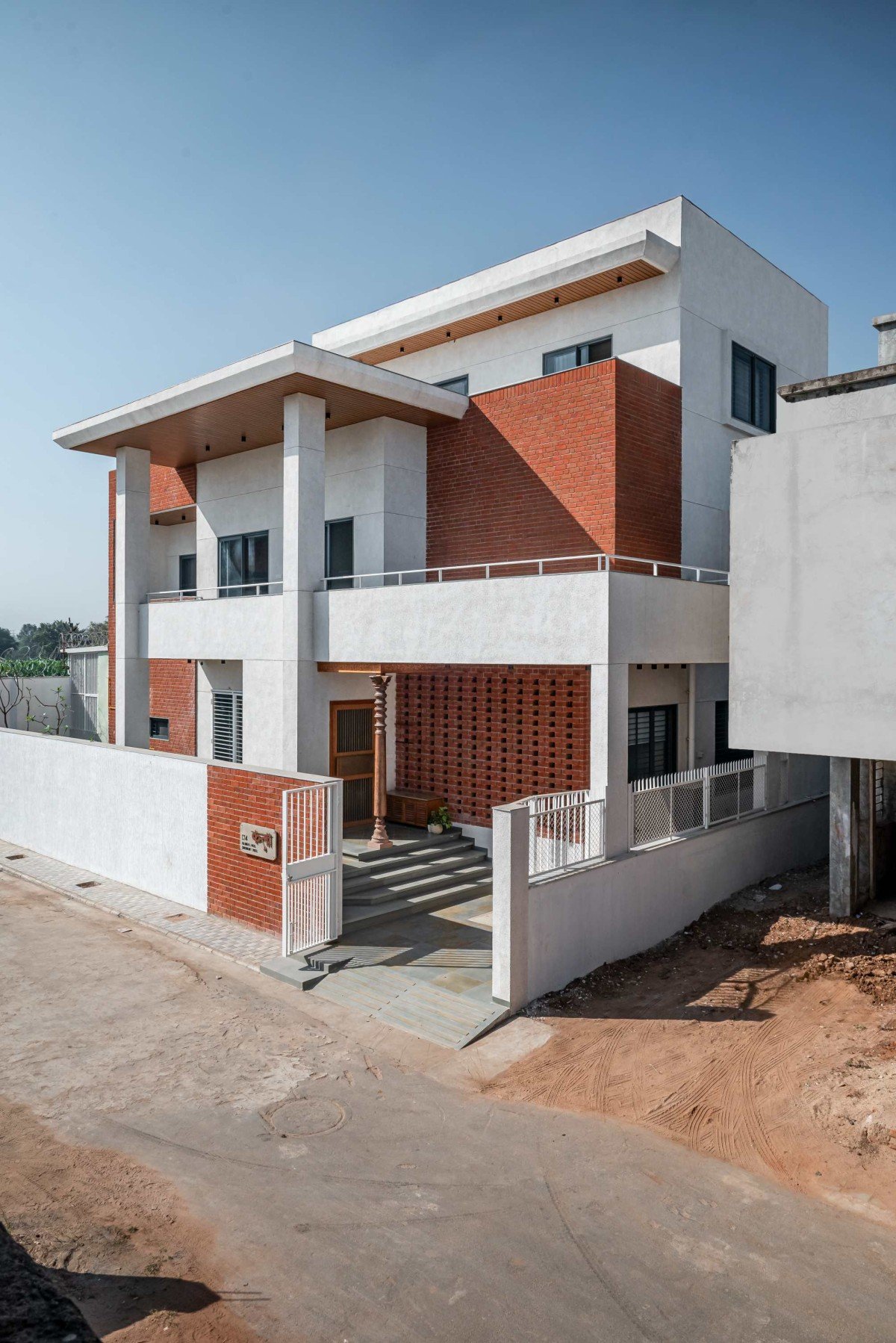
The exterior presents a composition of clean white volumes intersected with exposed brick surfaces, creating a balance between solidity and texture. Rather than relying on ornamentation, the facade derives its character from proportion, light, and material contrast. Deep projections, recessed balconies, and extended slabs create strong shadow lines across the structure throughout the day, giving the house a constantly shifting visual depth.
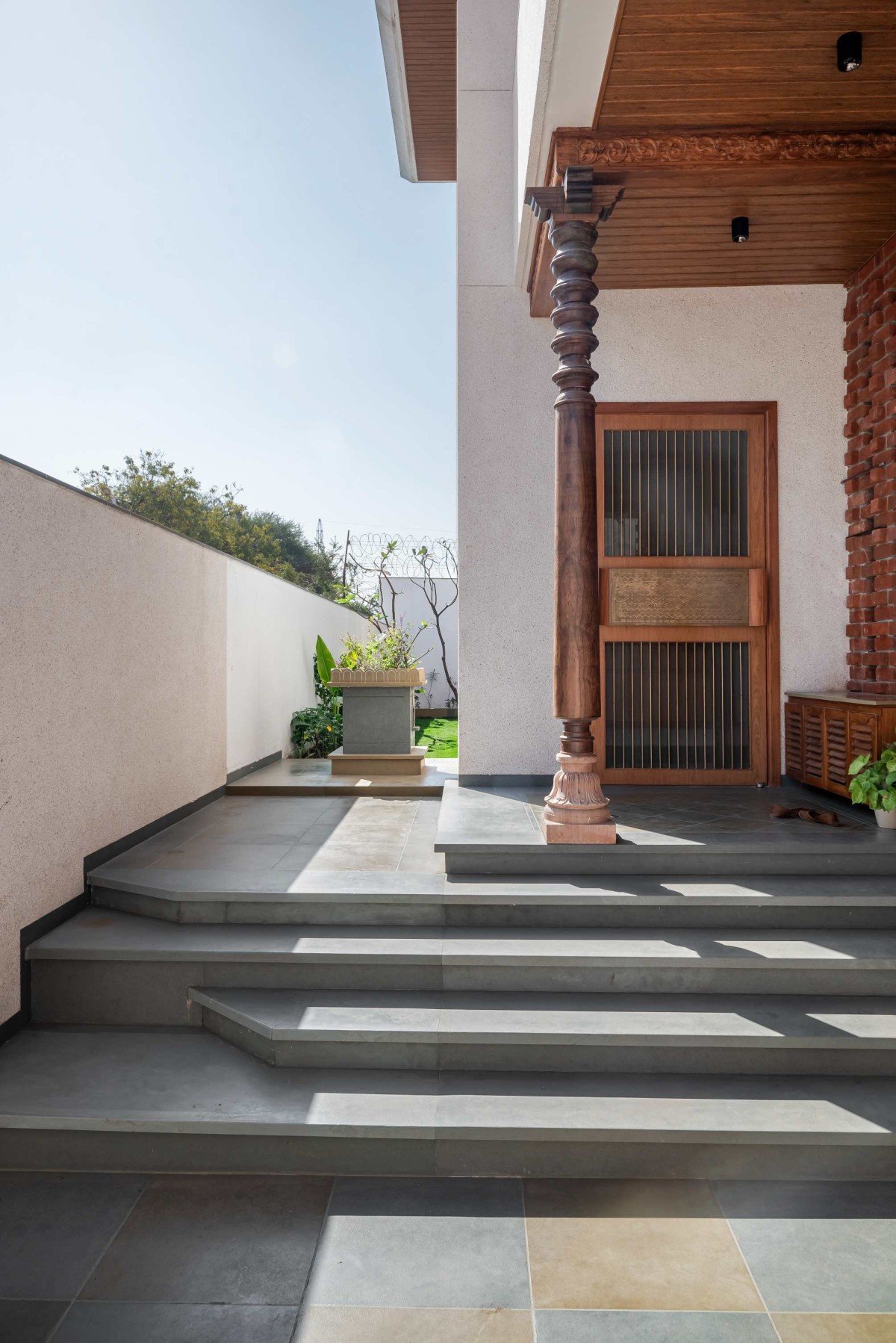
At the entrance, the exposed brick jaali wall becomes one of the defining architectural elements of the project. It filters light into the semi-open porch while also introducing ventilation and privacy. Positioned against the otherwise minimal white facade, the jaali softens the geometry of the structure and establishes a visual connection to traditional Indian architectural vocabulary without appearing decorative or forced.
A carved wooden column placed at the entry further strengthens this transition between contemporary and traditional elements. Instead of being treated as a nostalgic insert, it becomes part of the architectural rhythm of the house, grounding the otherwise sharp linear language of the exterior. The stepped entrance sequence, finished in muted stone tones, adds to the sense of arrival while maintaining the understated material palette seen throughout the project.
Inside, Kala continues this balance between warmth and restraint. The foyer is designed as an intimate transition space containing heirloom objects and a brass Ganpati murti, creating a deeply personal layer within the architecture. The flooring, composed of multicolored Kota stone laid in varying grid patterns, introduces texture and movement underfoot while visually connecting different parts of the home.
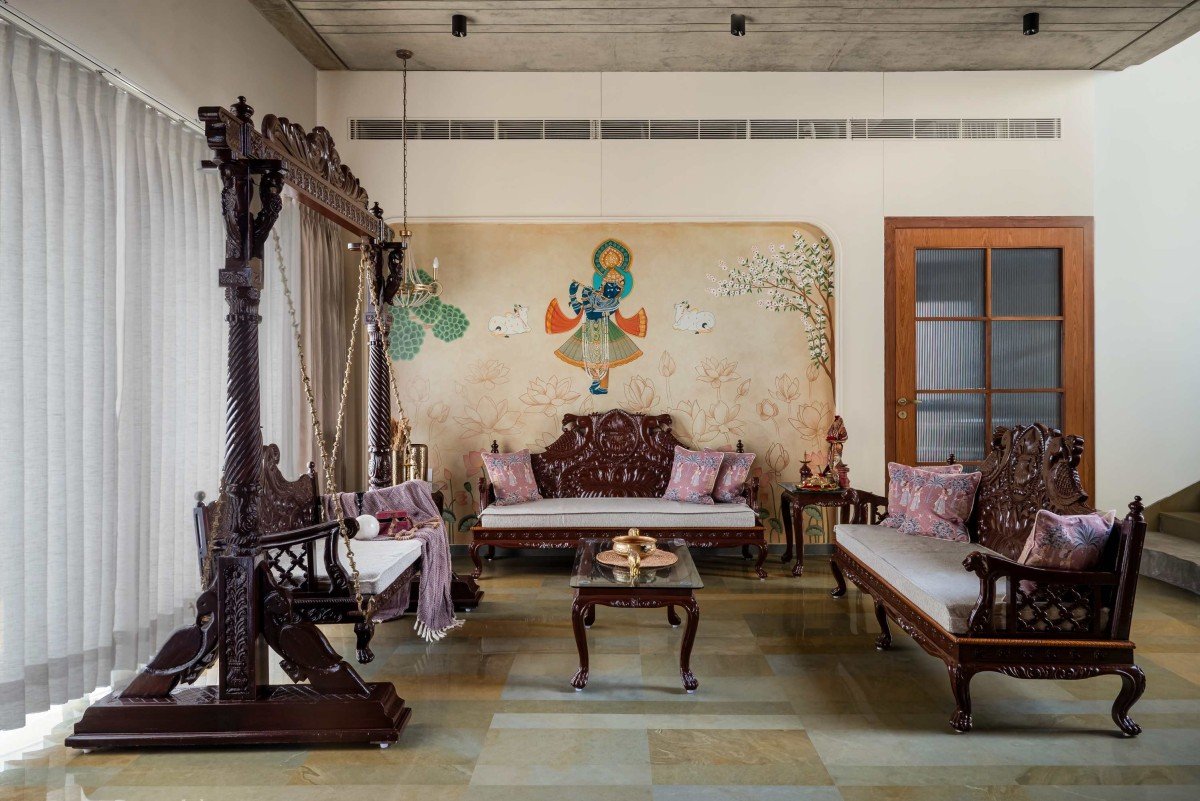
The living room combines heavy carved wooden furniture with clean contemporary surfaces and exposed RCC ceilings. Rather than competing with each other, these elements work in contrast. Traditional wooden seating, neutral fabrics, and the indoor swing bring warmth and familiarity to the space, while the exposed concrete ceiling introduces a sharper and more minimal counterpoint. A Krishna-inspired artwork by artist Avinash Gondaliya becomes a focal point within the room, adding color and narrative without overwhelming the space.
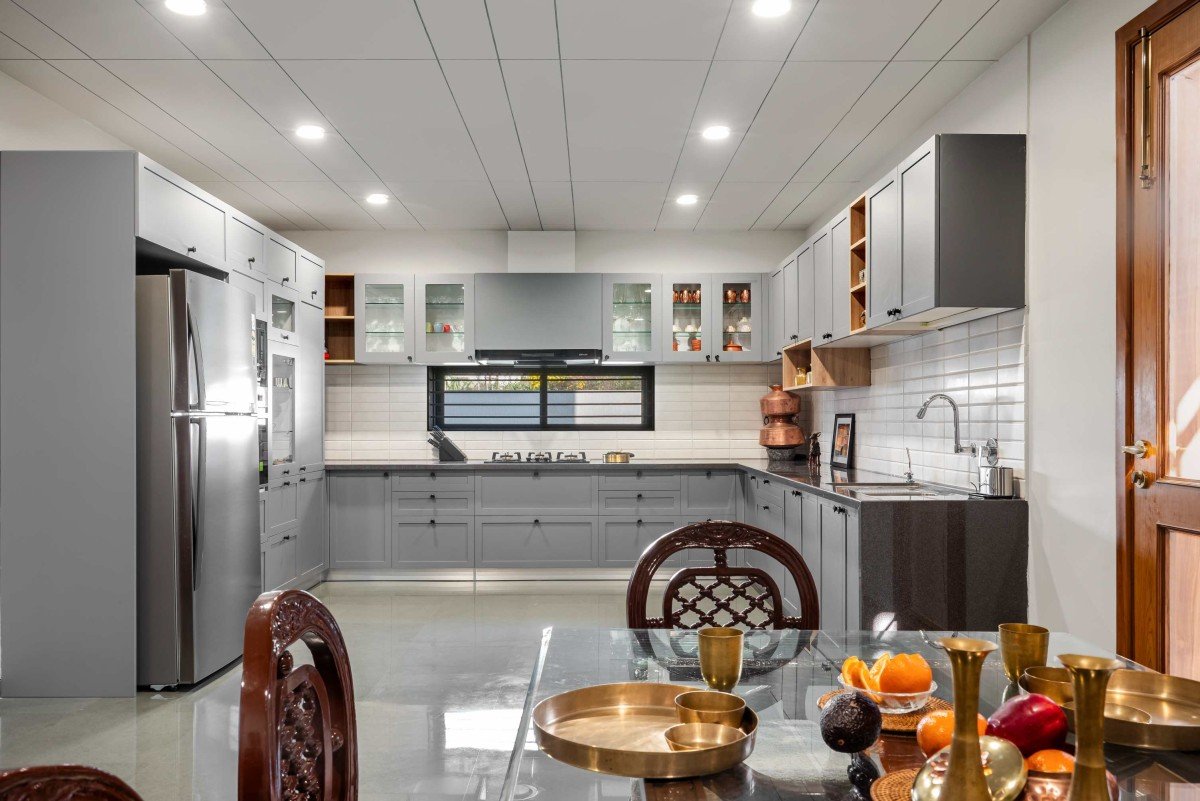
The dining and kitchen areas are designed with a similar sense of contrast. The kitchen remains muted and functional, defined by sleek cabinetry, clean lines, and understated finishes. Adjacent to it, the dining space leans more heavily into crafted detailing through carved wooden chairs, brass accents, and a richly detailed crockery unit. Together, the spaces balance utility with visual richness without disrupting the overall calmness of the house.
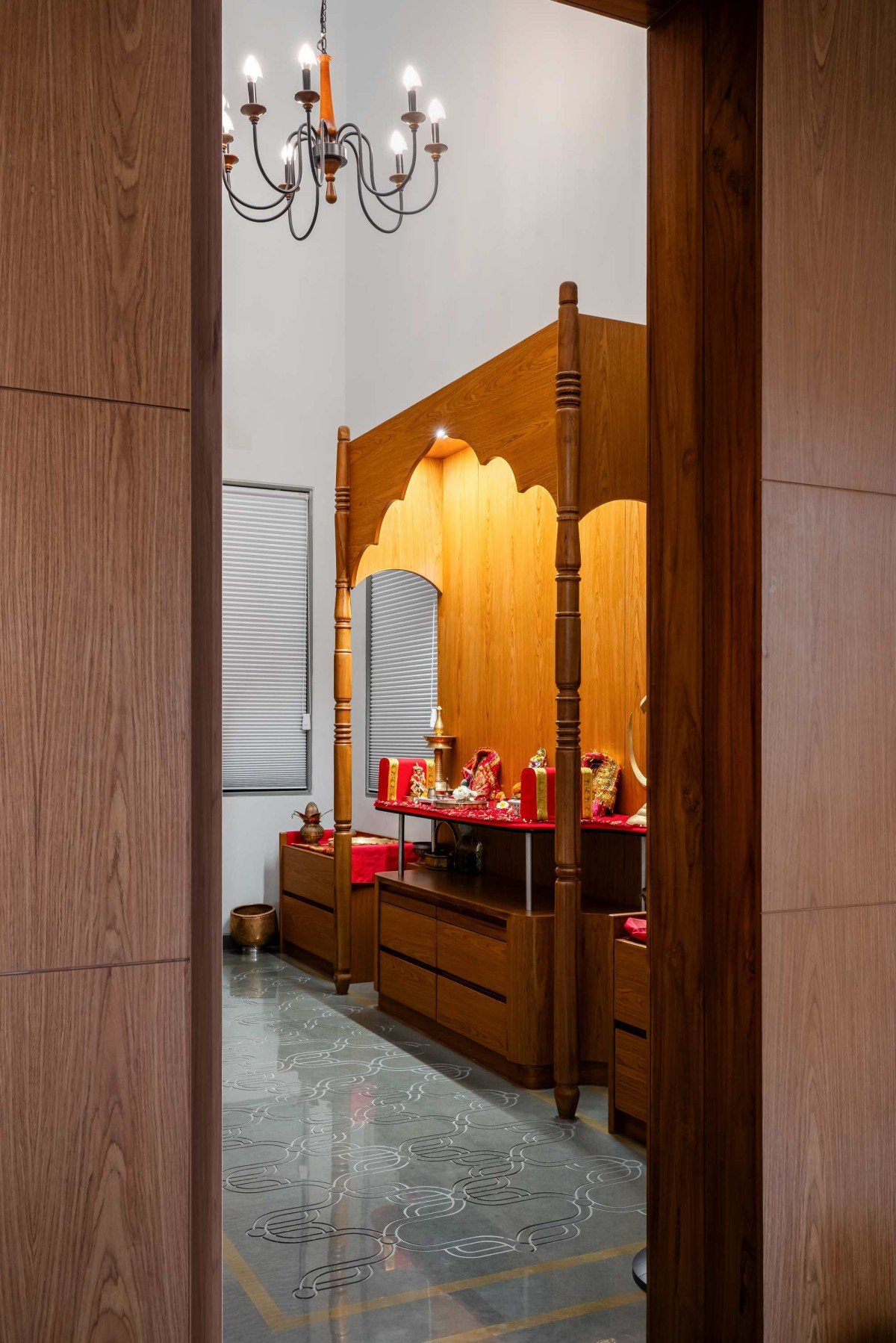
One of the most spatially significant areas within Kala is the double-height pooja room. Detailed with traditional wooden columns and finished in grey Kota flooring with CNC-cut borders, the space carries a ceremonial quality while remaining visually restrained. A vintage chandelier descends through the volume, introducing softness and scale without becoming excessive.
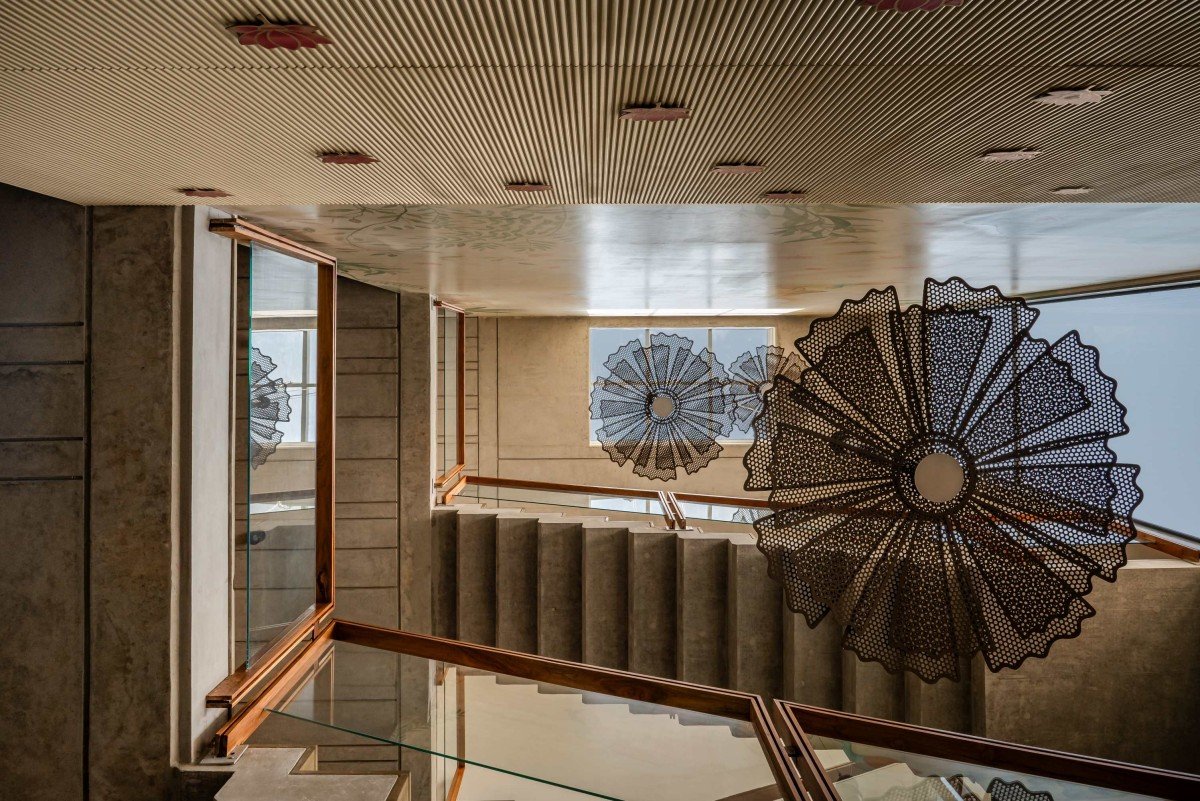
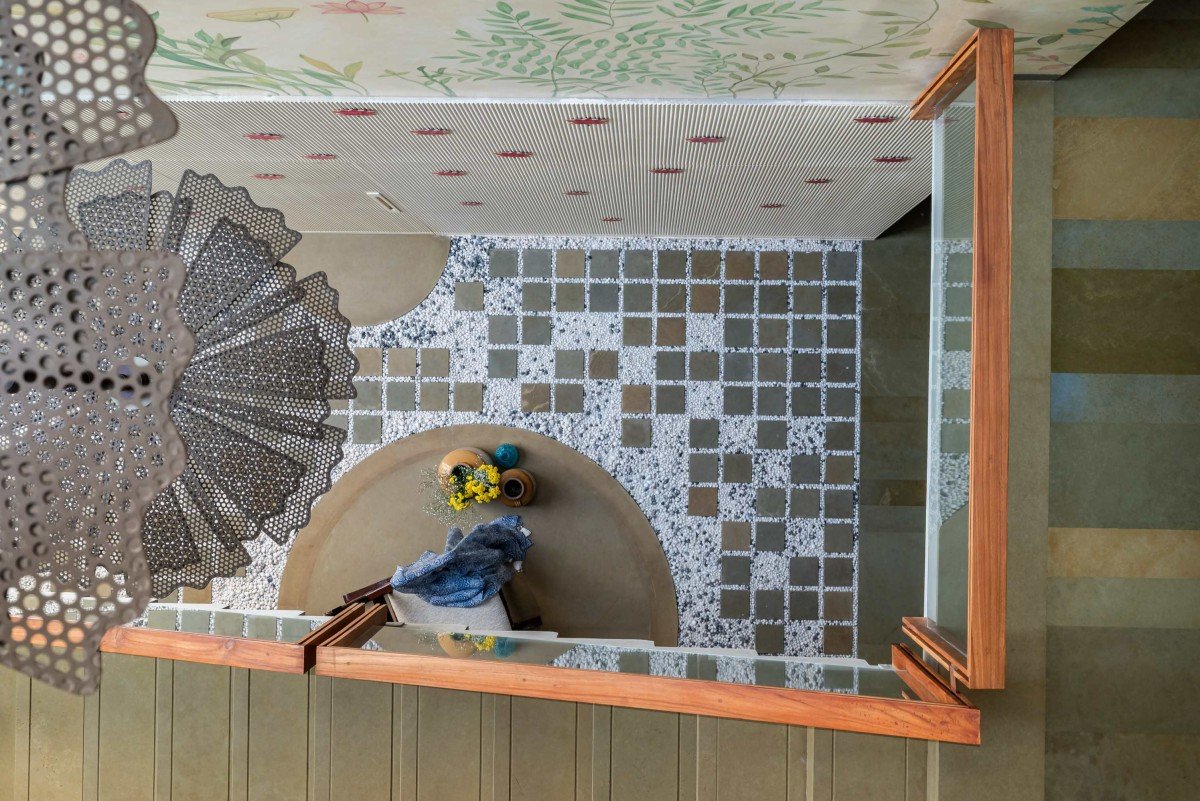
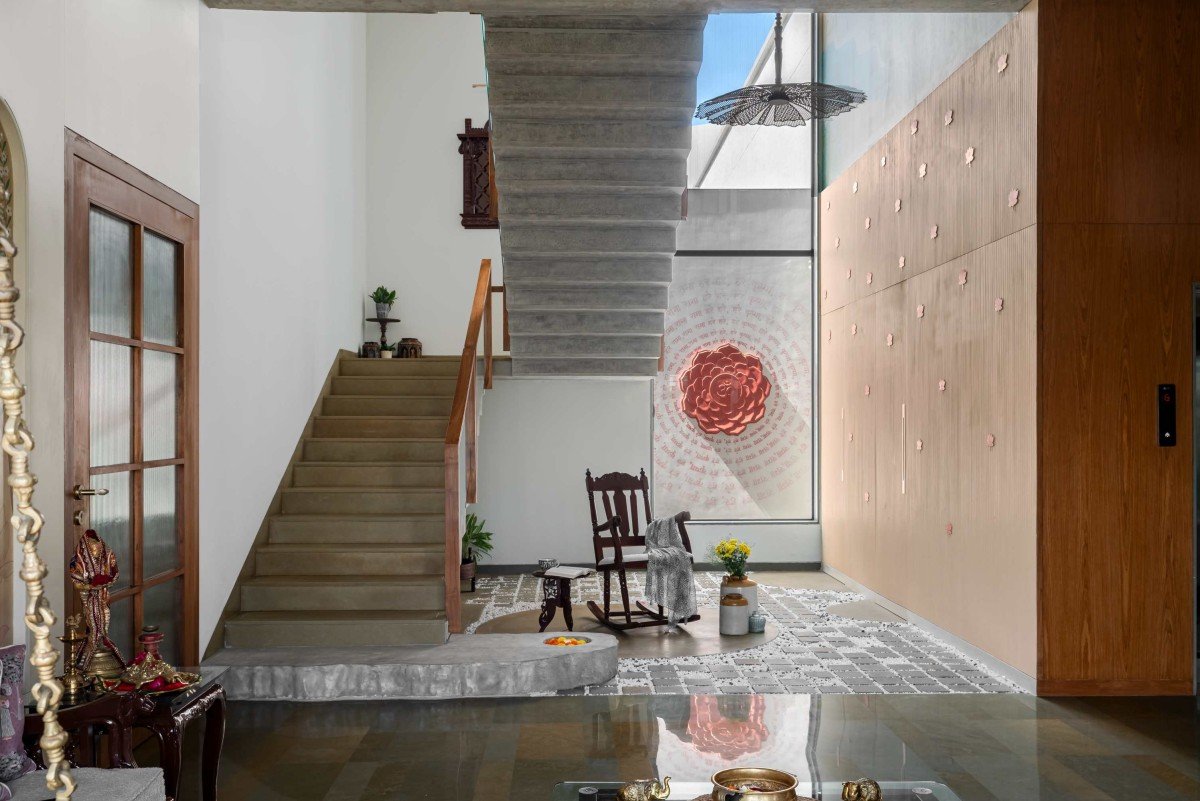
At the center of the house lies the triple-height courtyard, which acts as the primary source of light and spatial continuity. Natural light enters through skylights and tall openings, moving across the Kota flooring and pebble inlays throughout the day. A sculptural RCC staircase rises through this volume with Jaisalmer stone treads and wooden railings, creating a strong vertical element within the otherwise grounded material palette. Suspended above, a perforated pendant light casts shifting patterns across the surfaces, adding another layer of movement to the space.
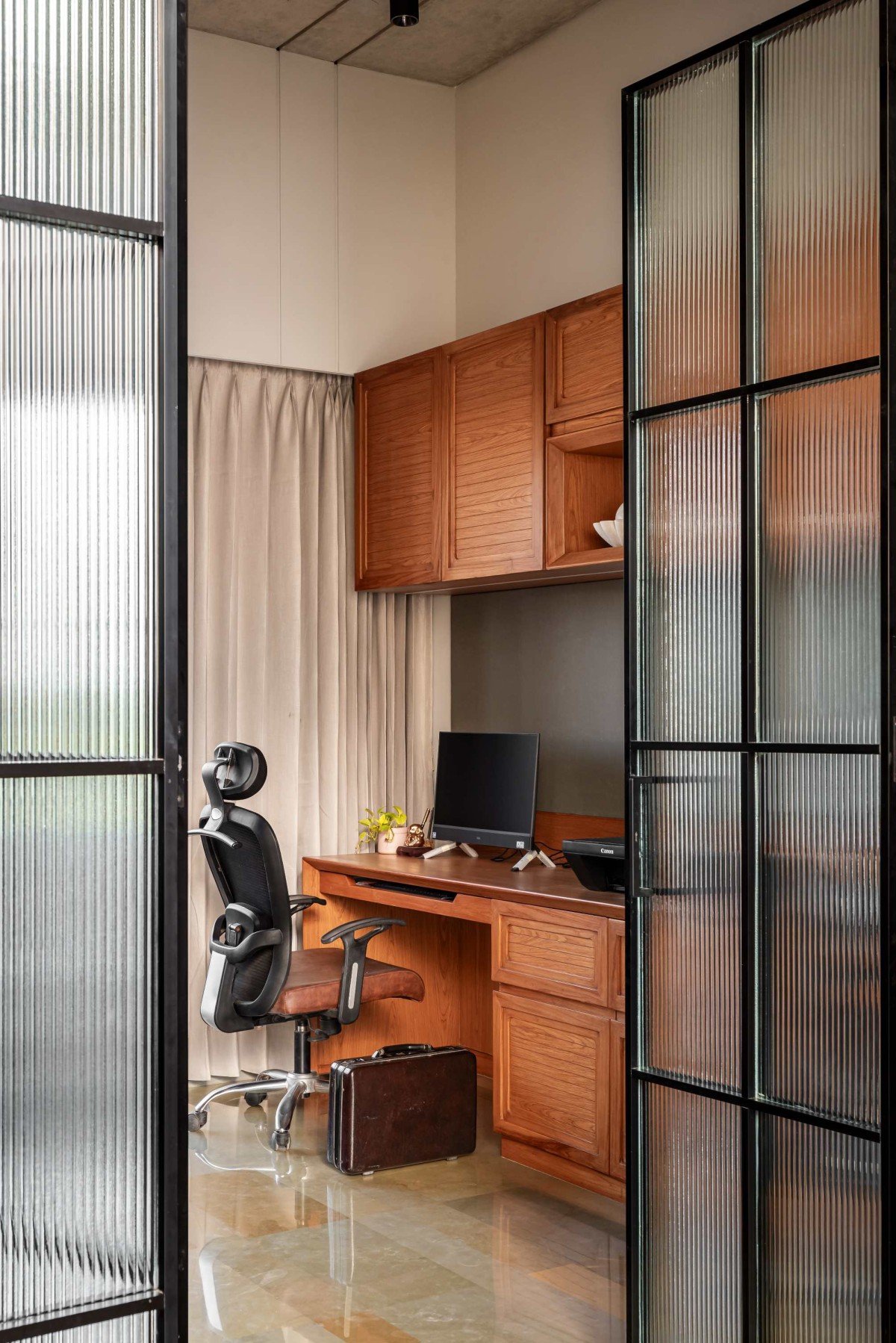
The upper floors continue the material language established below. Kota flooring, exposed RCC ceilings, teak finishes, and glass partitions maintain openness while introducing warmth and privacy where required. Study areas and office spaces remain visually connected to the rest of the house, avoiding enclosed or isolated planning.
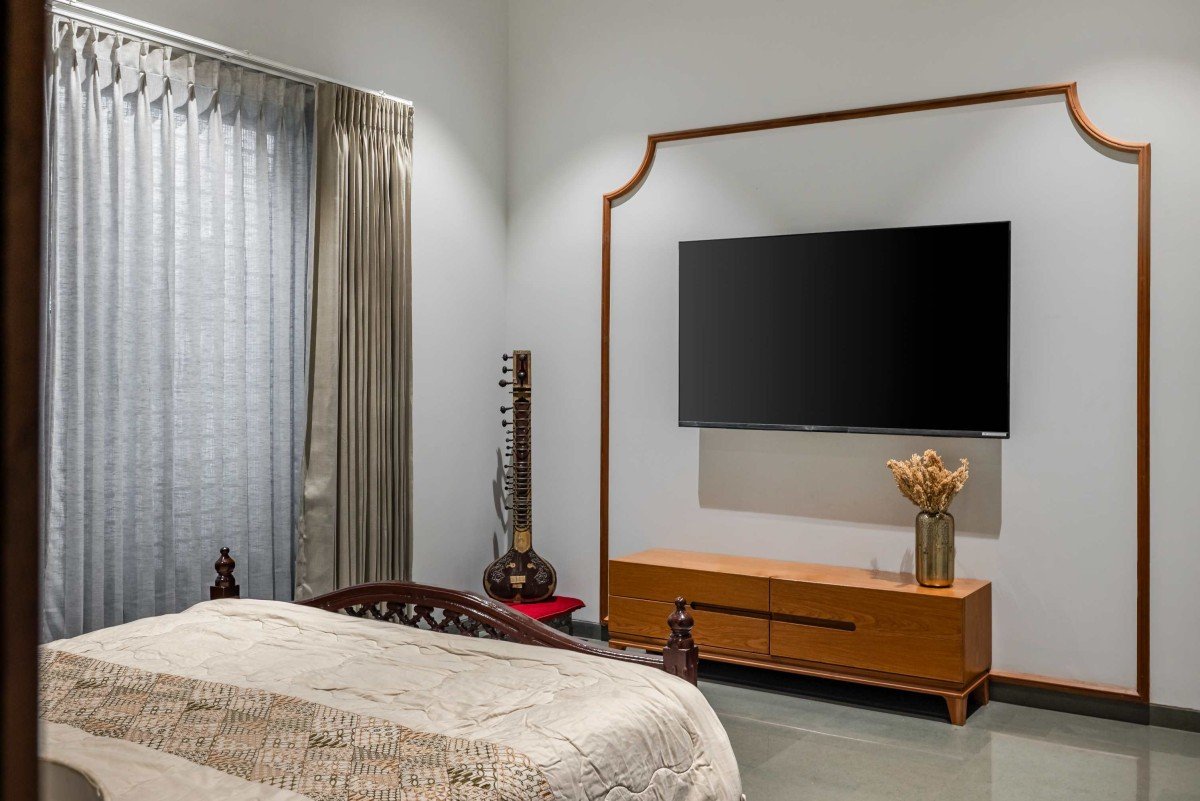
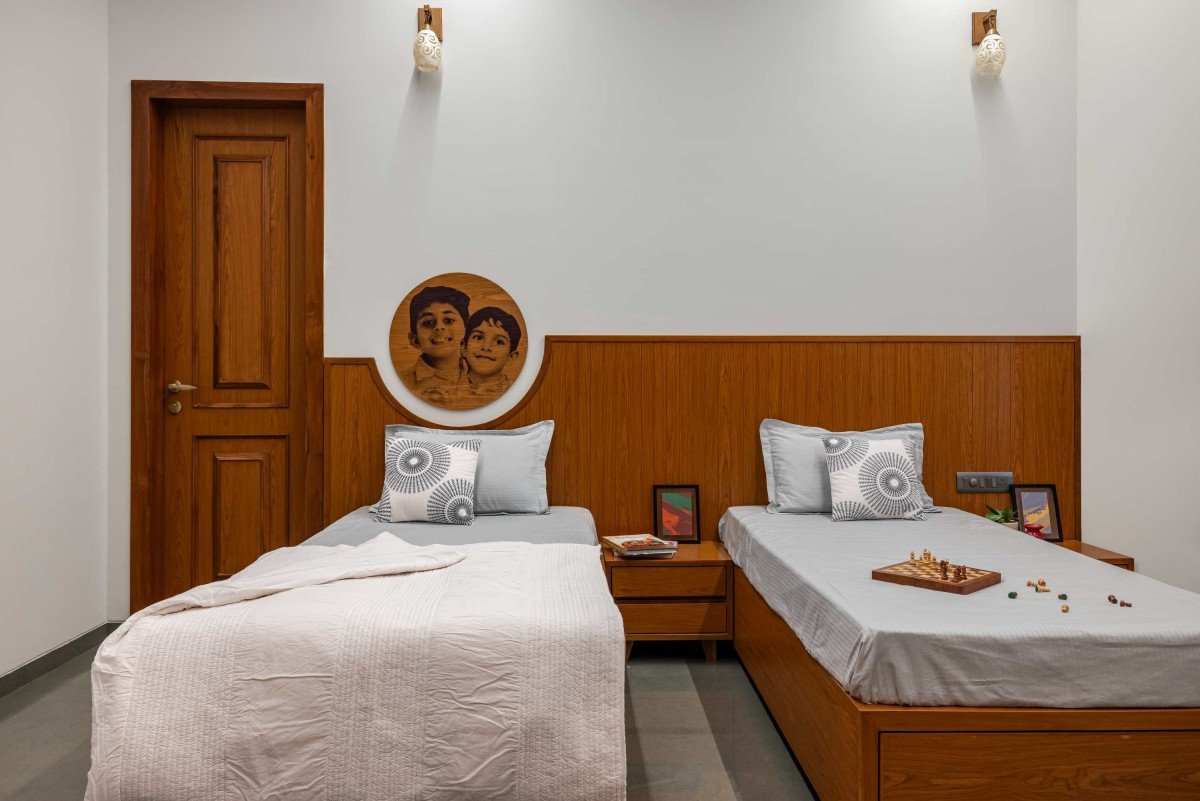
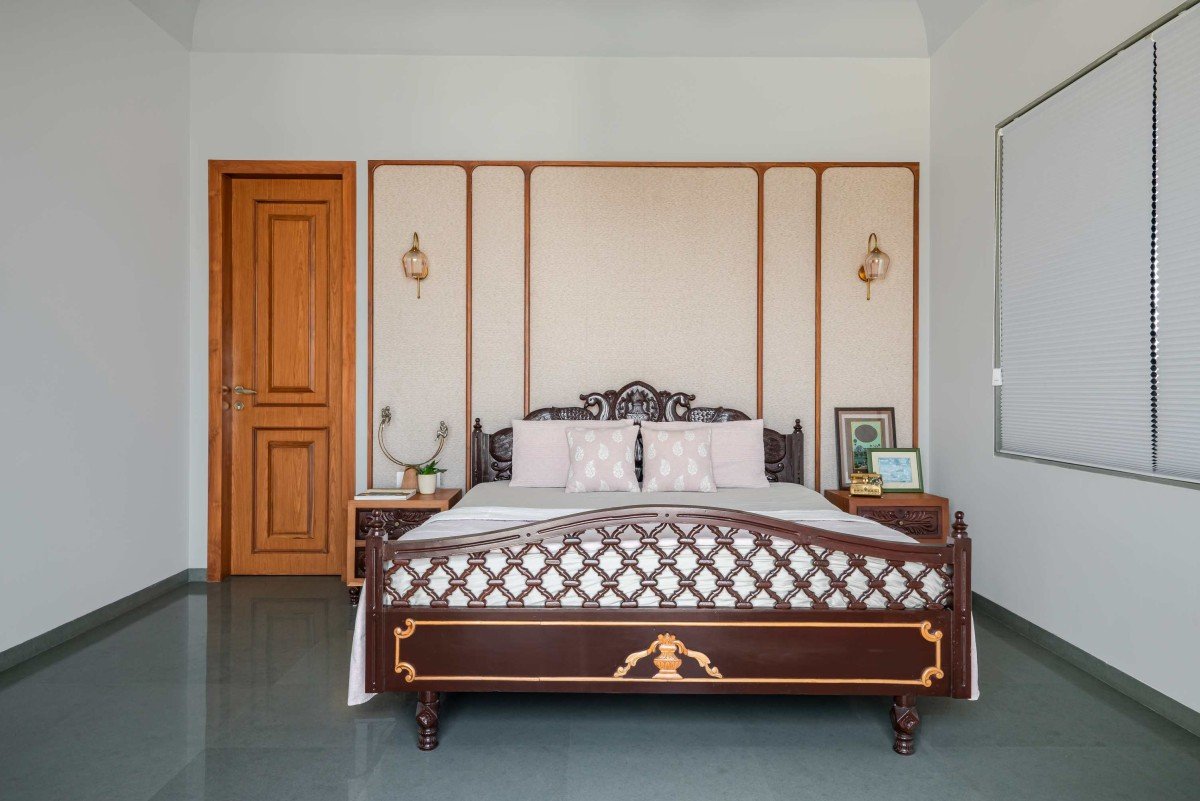
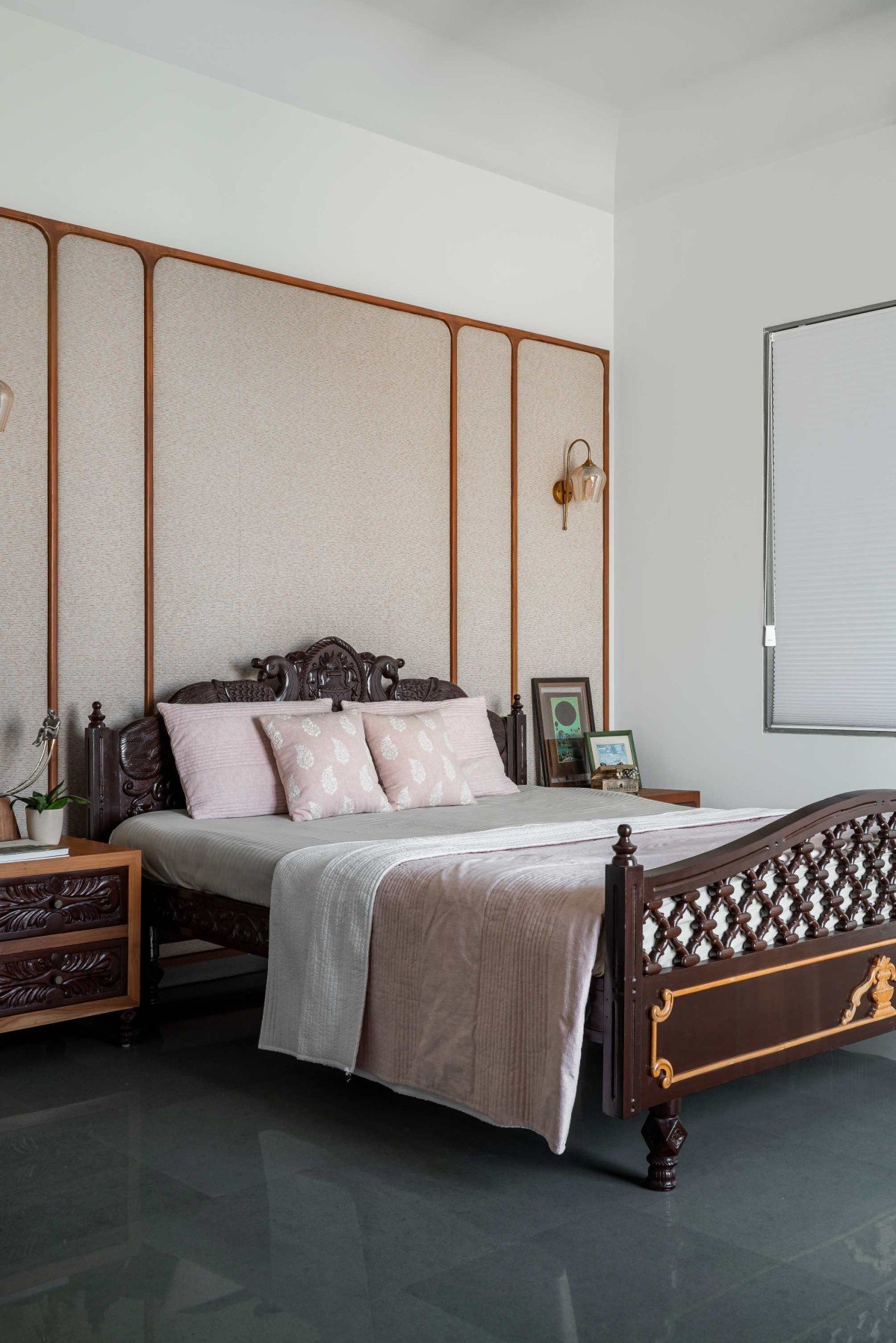
The bedrooms each carry a distinct atmosphere while remaining part of the larger architectural vocabulary. The master bedroom uses soft neutral tones, warm wood finishes, and fabric panels to create a quieter and more refined setting. Brass sconces and vertical wooden battens introduce texture and rhythm without relying on decorative excess. The children’s room features functional, clean-lined furniture and integrated storage with playful details, while the parents’ bedroom maintains a minimal aesthetic enhanced by personal items like a sitar and rehal.
Throughout Kala, materials are used with clarity and restraint. Exposed brick, Kota stone, wood, brass, and concrete appear repeatedly, but always in measured proportions. The house does not attempt to recreate tradition literally, nor does it pursue minimalism at the cost of warmth. Instead, it builds its identity through carefully layered contrasts, where crafted details coexist with clean volumes and contemporary spatial planning.