
Leather weaving and wood inlay aren’t new to Turri’s workshop. What’s changed this season is where the brand is putting them.
Woven by hand from start to finish, the leather on these pieces doesn’t sit on the frame the way upholstery usually does; it becomes part of it, carrying the texture and give of a woven textile rather than a surface stretched tight over padding. Inlay takes the opposite route to a similar effect: different wood essences set against each other until the tabletop or panel holds its own pattern, no applied decoration required.
Three pieces make the case. Marco Acerbis’s Nabi chair runs a saddle-style weave across its upholstery, finished with a stickage process tight enough that the seams barely register up close. On Monica Armani’s Roma bed, woven leather shows up on the side panels for the first time, and the addition shifts how the piece reads as an object, less flat, more layered than the earlier version.
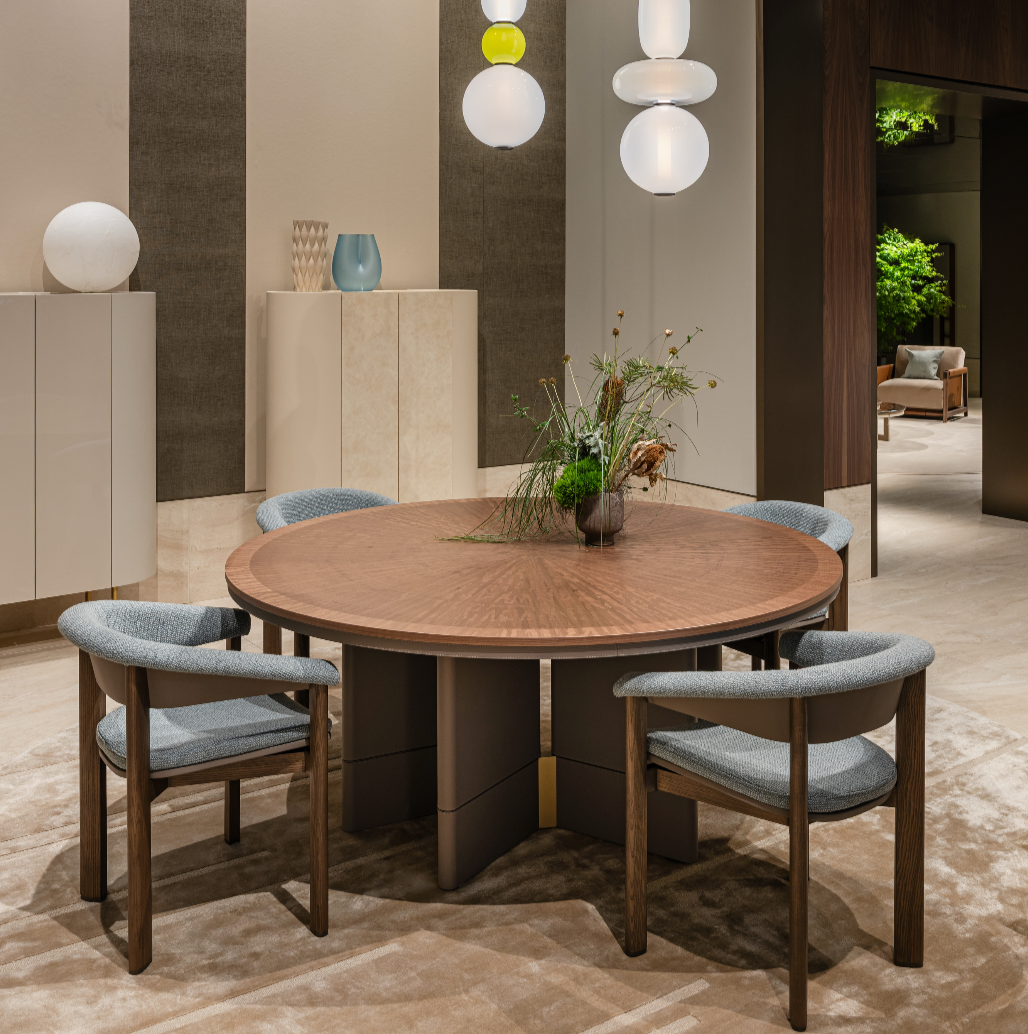
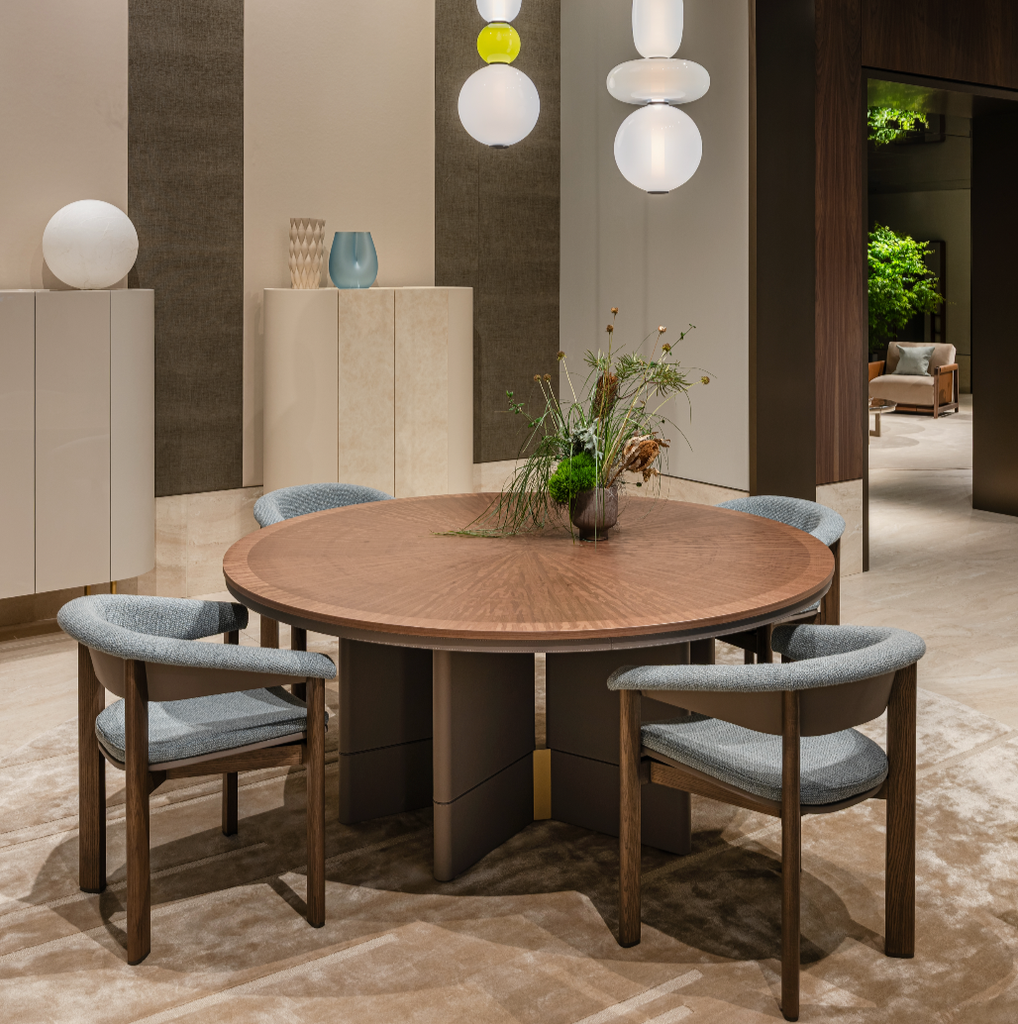
The Zero26 round table, designed by Andrea Bonini and shown at the fair, carries the inlay work furthest, its tabletop built from a pattern clearly meant to hold up under close inspection. The wider Zero26 range has also been refreshed: round and rectangular tables now both come in walnut alongside the original high-gloss lacquer, the round table sits on a lighter structure than before, and every model’s legs are leather-wrapped with the stitching left visible rather than hidden.
Weaving and inlay aren’t unusual techniques in furniture making on their own. What stands out is that Turri is pulling methods typically reserved for large contract commissions into pieces meant for regular use, domestic or hospitality alike. The brand says the same approach carries through to its boiserie and full interior projects as well.
