
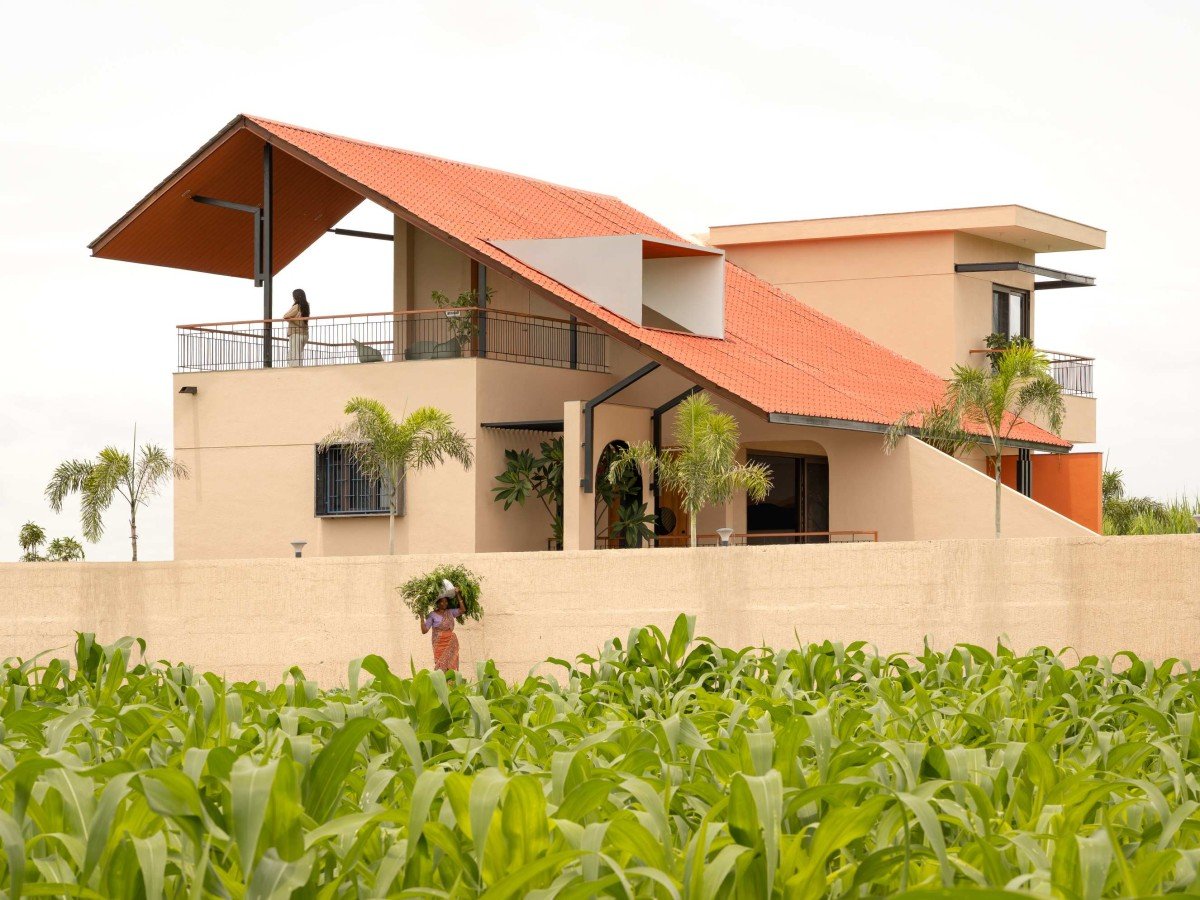
Set within the agricultural landscape of Konkangaon near Sangamner, Sindhu House is a 2,500 sq. ft. weekend residence designed by Ajit Bendre Design Studio for a family of four. Conceived as a rural retreat, the project embraces its surroundings by reflecting the local climate and slower rhythm instead of imposing a polished farmhouse aesthetic.
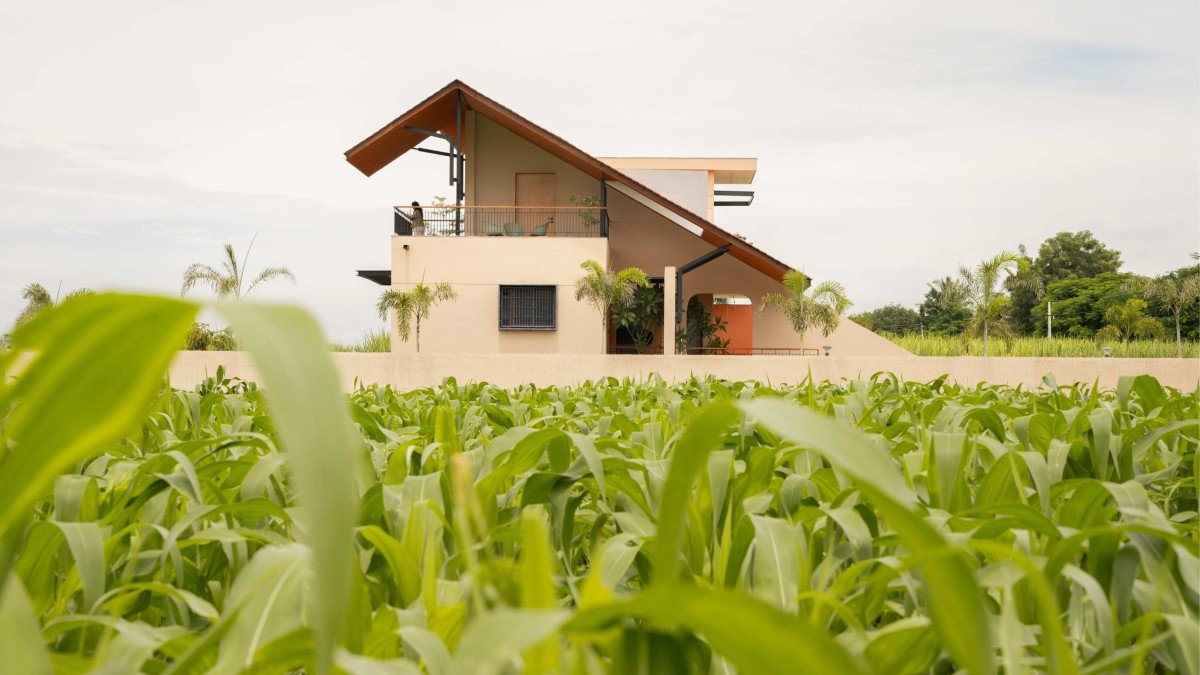
The house is immediately recognizable for its large sloping terracotta roof, which stretches across the structure in one continuous gesture. More than a visual feature, the roof becomes the organizing element of the design, creating deep overhangs, shaded terraces, semi-open sit-outs, and protected circulation spaces. In the context of Maharashtra’s intense summers and heavy monsoon rains, this oversized canopy plays a practical role while also giving the home its distinct profile against the surrounding fields.
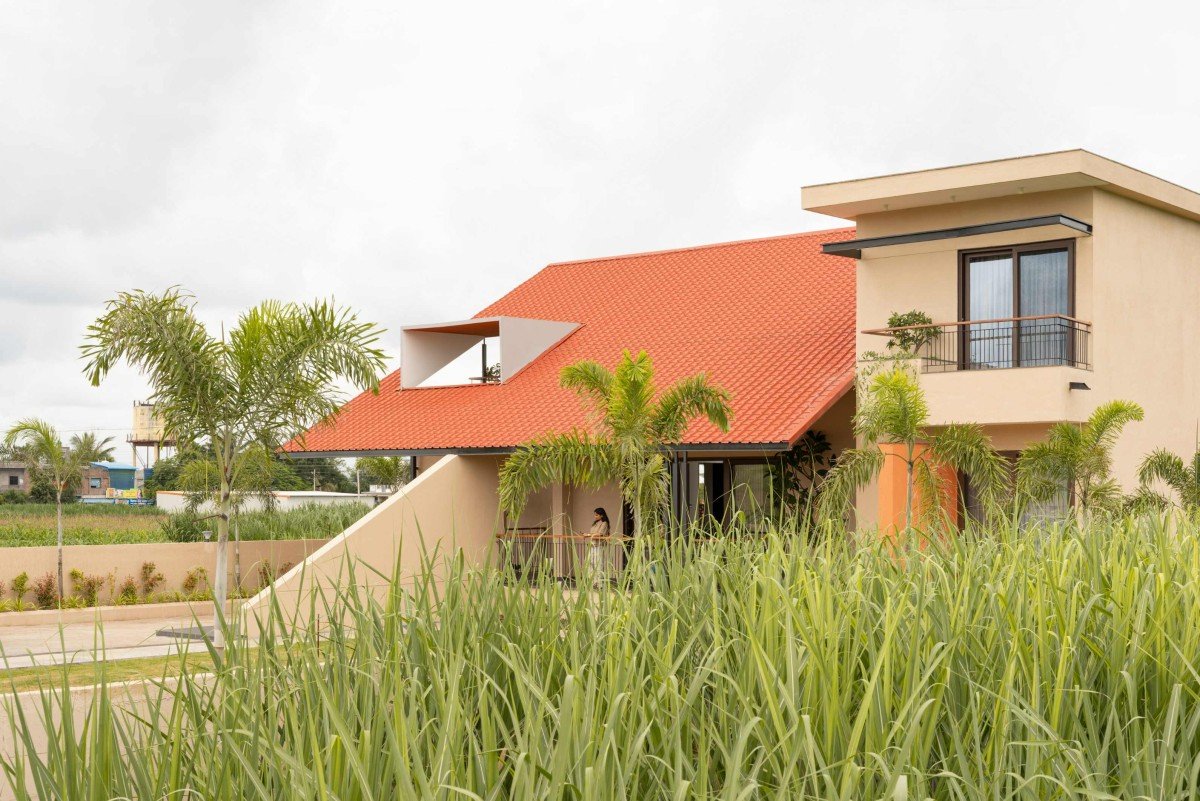
Viewed from the farmland, the structure feels low and expansive despite its multiple levels. The roofline slopes dramatically downward, visually tying the upper floor to the ground and softening the overall scale of the house. The architects avoid heavy or imposing forms, instead breaking the mass into layered volumes and open edges that allow light and air to move freely through the spaces.
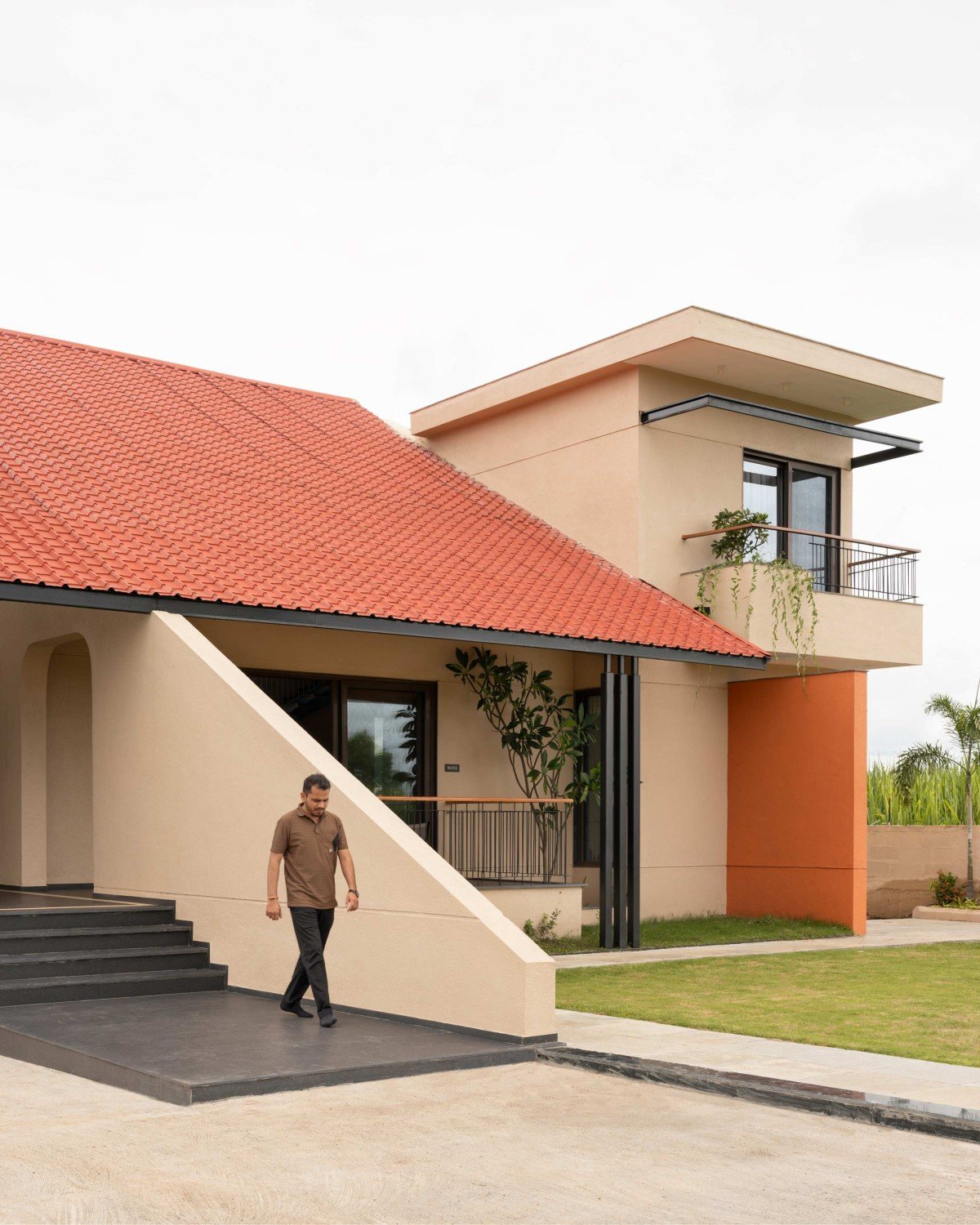
The idea of overlap becomes central to the planning of the home. Indoor spaces consistently open into transitional zones rather than ending abruptly at walls. Living areas spill into verandahs, terraces remain partially sheltered under the extended roof, and large openings frame uninterrupted views of the surrounding greenery. This approach gives the house a sense of openness while still maintaining intimacy for family living.
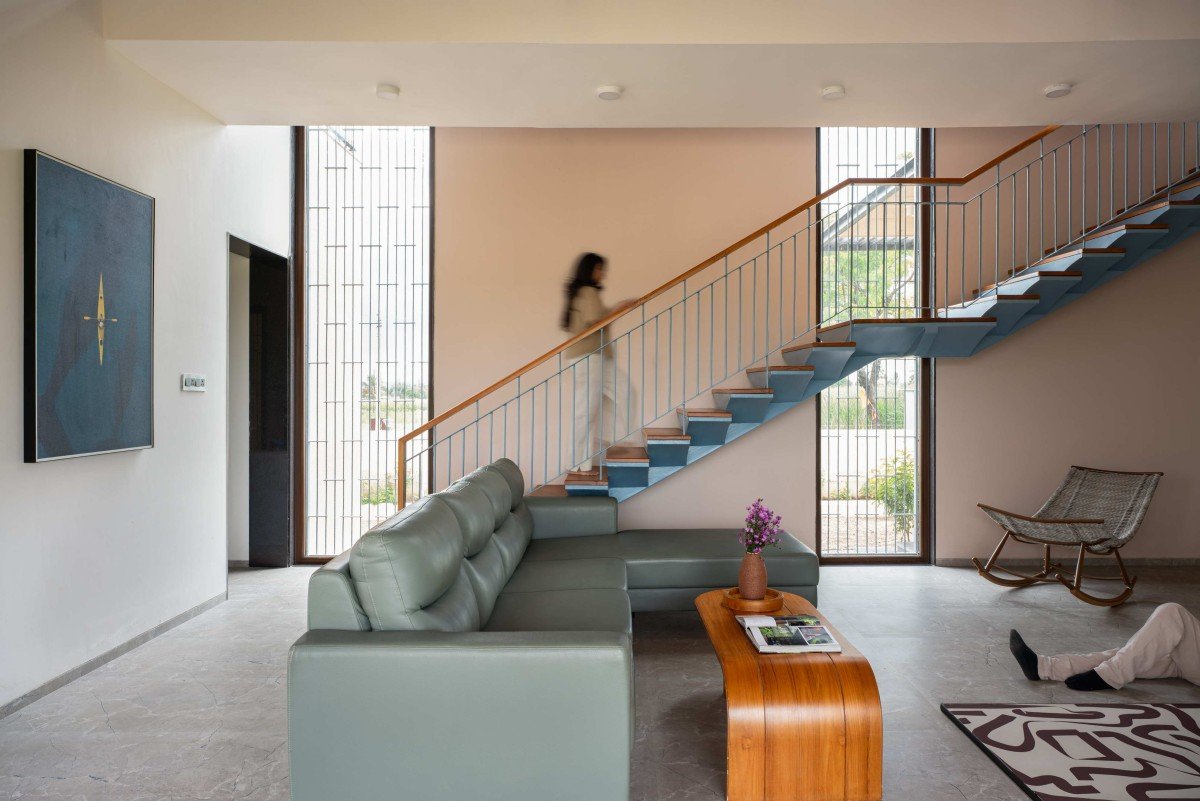
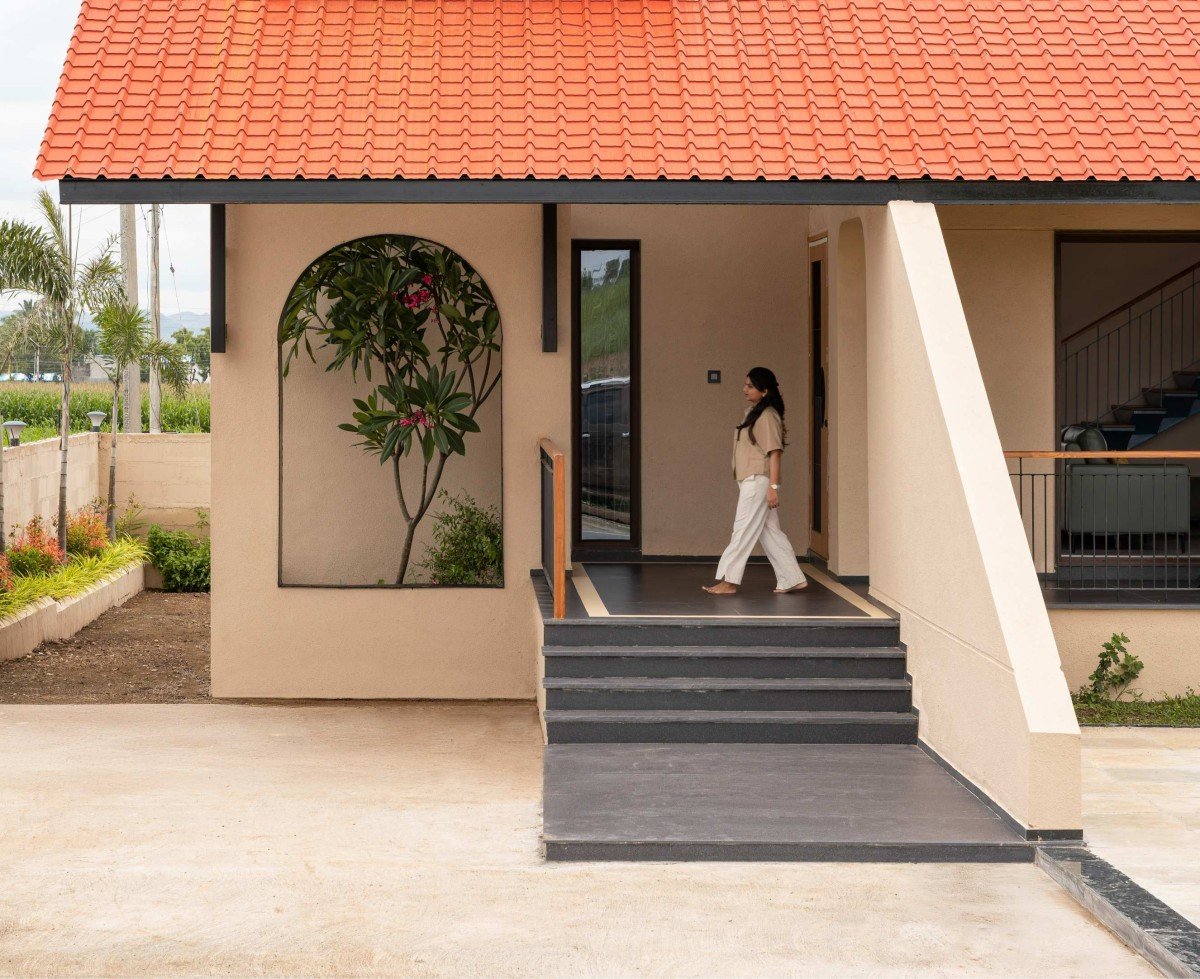
The entrance sequence reflects the same restraint seen throughout the project. A modest shaded porch leads into the home, framed by angular structural supports and softened with pockets of landscape. One of the most striking details here is the recessed planter niche integrated into the wall, where a flowering tree becomes part of the architectural composition rather than an added decorative element. The palette remains deliberately simple: muted plastered walls, terracotta roof tiles, dark metal members, and natural textures that sit comfortably within the rural setting.
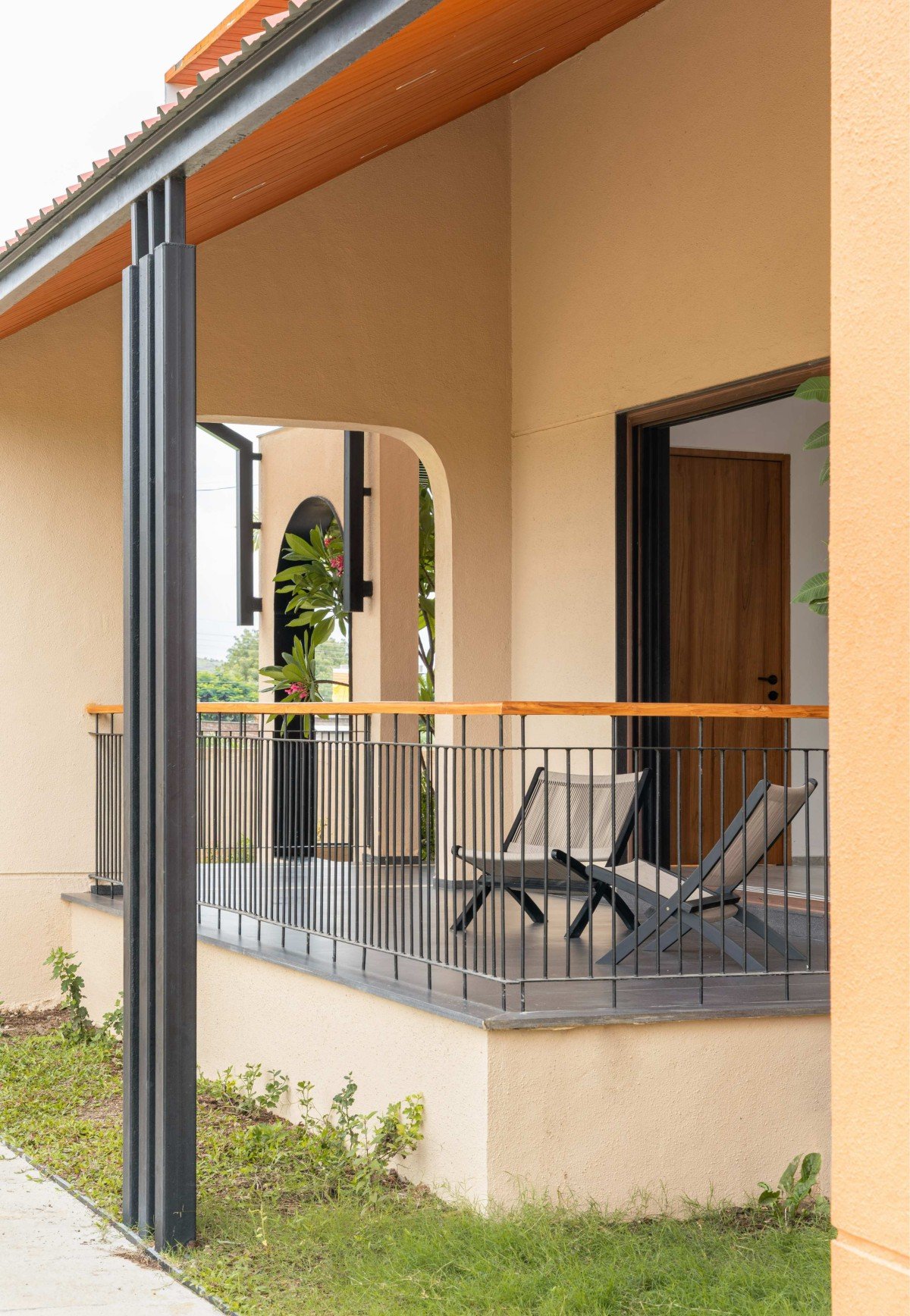
Inside, the double-height living room forms the spatial core of the house. Tall glazed openings bring in natural light throughout the day while maintaining visual connections with the outdoors. A linear staircase moves diagonally across the volume, adding movement and structure to the otherwise calm interior language. Slim railings and exposed stair undersides keep the element visually light, allowing the openness of the room to remain uninterrupted.
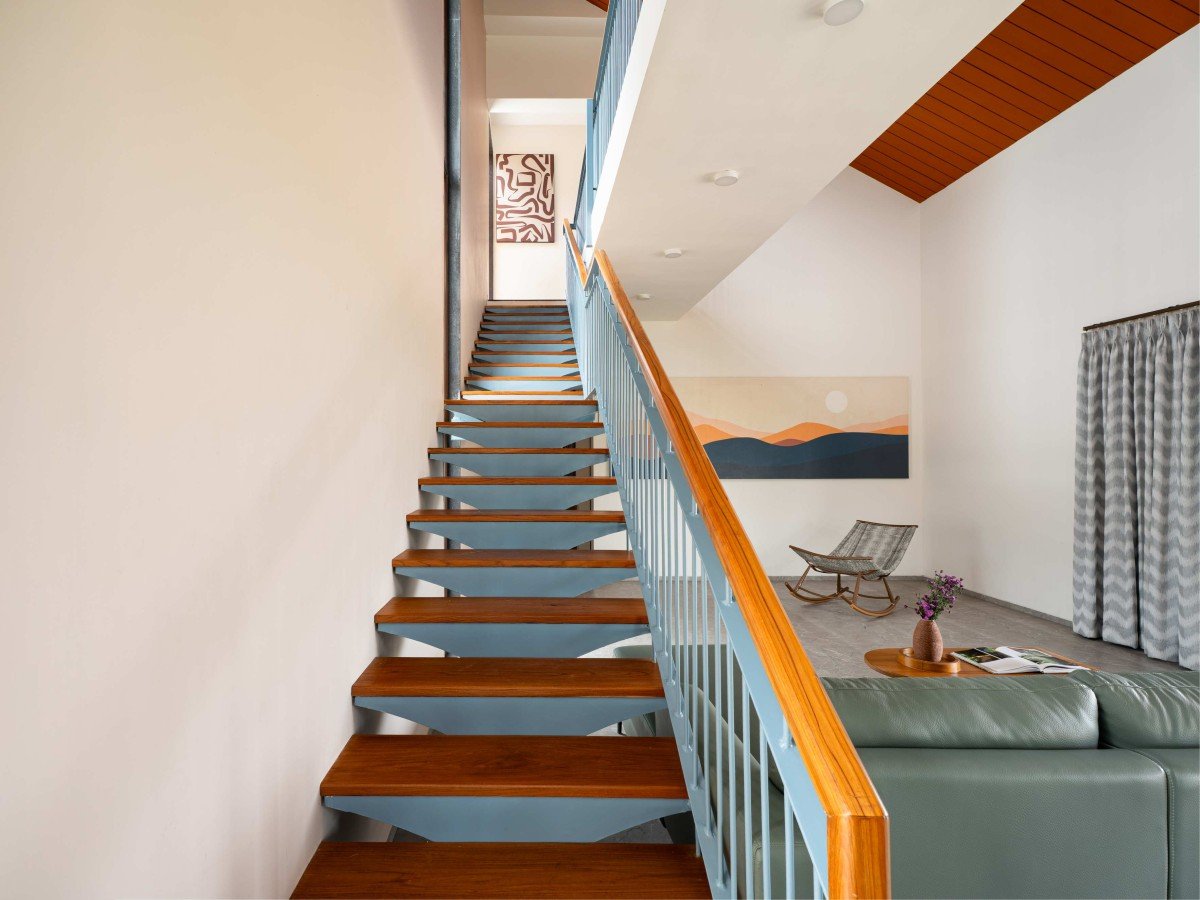
Furniture and finishes are intentionally understated. Soft neutral tones, clean surfaces, and minimal detailing allow the architecture itself to remain the focus. Instead of relying on decorative excess, the interiors derive character from proportion, daylight, and the relationship between solid and open spaces.
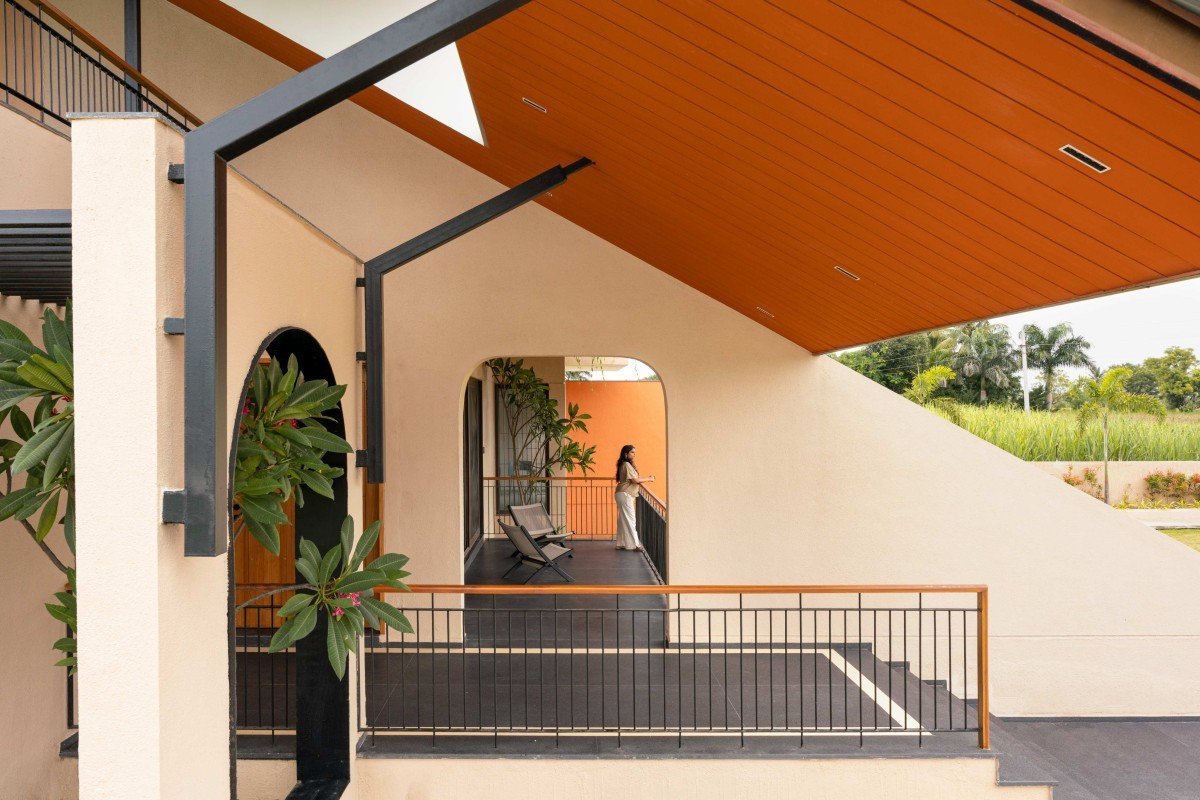
The upper terraces further reinforce the weekend-home character of the project. Protected under the sweeping roof yet open to the landscape, these spaces are designed for slower routines: sitting outdoors in the evening, gathering with family, or simply looking over the fields after rain. The architecture does not isolate itself from the site but remains constantly aware of it through framed views, cross ventilation, and shaded outdoor extensions.
What makes Sindhu House compelling is its measured approach. The project does not attempt to romanticize rural living, nor does it treat the countryside as a backdrop for spectacular architecture. Instead, the design focuses on climate responsiveness, spatial comfort, and continuity between the built form and the landscape around it. The result is a contemporary weekend residence that feels rooted in its setting without becoming nostalgic or overly stylized.
Fact File
Project Name: Sindhu House
Location: Konkangaon, near Sangamner, Maharashtra, India
Typology: Private Weekend Residence
Architects: Ajit Bendre Design Studio
Built Area: 2,500 sq. ft.
Completion Year: 2025
