
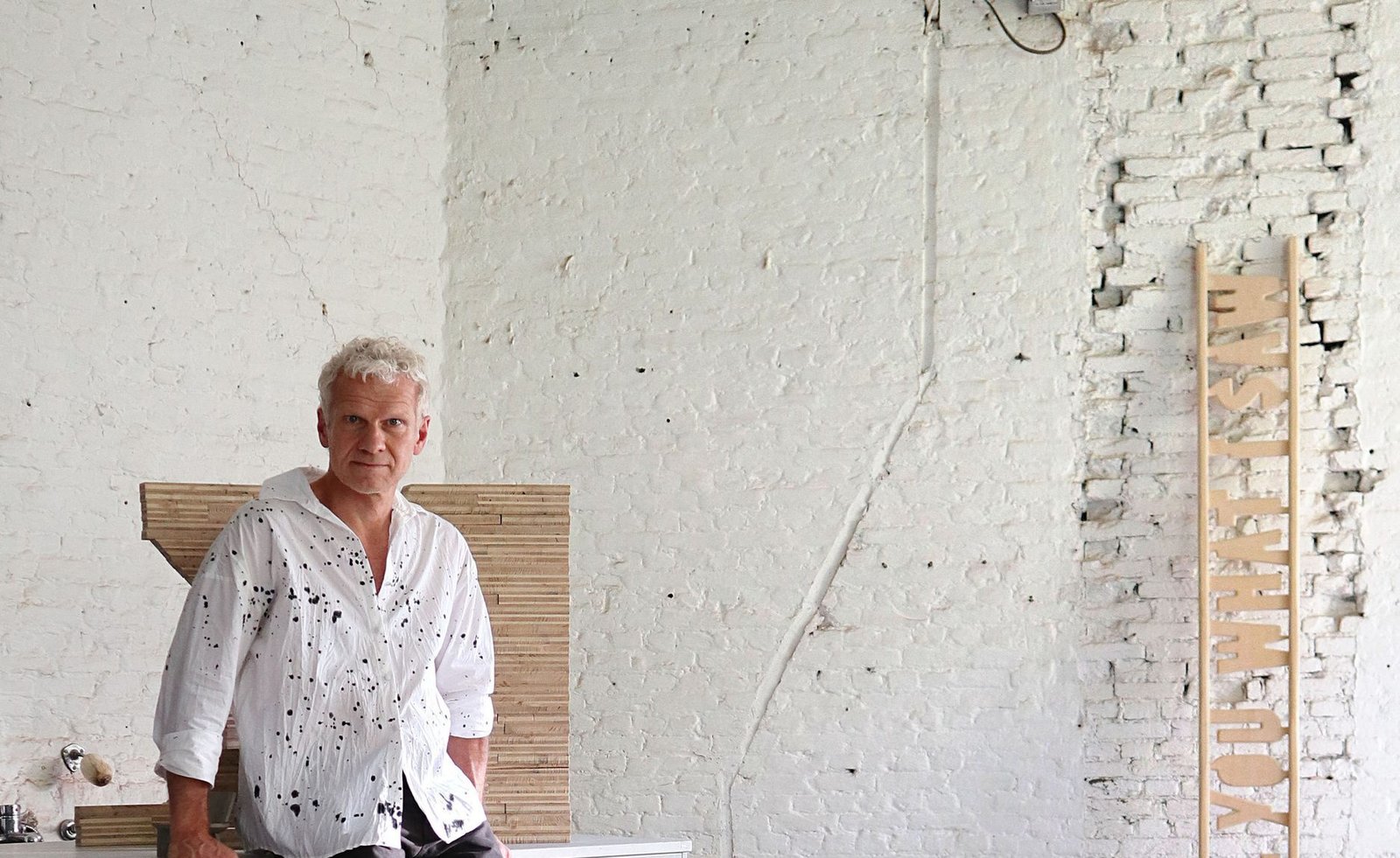
He spent years designing corporate identities, and the physical work that came with them, a bar counter here, a ticket desk there, all built to someone else’s deadline. Eventually he built a second practice with none of those limits attached. What he learned surprised him: total freedom wasn’t the answer. A single rule was. Alisha Maindola speaks with Marc Meeuwissen of Dear Objects, ahead of his continued run of collectible-design showings across Europe, about restriction, imperfection, and a future he’s not sure human intuition survives.
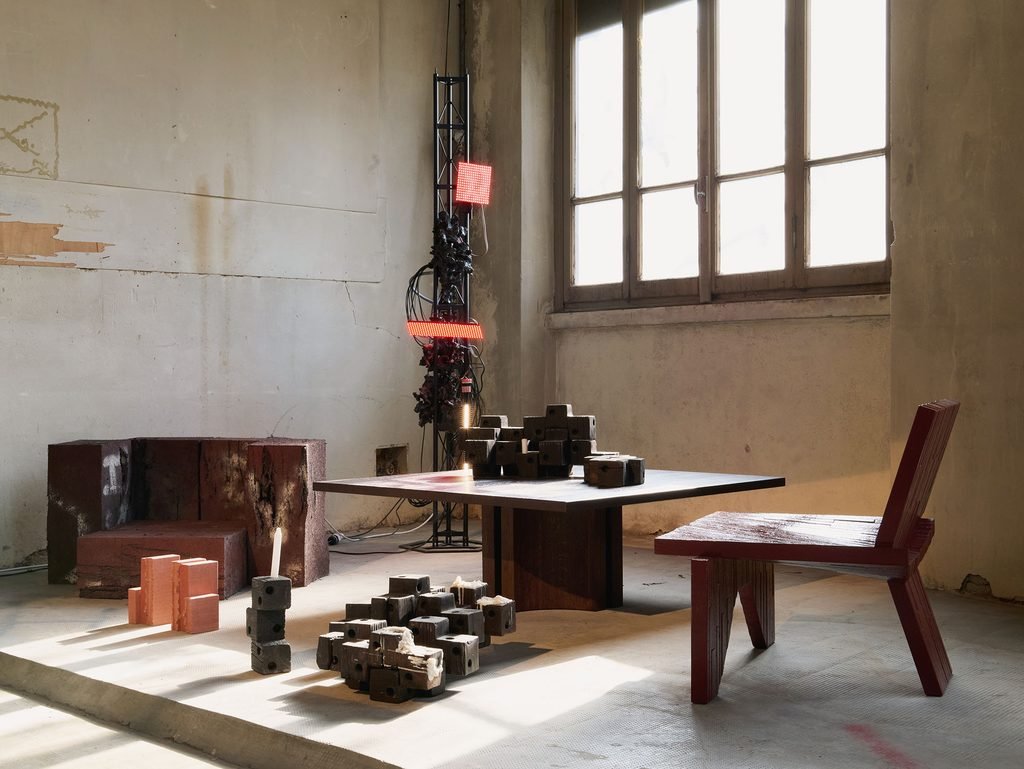
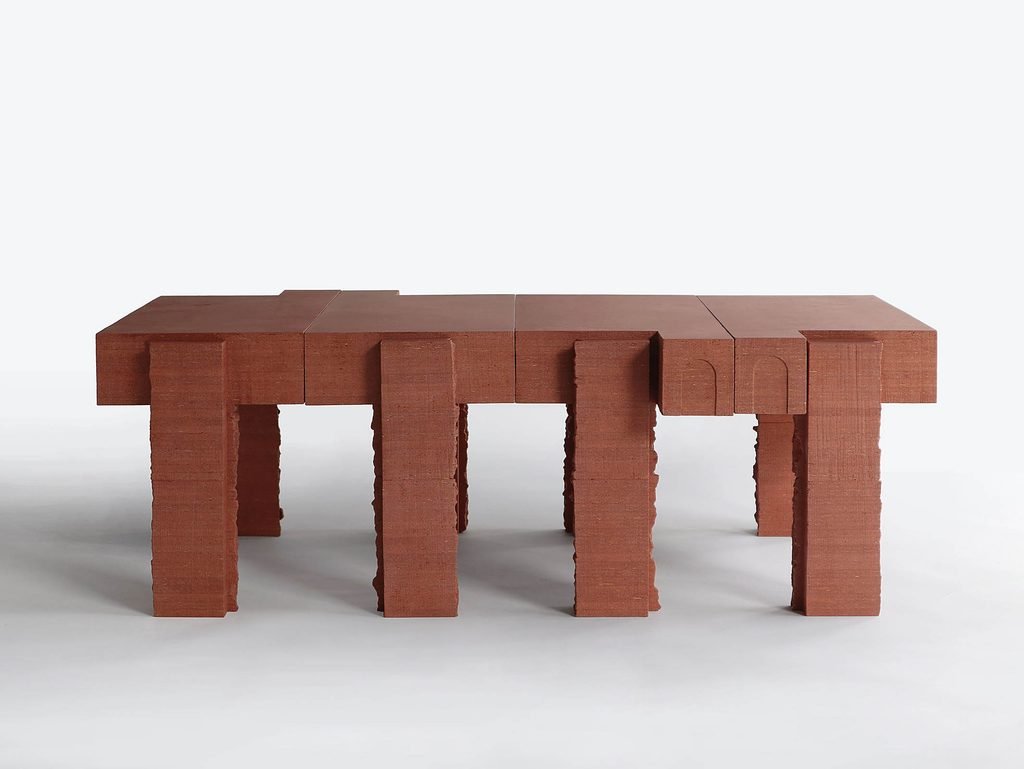
Corporate identity work paid Meeuwissen’s bills for years. It also came with a ceiling. A theatre café needed a counter. A lobby needed a divider. Each brief arrived with a client attached, and a client meant a deadline, and a deadline, he’s since decided, is usually where good work stops rather than where it finishes. “Without a client, you have the opportunity to continue that process until you’ve achieved the best possible result. Only then, in my view, can you reach a level that’s worth investing all your time and energy in.” Dear Objects exists because he wanted to keep going past the point where a brief would normally end.
Freedom didn’t arrive as clarity, though. He calls the early period a rudderless adventure, a head full of half-formed ideas with nothing steering them. Should function outweigh form? Make it himself, or have someone else fabricate it? Does the story behind an object matter more than its shape? None of these resolved quickly. What did arrive, gradually, was a method rather than an answer: limit everything down to one material, worked by one tool, by hand. Sawing a single sheet of timber-based board turned out to sharpen his instincts rather than box them in. “The more you realize what is not possible, for example, sawing a circle, the more focused and inventive the design process becomes.” One sheet. One saw. One object. That line became the entire premise behind BRUTALISTA, his best-known series, and close to a founding document for everything Dear Objects has made since.
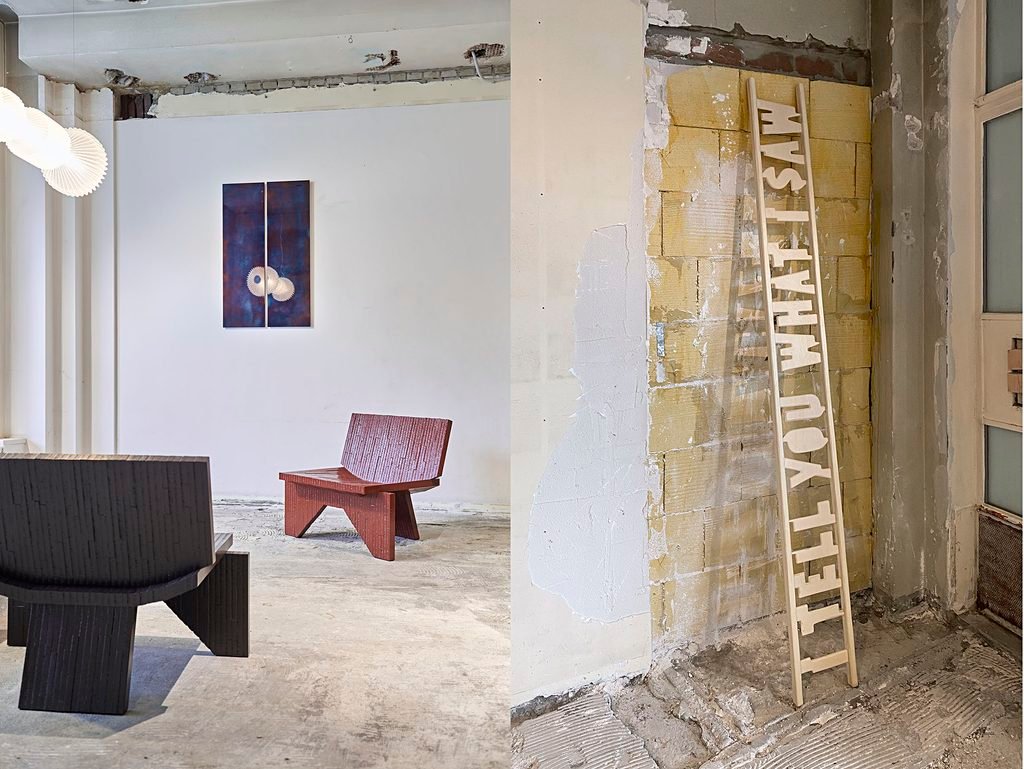
Working almost entirely by hand wasn’t only practical. It was a small act of positioning. His earliest pieces read less like furniture and more like short stories told in wood, objects built around a single memory or observation rather than a functional gap in a room. He named that first series I Tell You What I Saw, a fairly direct admission that after years spent producing polished visuals for other people’s brands, he finally wanted the images to be his own.
Object, sculpture, architecture, Meeuwissen doesn’t bother drawing lines between them. What he’s chasing is a form powerful enough to stand on its own, and that, in his estimation, is the one trait every designer, sculptor and architect he respects actually shares. Technique is a means, never the point. Even the word “object” gets used deliberately, less as a category than as an exit ramp, a way to dodge the flatter, more limiting language of “chair” or “table” and skip the tired debate over whether something counts as art or design. Call it an object, and it gets judged purely on its form.
Most designers sketch first. Meeuwissen reaches for a material he doesn’t fully understand yet, often one being pushed to do something it wasn’t built for. That habit produced MAKE AND BREAK, a series built on Viroc, a cement-bonded chipboard that borrows concrete’s strength and wood’s flexibility without behaving quite like either. Nobody, including Meeuwissen, can fully predict how it fractures under pressure. Rather than hide that unpredictability, he built the series around it. Layers get stacked into a single mass, then broken apart by hand, and the resulting fracture line is now the series’ signature, proof that a material can teach a designer something a sketch never could.
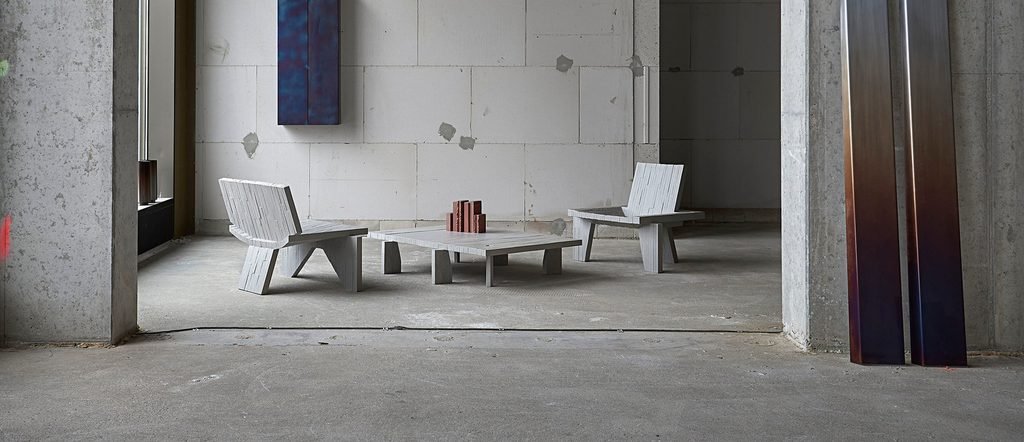
Even inside Dear Objects, direction took time to find. Total freedom, it turns out, guarantees very little. Was storytelling more important than form? Did making the piece himself actually matter, or was conceiving it enough? These weren’t questions he answered at a desk. They answered themselves slowly, through the physical act of making, one broken panel or badly cut sheet at a time.
Ask Meeuwissen why visible process matters so much to him and the answer sounds closer to ethics than aesthetics. He wants no gap between how an object looks and how it was actually built, no hidden step smoothed over for presentation’s sake. That’s what first drew him to Marcel Wanders’ Knotted Chair, and later to Dirk van der Kooij’s Chubby Chair, two objects whose form simply can’t be separated from the specific, visible process behind them. It’s also why he leans into imperfection rather than sanding it away. A hand tool leaves a mark that functions almost like a signature, evidence of one specific person at one specific moment. He preserves that quality even where machinery enters the process. High-speed waterjet cutting, his mechanical stand-in for a handsaw, still leaves an irregular trace on every cut, since speed, angle and material density shift constantly through a single pass. Even the machine, in his hands, leaves fingerprints.
Knowing when a piece is finished, he says, isn’t really knowledge at all. It’s a decision. Either he can live with an object as it stands, or pushing it further would achieve nothing, and whatever comes next belongs to a different piece entirely.
His years in graphic design shaped how he still builds form today, more than most people would guess. He constructs three-dimensional work the way a layout designer builds a page, stacking flat shapes until they resolve into volume, working first through scale models glued together from layered cardboard or wood before scaling up into whatever sheet material he’s committed to. Photographing those models early, he’s found, tends to expose a design’s weak points long before a full-size version exists. A genuinely strong object, in his view, has to hold up from every single angle, not just the one that ends up photographed.
Anish Kapoor comes up when he talks about influence, specifically Leviathan at the Grand Palais. So do Herzog & de Meuron’s Reading Pavilion in Jinhua, the painter Bernard Frize, and video artists Richard Mosse and David Claerbout. Different disciplines, same trait, according to Meeuwissen: each one builds a self-contained universe strong enough to make a viewer lose track of time and place, disorienting and poetic at once. He’s precise about the distinction he wants drawn here. They didn’t shape his worldview. They enriched it, and he clearly considers that a meaningfully different thing.
Brutalism as a philosophy still matters to him, but narrowly, specifically where it intersects with honesty about materials. Eco-Brutalism is where he sees that idea land hardest today, buildings that refuse to hide their environmental cost behind decorative cladding and instead show their raw materials and life cycle plainly. That same instinct governs how he separates desirability from meaning. Form and colour chase trends, collect quick approval, and fade. Meaning asks more of a viewer and tends to last longer, though he won’t call the two opposites, pointing to Rietveld’s Red-Blue Chair as proof a single object can hold both at once. Meaning itself can take several shapes, functional, ecological, narrative, social, and visual appeal plays a legitimate part in all of them. It’s only when visual appeal is the entire story that he’s willing to call something, flatly, art or bad design.
On artificial intelligence, he doesn’t soften his answer. He hopes human intuition keeps distinguishing people from what a machine produces, but he’s genuinely worried it’s already losing that fight, that people are quietly outsourcing their own instincts to a system’s instead. Technology itself hasn’t diminished creative possibility, he’s careful to add, and he isn’t interested in rejecting it outright. What matters is intent. Used deliberately, as a tool rather than a shortcut around judgment, technology still leaves space for one designer to stand apart from everyone else reaching for the identical tool.
Sustainability threads through nearly everything else he says, though he resists collapsing it into a single question. Real effort is going into new materials, biocomposites, earth concrete, recycled plastics, but whether any of it scales to real manufacturing volume remains, in his words, genuinely open. For him, sustainability starts closer to home, with the relationship between a person and an object they own. Something built to age well. Something expensive enough that a buyer thinks twice before an impulse purchase, and repairs it rather than replacing it once it’s theirs. His material choices track that logic exactly. He favors engineered wood sheet materials over solid timber because they simply use less raw wood, plywood especially, and singles out Valchromat, an MDF variant built from residual branches and wood chips bonded with organic resin, as proof that a material’s upfront ecological cost can be offset by a long lifespan and minimal upkeep.
He’s not interested in pretending collectible design floats above the contradictions of a consumer economy just because it makes less of everything. More practicing designers naturally means smaller production runs, almost by arithmetic, and tools like 3D printing now let individual makers work in small batches without a factory behind them at all. But he won’t dodge the obvious tension either: making new objects while genuinely arguing for sustainability will always sit a little uneasily together, a contradiction he thinks applies to nearly everything people make, not design specifically. His own response stays practical rather than philosophical. Waste gets minimized where he can manage it. Offcuts get sourced secondhand. He visits manufacturing plants directly, looking for material they’re already throwing away.
His real worry about the future isn’t a materials question at all. It’s access. Work made by a designer’s own hand costs more than most people can spend, and Meeuwissen doesn’t dodge the implication, that collectible design risks becoming, gradually, something only the wealthy actually get to own. He doesn’t offer an easy fix for that, and doesn’t pretend to have one.
Asked what he’d want the next generation of designers to take from his own approach, he deflects the premise slightly, calling it a little presumptuous to assume anyone should learn something specific from him. If there’s anything worth taking, he offers this instead: commit to one bold idea, strict enough to shape an entire visual language, and let that single rule act as a compass for whatever comes next. One sheet. One saw. One object. It’s the same rule that built his first BRUTALISTA piece, years ago now, and by his own account, he’s never needed a second one.
