
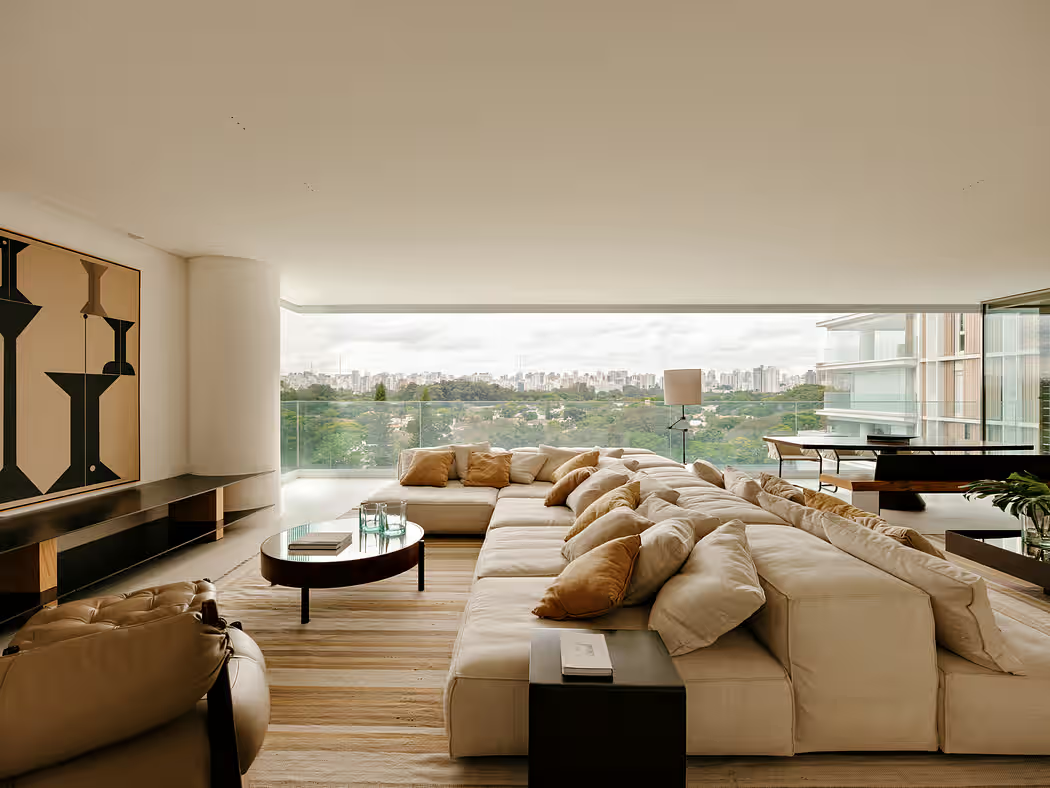
When the apartment next door became available, Studio Arthur Casas found a way to absorb it without breaking what was already there.
Fact File
Architecture and Interior Design: Studio Arthur Casas
Type: Residential Renovation
Year: 2025
Photography: Fran Parente
The project begins with a premise that most renovation briefs do not contain. The apartment is already finished, designed, decorated, inhabited, and resolved. Studio Arthur Casas has completed a home for a young couple in São Paulo’s Gaivota district, and the family has settled into it, and then the apartment next door becomes available. The practice now faces the question of how to extend an existing home, not how to design a new one, while preserving the existing internal logic, which is more demanding than it appears, because the difficulty of addition lies in managing to avoid disturbing the existing structure.
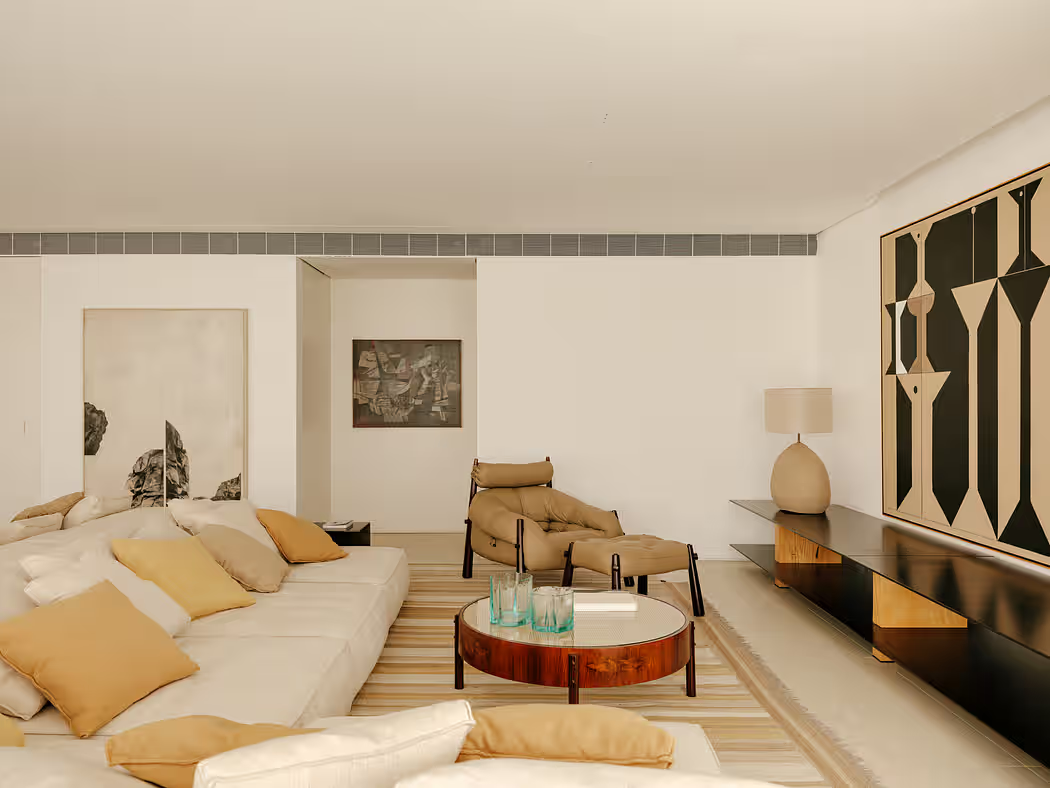
The family is young and growing, a couple with three small children, and what the additional unit needed to provide was scale, more room for gathering, a proper place for the children, a guest suite, and the ability to receive people at the kind of generous São Paulo scale that a single apartment, however well designed, could not accommodate. The second unit, adjacent to the first and connected through the gourmet area, needed to be integrated seamlessly to create a single interior rather than two separate homes.
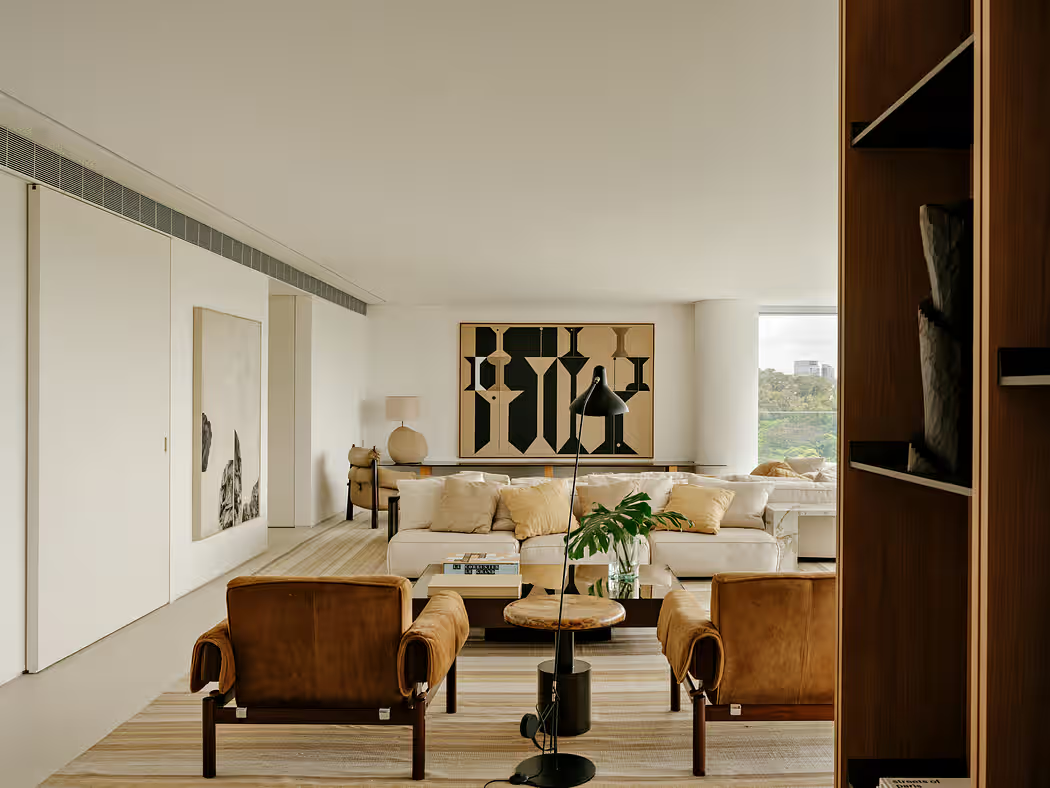
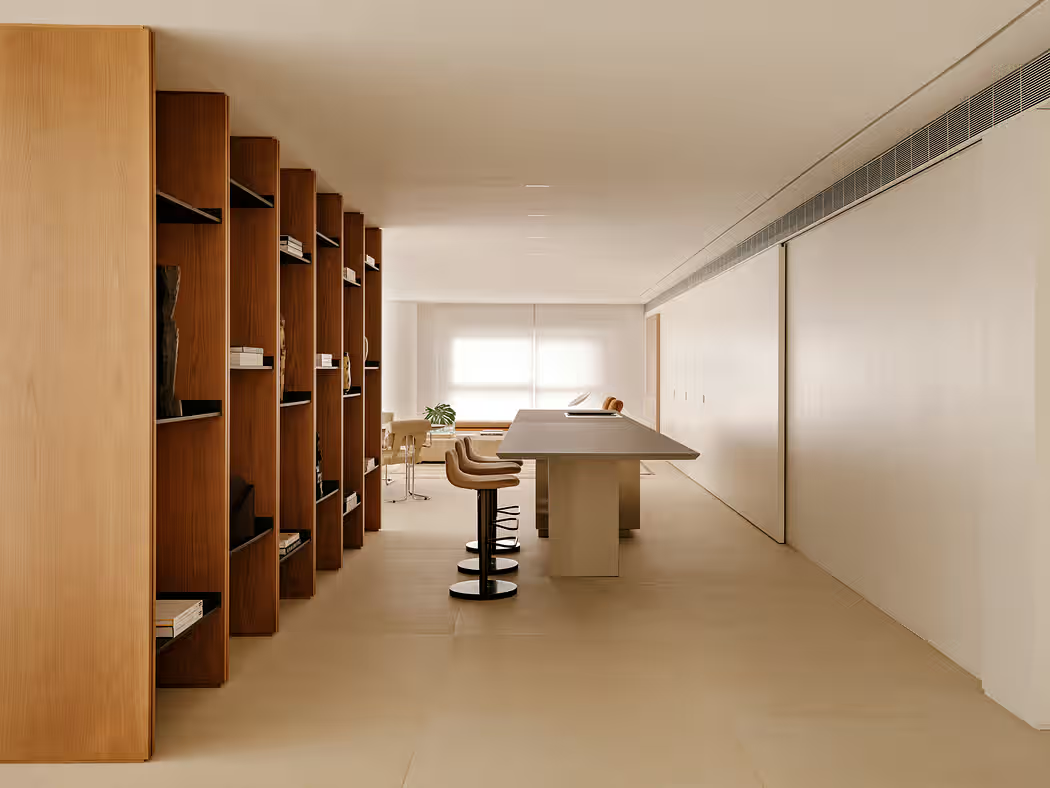
The device that resolves this is a large bookcase in deep-stained timber that runs the full height of the connecting wall between the two units, its open shelves holding books, sculptures, and objects in the manner of a library rather than a partition, broadening sightlines from one unit into the other while establishing a visual threshold that the eye crosses without registering as a structural boundary. Standing at the gourmet island in the second unit and looking back through the bookcase toward the first, the apartment reads as a single deep interior, with the large geometric artwork in the original living room visible in the distance through the timber shelving and the park view beyond the full-height glazing framing the whole sequence. The join is visible if you look for it and invisible if you simply live in the space, which is precisely what the project required.
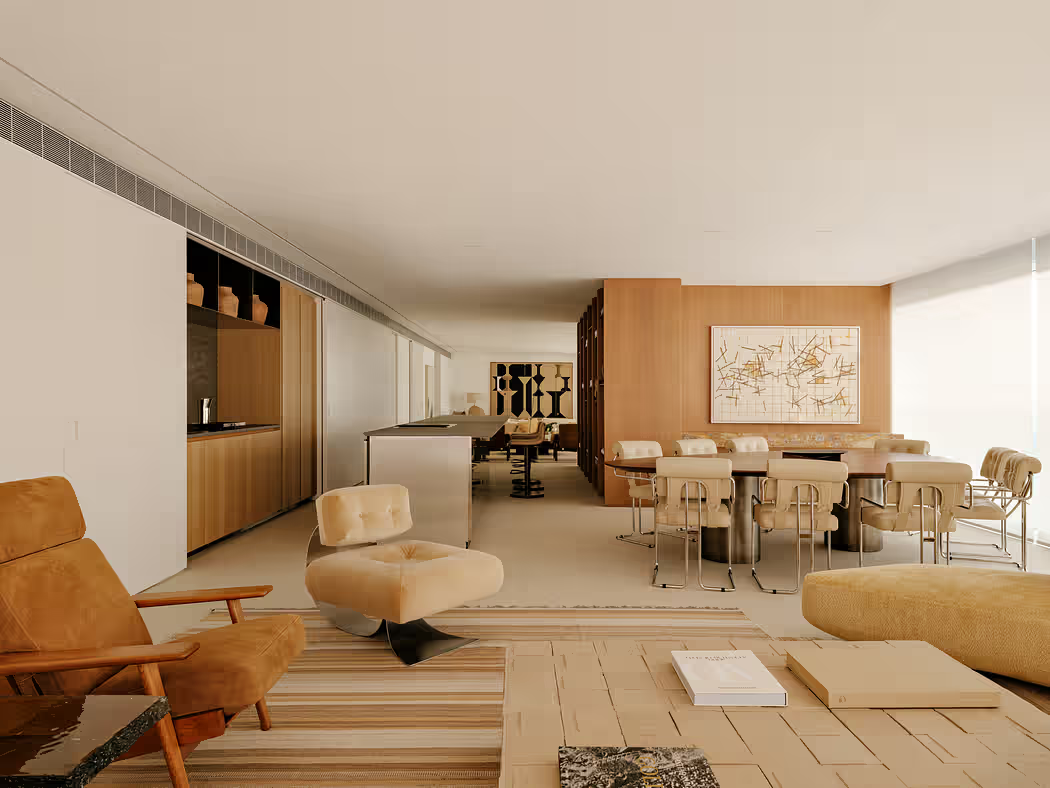
The gourmet island, which connects the two units, is designed with the same economy of means that governs the entire renovation. Its stone countertop is completed using reused material, and a new metal foot is designed to relate to the proportions and character of the original piece rather than replace it. The bar stools at the island, upholstered in tan leather and mounted on black pedestal bases, are positioned against the bookcase wall. This arrangement allows the act of preparing food and the act of crossing from one section of the apartment to the other to share the same territory, with the kitchen and the threshold occupying the same moment in the plan.
The first section of the home, the original apartment, organizes the social life of the family around an island sofa of substantial scale in off-white upholstery with mustard scatter cushions that anchors the living and home theater space in a configuration generous enough to hold an extended family gathering and relaxed enough for a weekday evening with three children. A large geometric artwork in black and beige occupies the wall beside the television unit, a piece in dark wood with oak accents that sits low along the wall and grounds the artwork above it. The retractable projection screen disappears when not in use, allowing the room to shift from cinema to daily occupation without the visual weight of equipment asserting itself between screenings. To one side of the living area, two tan leather armchairs in the Brazilian vintage tradition, low and reclined and deeply comfortable, face across a rosewood coffee table with a glass top toward the main sofa, the arrangement giving the room a second social register alongside the island sofa, a place for conversation at a different scale and in a different proximity.
The park view along the glazed perimeter showcases São Paulo’s dramatic greenery, a sweeping tree canopy that enhances the need for thoughtful interior choices. The plaster ceiling runs continuously across the enlarged apartment, uninterrupted from one unit to the other, and the large-format ceramic tile floors of the social areas establish a visual continuity that the bookcase then reinforces, the material logic of the floor and the ceiling making the junction between the two former units feel like a spatial decision rather than an architectural fact.
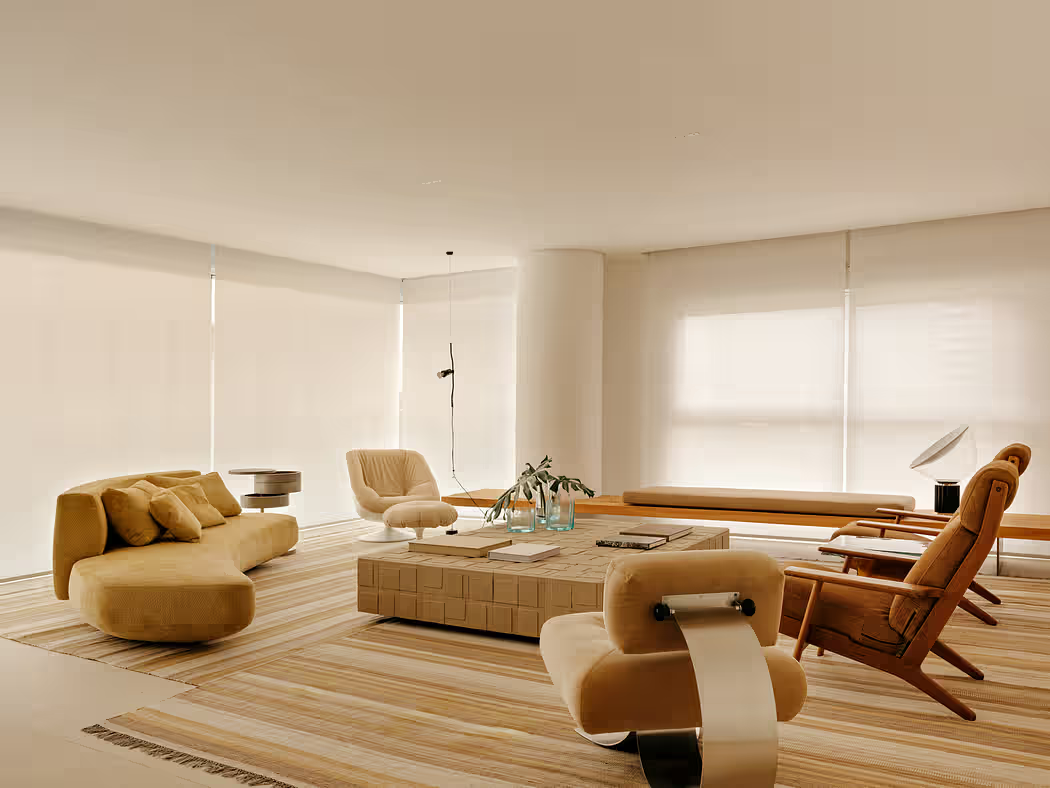
The second unit introduces a larger living room with a more intimate character than the first despite its scale. A curved organic sofa in mustard velvet introduces a different form language from the rectilinear island sofa of the original unit, and the furniture here, a sculptural cantilever lounge chair, a wooden coffee table in a gridded block pattern, and vintage wooden armchairs, all assemble with the ease of a room that has been lived in rather than staged. Roller blinds filter the São Paulo light rather than admitting it directly, giving the room a diffused quality that the full-height glazing of the original apartment does not have, and the effect is of two living rooms that feel genuinely different in atmosphere despite the consistency of material and palette that connects them.
The dining table in the gourmet area scales up to accommodate the larger gatherings the expanded apartment was commissioned to host, its chrome-framed chairs mixing vintage Brazilian pieces with more contemporary selections in the manner of a table that has accumulated over time rather than been assembled at once. Above it, on the timber-paneled accent wall, an abstract artwork in gold and cream provides the warmth that the neutral palette of the social areas deliberately withholds, leaving the artworks and the furniture to bring texture and emphasis to rooms that have chosen restraint as their primary register.

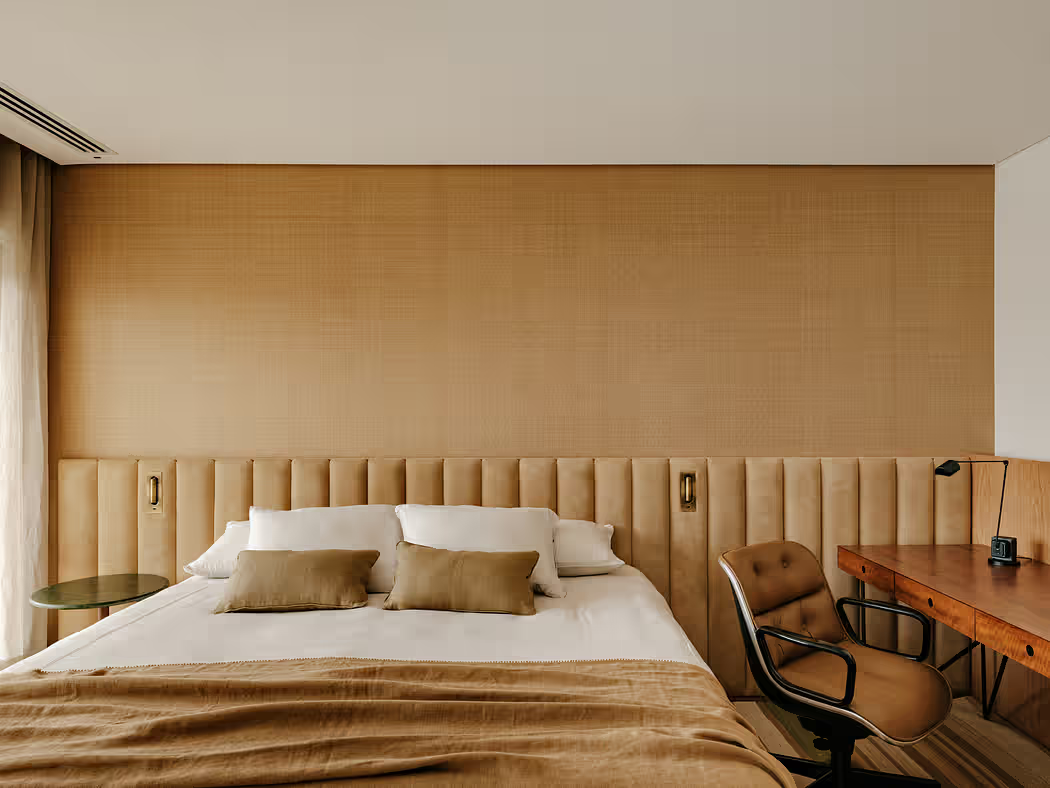
The private spaces shift the material language of the apartment perceptibly. In the primary bedroom, a channeled upholstered headboard in warm wheat fabric spans the full width of the bed and extends sideways, its fluted vertical panels continuing the room’s material warmth while the textured wall covering above it, in the same amber-honey tone, gives the bedroom a depth and enclosure that the white walls of the social areas do not attempt. A vintage rosewood desk with a leather desk chair sits to one side of the bed, the kind of furniture that takes decades to acquire the particular quality of presence it now has, and the combination of it with the bespoke headboard and the warm wall treatment produces a room that reads as the most personal space in the apartment, the place where the clients’ accumulated choices are most legibly themselves.
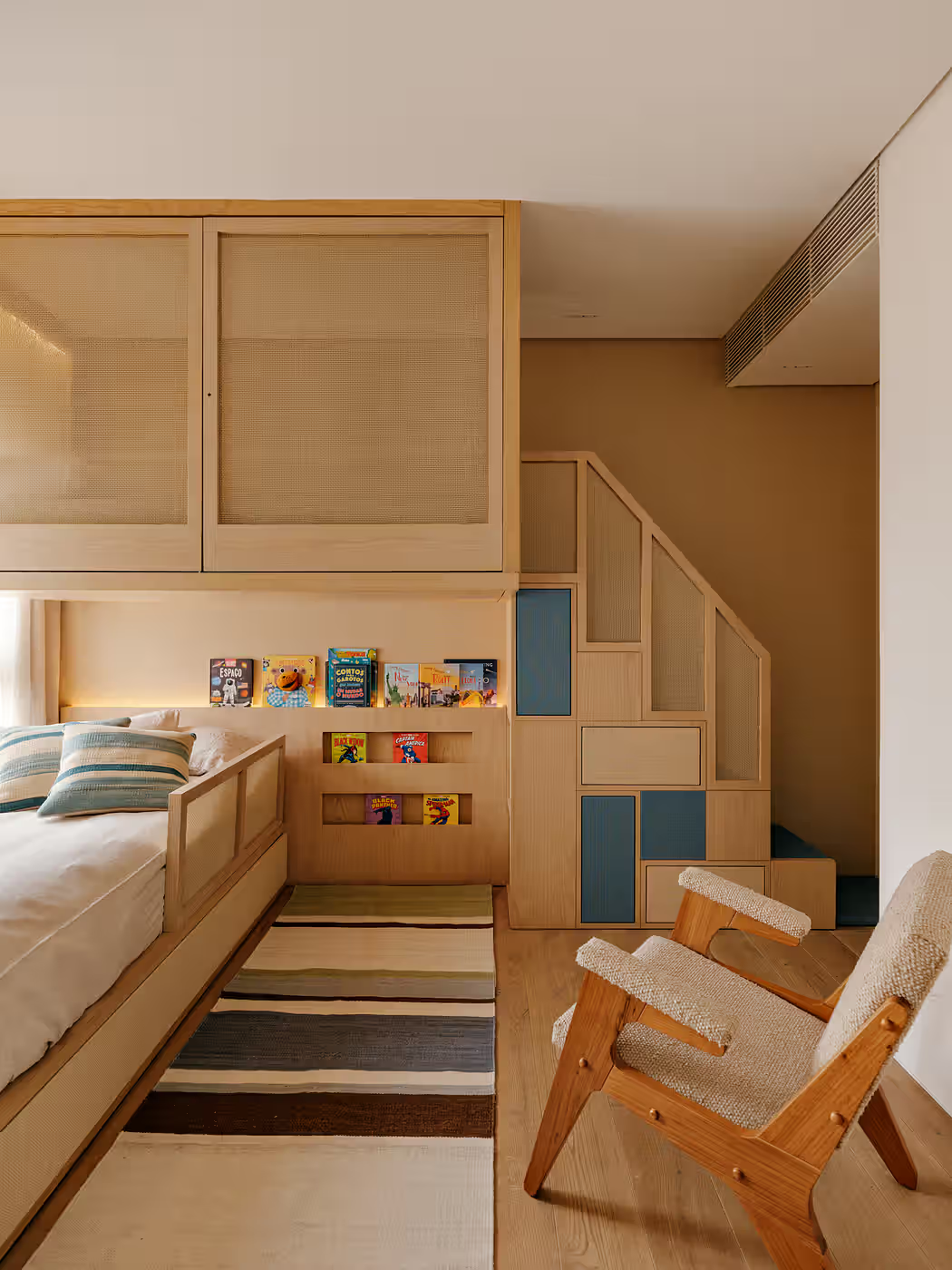
The children’s room in the second unit is the most architecturally inventive space in the project and is clearly designed for its specific users. A complete bespoke timber system in pale natural maple occupies the entire primary wall: a lower bunk bed with integrated open book ledges displaying the children’s books along its face, overhead storage with perforated cane panel doors above it, and a staircase to a loft sleeping area whose risers incorporate drawer storage painted in a warm denim blue, the only color accent in an apartment that has otherwise held firmly to its neutral palette. The system is complete and considered in the way that the best children’s furniture always is, which is not the way of visual playfulness but the way of genuine thought about how children actually inhabit a space and what they need from it across different hours of the day.
The guest room has been designed with its future in mind. Its current use as a guest suite is built on a spatial logic that anticipates its conversion into a third children’s bedroom as the family grows, and the decision to build that future change into the current floor plan rather than leaving it to a subsequent renovation reflects the broader intelligence of a project that treats flexibility not as a concept but as a specific set of spatial decisions made in the present to accommodate needs that are not yet present but will be.
In the bathroom, natural oak cladding covers the vanity unit and the surrounding walls in a continuous grain, topped with a dark stone basin whose surface reads almost like slate against the warmth of the timber around it, a black matte faucet providing the single precise contemporary note in a material combination that is warm, specific, and entirely consistent with the private register the bedroom spaces establish. Warm indirect lighting behind the vanity panel creates an amber glow at floor level that makes the bathroom feel inhabited rather than functional, the kind of light that the social areas of the apartment, with their plaster ceilings and their park views, have no need to provide.
What Studio Arthur Casas has produced in Gaivota Apartment is a renovation that absorbs the fact of its own expansion so completely that the enlarged home reads not as two apartments joined but as a single interior that has always been exactly this size, which is a more difficult achievement than the seamlessness of the result makes it appear. The bookcase that joins the two units is the evidence of the work. The apartment that surrounds it, moving from its park-facing living room through the gourmet junction to the new dining scale and the second living room and the children’s timber world beyond, is the result.
