

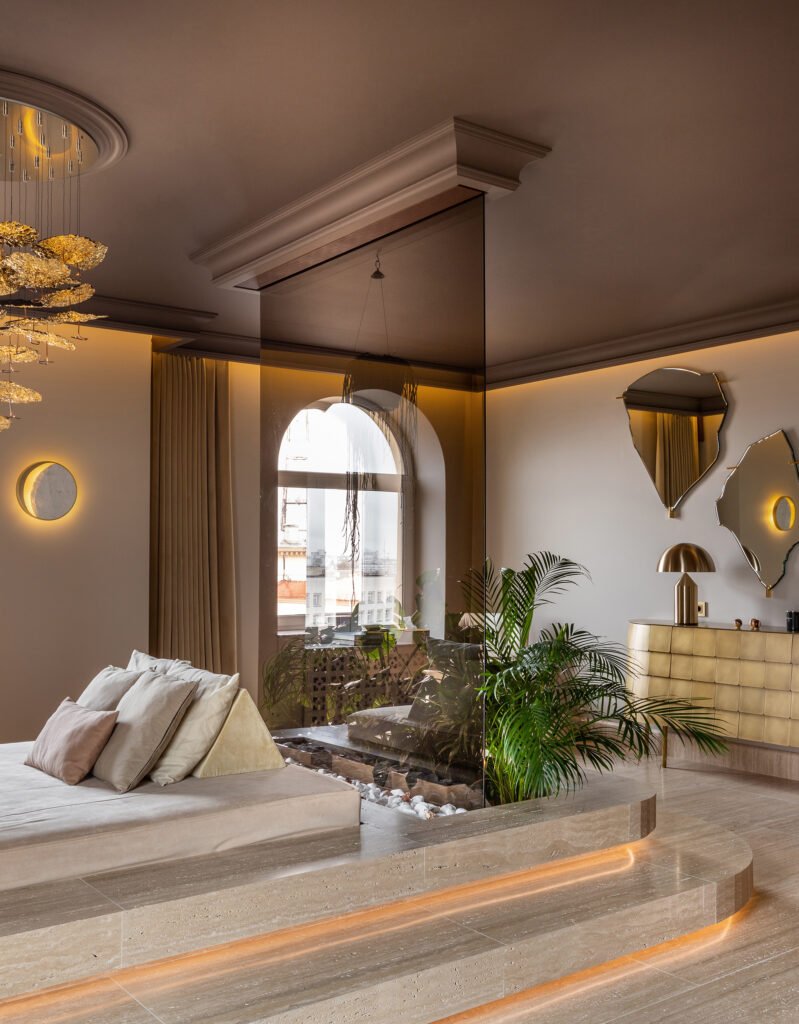
When Alena Bulataya walks into a space for the first time, she does not look at the style. She observes how the space behaves. Circulation, balance, light distribution, and moments of tension reveal themselves immediately, before the brief has been read or the client has spoken. Most people cannot explain why they feel good in a particular space, she says, but their body knows. Good design speaks to the eyes. Great design speaks to the nervous system. This is the principle she pursues, and one she actively passes on to every member of her team at AB Design Buro.
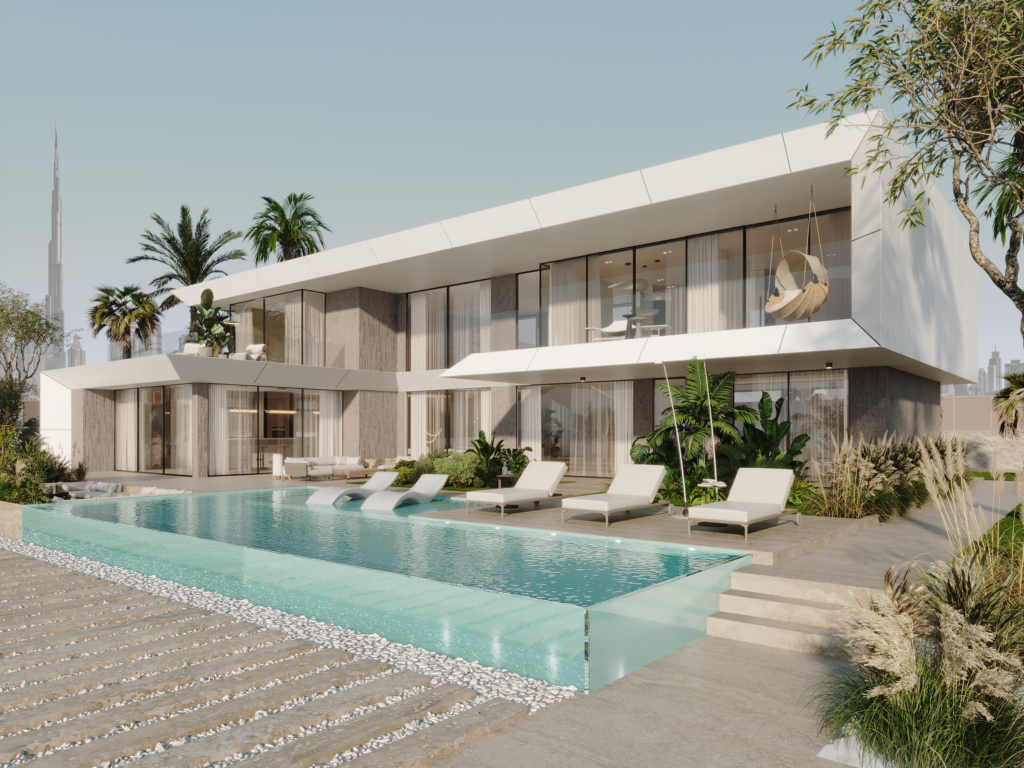
Bulataya is the founder and creative director of an international studio whose work spans private villas, restaurants, beauty clinics, spas, offices, and apartments across Belarus, the UAE, Qatar, the United States, and Europe. The range is not accidental. Working across typologies removes hierarchy, she says. A private villa, a restaurant, and a clinic are not fundamentally different—they are all environments that influence behaviour, perception, and emotional state. What changes is the intensity and rhythm of that interaction. The discipline she has built her practice around is the same across all of them: understanding what a space needs to do to the person inside it, and then making that happen without the person ever knowing it is being done to them.
She studied at the National Academy of Fine Arts and then continued in Milan, and she is clear about what each gave her that the other could not. The academy trained discipline, a precise understanding of proportion, balance, and composition, and developed a way of seeing where you instinctively recognize when something is resolved and when it is not. Milan introduced context and, with it, an understanding that design is inseparable from culture, industry, and lifestyle and that form without relevance to the world it inhabits is simply form. One gave her a rigorous visual language. The other taught her that design is always part of a larger system, economic, cultural, and human, and that a designer who does not understand that system is only ever working on the surface of it.
“Good design speaks to the eyes. Great design speaks to the nervous system.”
Creation, for Bulataya, was never inherited. She did not grow up surrounded by artists or designers, and there was no moment in her childhood that pointed inevitably toward the career she built. What she had instead was awareness, an early understanding of how strongly the environments and contexts you place yourself in shape the way you think and see. She made conscious decisions about which cities, cultures, and creative communities to move through, treating contrast itself as a form of education. No one is tied to a single place, she says. The world is too diverse to remain within one perspective. For her, inspiration comes from contrast, from moving between cultures, rhythms, and ways of living. It is within these differences that depth is formed.
The studio she opened more than fifteen years ago did not begin as a fixed structure. There is a moment, she says, when working within someone else’s framework begins to limit the way you think. For her it was not about independence but about authorship. As the demand for her work grew, it became clear that a different level of control was needed over concept, process, and execution. The team evolved organically through shared vision and increasing project scale, with flexible teams emerging across different cities as the work expanded. Today the studio operates simultaneously across multiple cities, countries, and continents while maintaining a consistent approach.
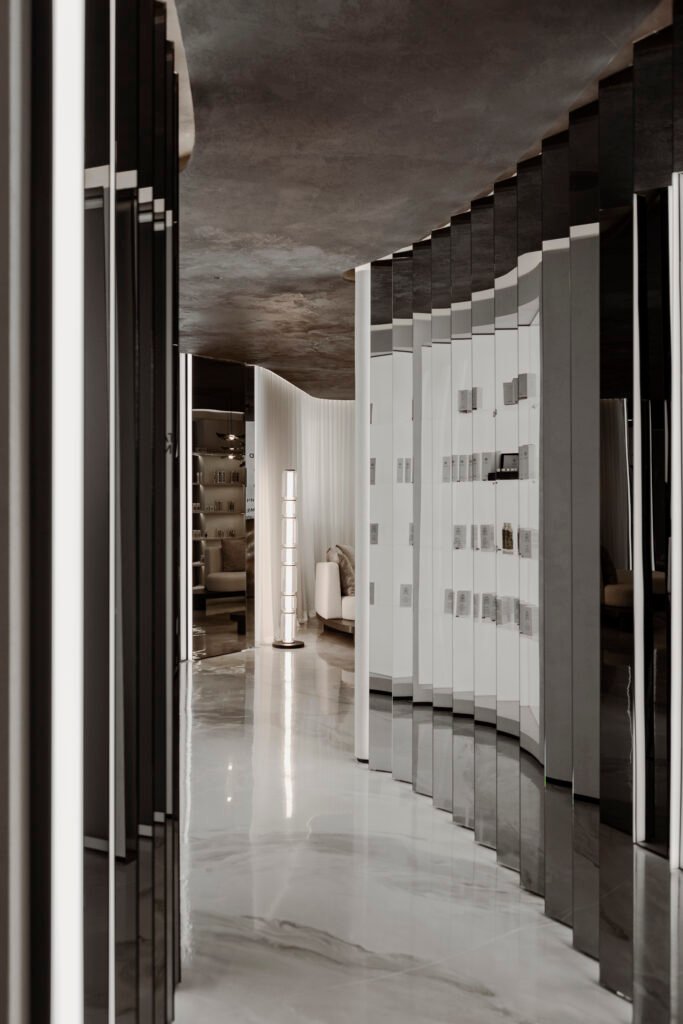
Consistency at that scale, she says, is not achieved through control at the end. It is embedded at the level of thinking. Spatial logic, hierarchy, and proportion are established early and guide every subsequent decision. In her practice, elegance and functionality are rarely in tension because they are rarely treated as separate concerns. Elegance is clarity, the absence of excess. Functionality is logic, the absence of friction. When the structure is precise, the visual outcome is no longer a matter of choice. It becomes inevitable.
“When the structure is precise, the visual outcome is no longer a matter of choice — it becomes inevitable.”
One of her hospitality projects was built around a challenge that had nothing to do with visual identity. The primary question was time: how the same space transitions from a calm morning atmosphere into a dense, high-energy evening environment without physical transformation. This required designing not objects but scenarios. A successful restaurant, she says, is not defined by a single atmosphere. It is built through layers of light, rhythm, density, and reflection. The task is not only to accommodate different moods but also to actively shape them, to guide emotional experience almost like a conductor directing an orchestra. A client later described the completed space as feeling like an exhale. Moments like these confirm that design operates beyond the visual. It affects how people feel before they can articulate it.
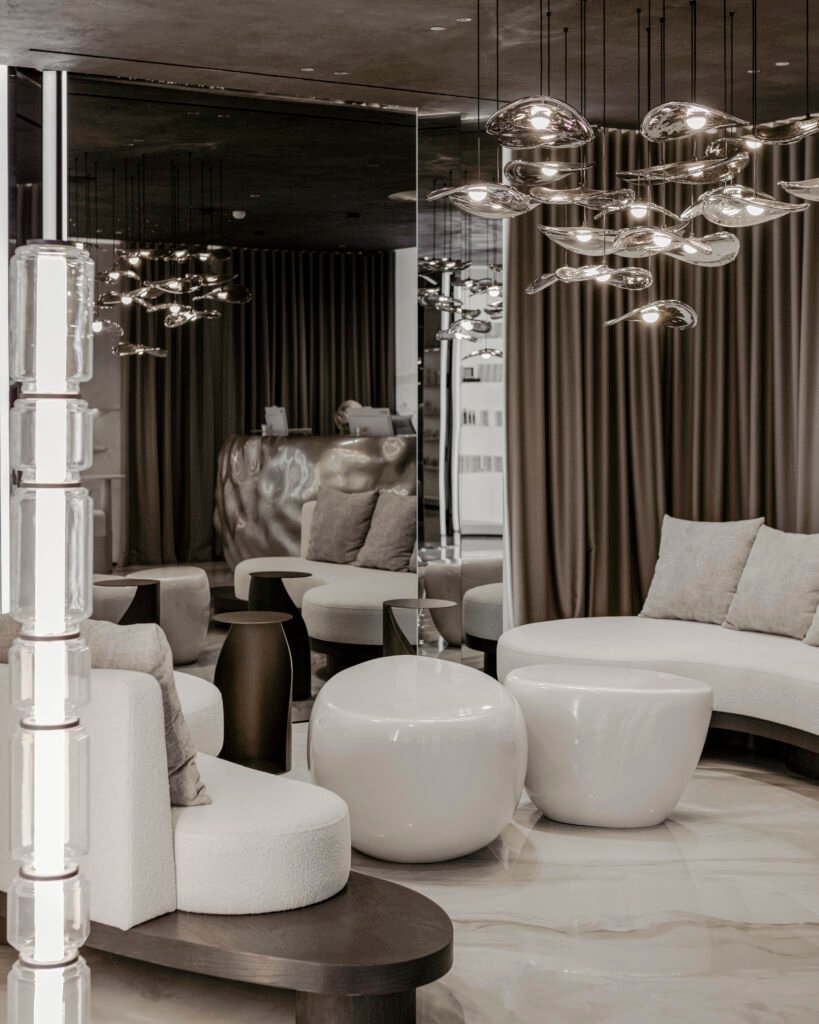
The difference between a spa and a restaurant, in her formulation, is not stylistic. It is perceptual. A spa slows time. A restaurant accelerates it. In a spa, stimuli are reduced. In a restaurant, they are orchestrated. In recent projects she has begun integrating what she calls soft zones, areas without visual noise, direct light, or pressure. In one wellness project, combining matte travertine, diffused light, water sound, and tactile materials led a client to say this space feels like an exhale. Good design, she says, is almost invisible. Bad design constantly interferes.
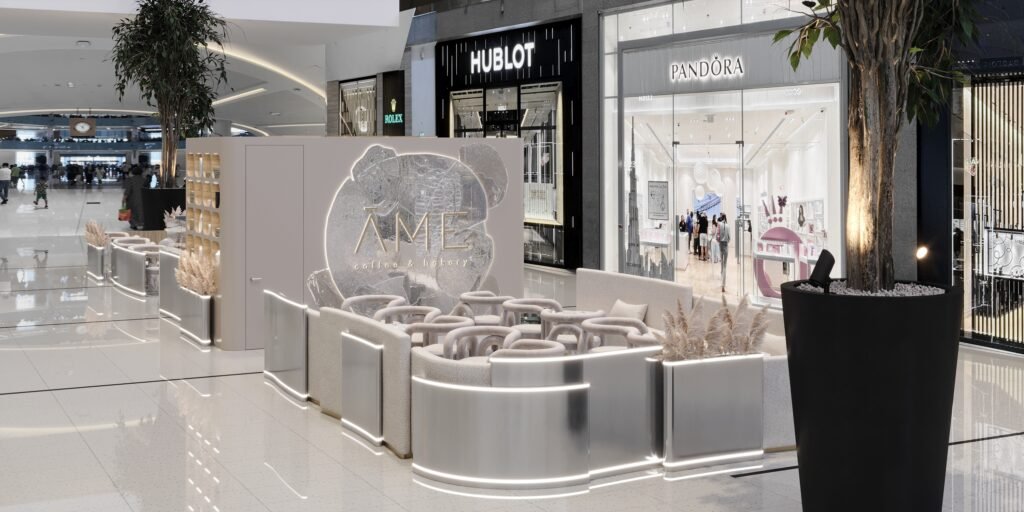
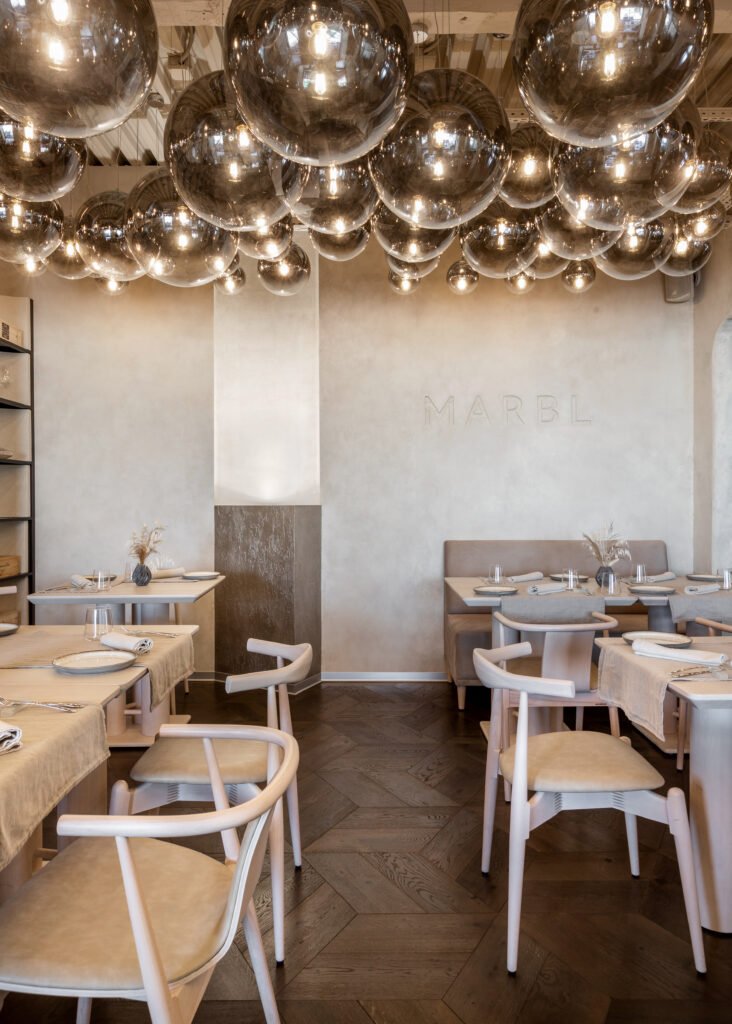
Dubai and Qatar want to be the most in architecture, technology, innovation, and scale. She has worked extensively across both markets and understands exactly what this ambition requires from a designer: not just solutions, but a strong and confident perspective. Clients there want to see the outcome before it exists. Decisions are fast, expectations are high, and the demand for immediate clarity is constant. New York asks something entirely different: spatial constraints that demand precision where every square foot is critical and complexity embedded within limitation rather than expressed through scale. The core process across all of these markets remains unchanged, she says. What changes are the parameters: climate, cultural patterns, materials, and light. Design is not adapted emotionally. It is calibrated.
“A spa slows time. A restaurant accelerates it.”
The material that has surprised her most in her practice is stone. It carries a sense of permanence and weight, yet in the right composition it can feel almost fluid, particularly through light and scale. Its perception shifts dramatically through texture, finish, and surface treatment, from raw and monolithic to refined and tactile. Its potential becomes especially evident through unconventional geometry, where it moves beyond its expected rigidity and becomes part of a more expressive, sculptural language, no longer simply applied but fully controlled and integrated into the formation of each piece.
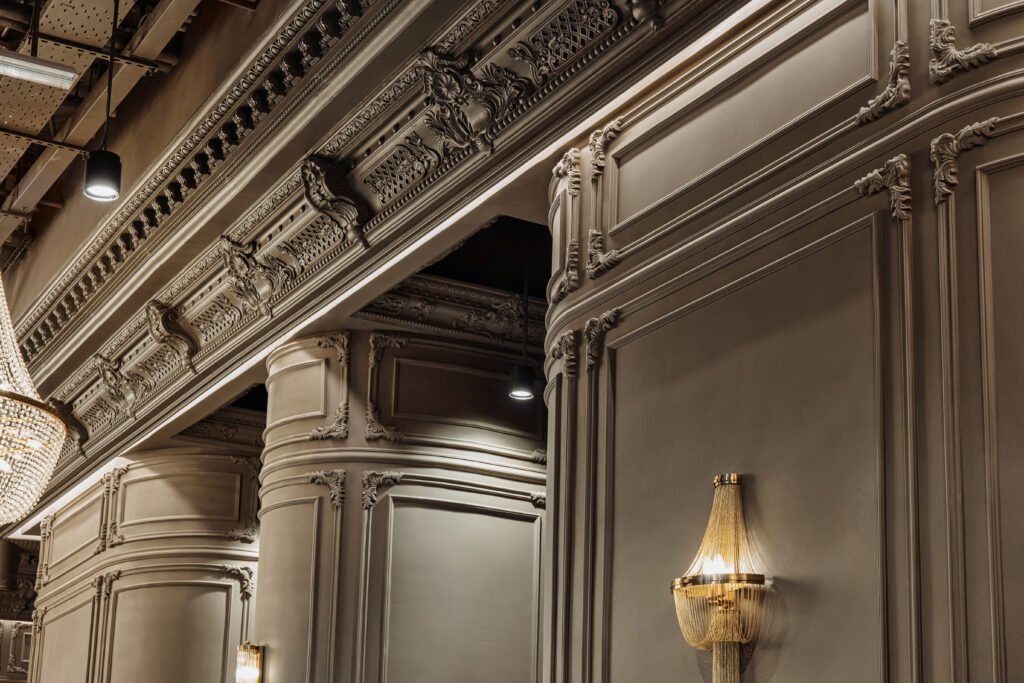
Clients, she says, almost always begin with images rather than with how they want to feel and live in a space. It is understandable, because visuals are easier to communicate than feelings. But design begins with a projected sense of self, with how a person envisions their future experience. Only then does the visual language become precise. The space that truly works is the one that reflects who the client is, not what they saw on a screen.
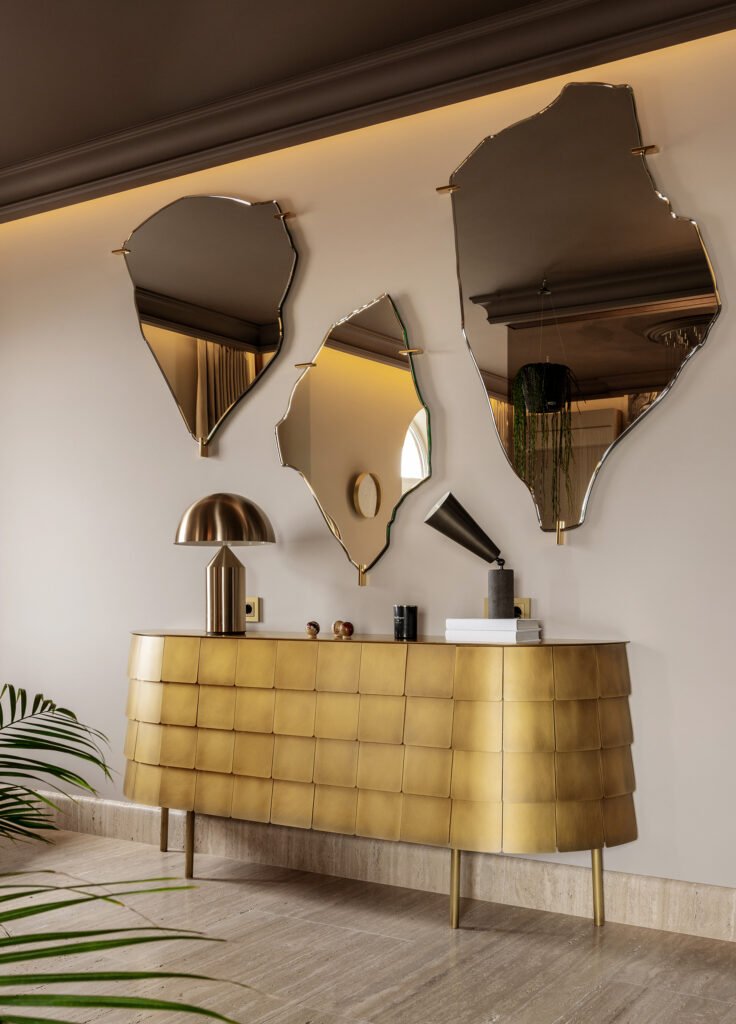
On luxury, she is direct. Luxury is not a cost; it is an alignment with one’s own perception. A well-designed space does not require explanation. It simply works on a sensory and emotional level. The underlying principle of her work across fifteen years has been three words she does not treat as a slogan but as a way of thinking: see more, do more, and be more. Seeing deeper, creating with intention, living in a space that truly reflects who you are. Luxury today, she says, is not about meeting expectations. It is about being authentic and shaping your environment accordingly.
The typology she thinks about most and has never been given is large-scale public or cultural spaces, particularly in cities like New York and Miami. Not because of scale. Because of impact, the ability to shape collective experience. Every environment she designs, from a private apartment to a restaurant accommodating changing light and crowds, reflects the conviction that space guides behavior, often unconsciously. A public cultural space is simply that conviction operating at its largest possible scale. It is, she says, where design becomes something closer to responsibility.
“Luxury is not cost. It is alignment with one’s own perception.”
Interview by Alisha M
