
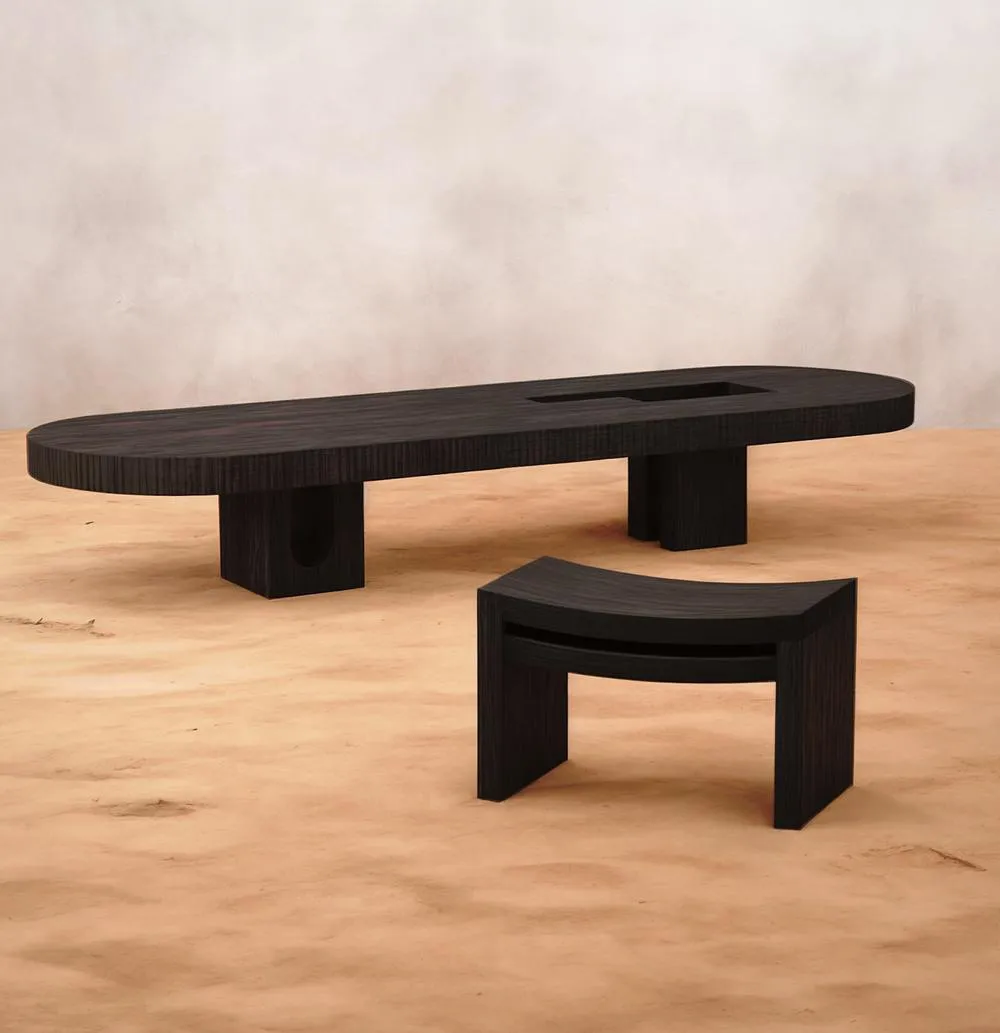
Terry Aidoo’s Kabila Collection, presented in Milan alongside Festival Divercity, takes the traditional African courtyard, a space historically built for gathering, storytelling, and shared meals, and translates it into a coffee table and stool. The name comes from “Kabila”, meaning “clan” or “tribe” in both Swahili and Arabic.
Aidoo has traced the collection back to his own upbringing, split between Italy and an African household. He’s noted the contrast between the individualism common in Western design and the collective, family-centred structure he grew up around, and Kabila started as an attempt to build that contrast into physical furniture rather than leave it as an abstract idea.
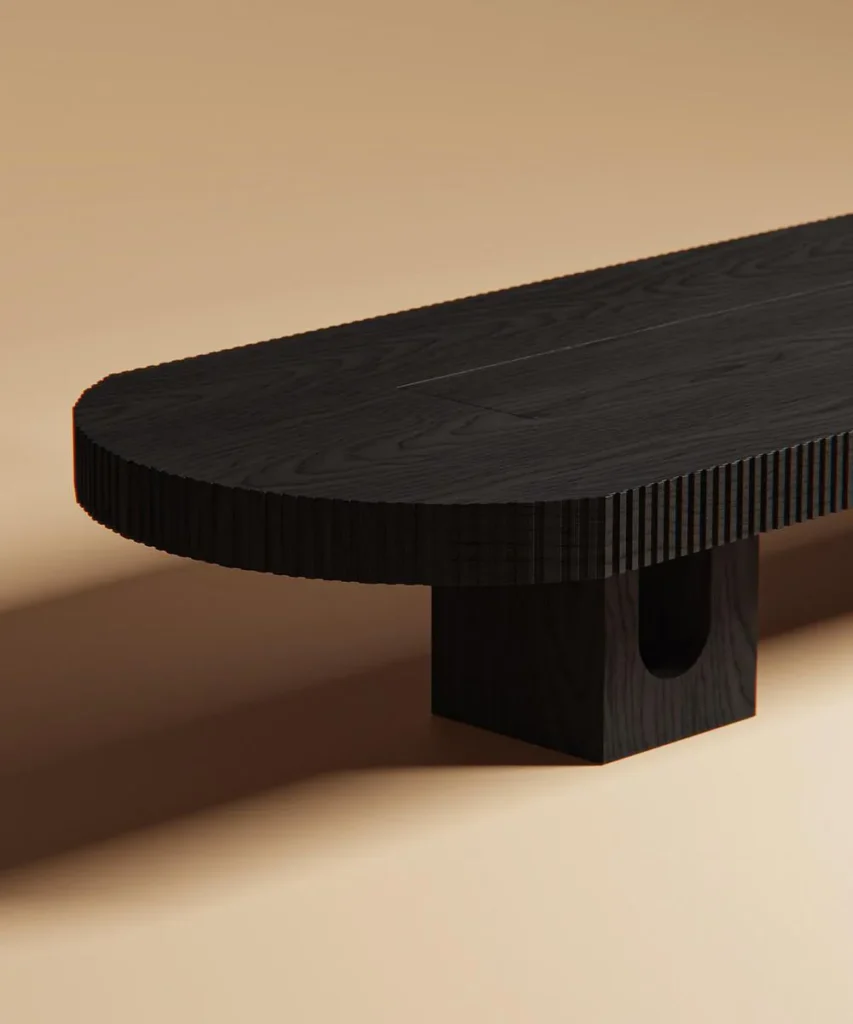
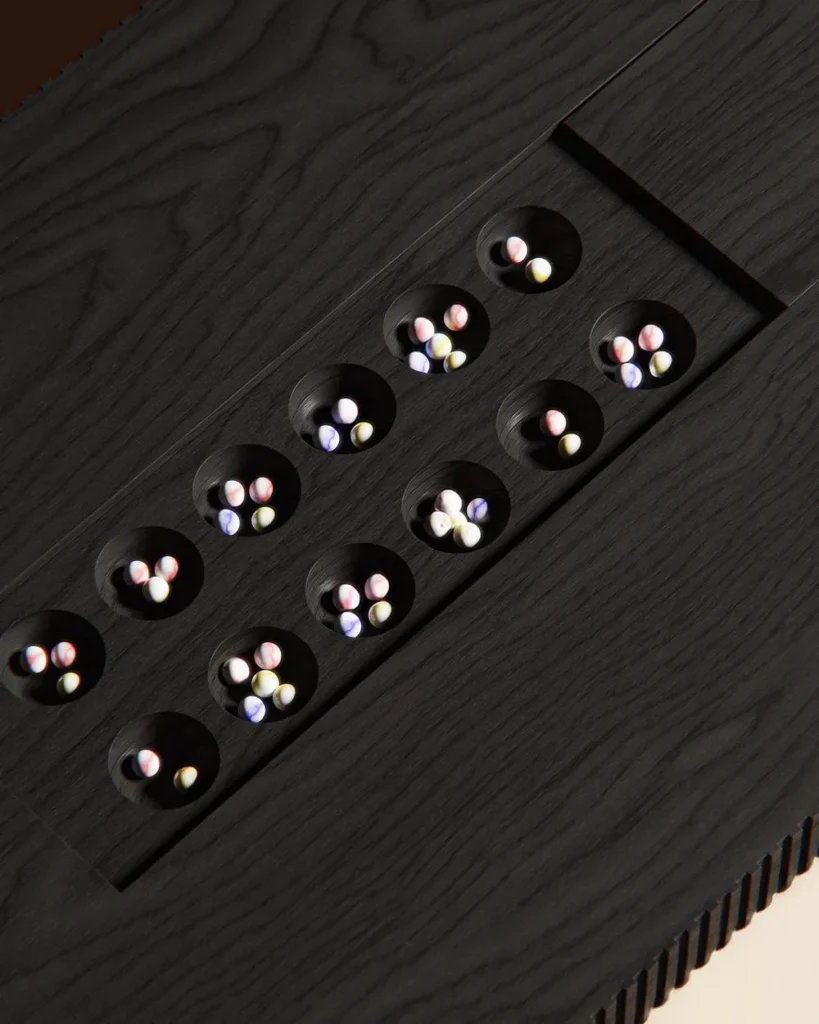
The table functions as the collection’s centre, with the stool arranged around it, the same way people gather around a courtyard rather than sit apart. A recessed circular detail on the tabletop nods to the Eritrean coffee ceremony, and a carved section references Oware, a West African board game traditionally played across generations. The stool takes cues from traditional Edo seating forms from the Benin Kingdom in present-day Nigeria, reworked in proportion and shape rather than copied outright.
The pieces are made from solid sapele wood sourced from Nigeria, CNC-machined for structural precision and then hand-finished by artisans in Italy. Aidoo has described wanting the final pieces to feel as though they were carved from a single block of timber, despite the digital precision behind the cuts.
Kabila won Product Designer of the Year in the People-Centric Design category at the inaugural Africa International Design Awards in 2026.
