
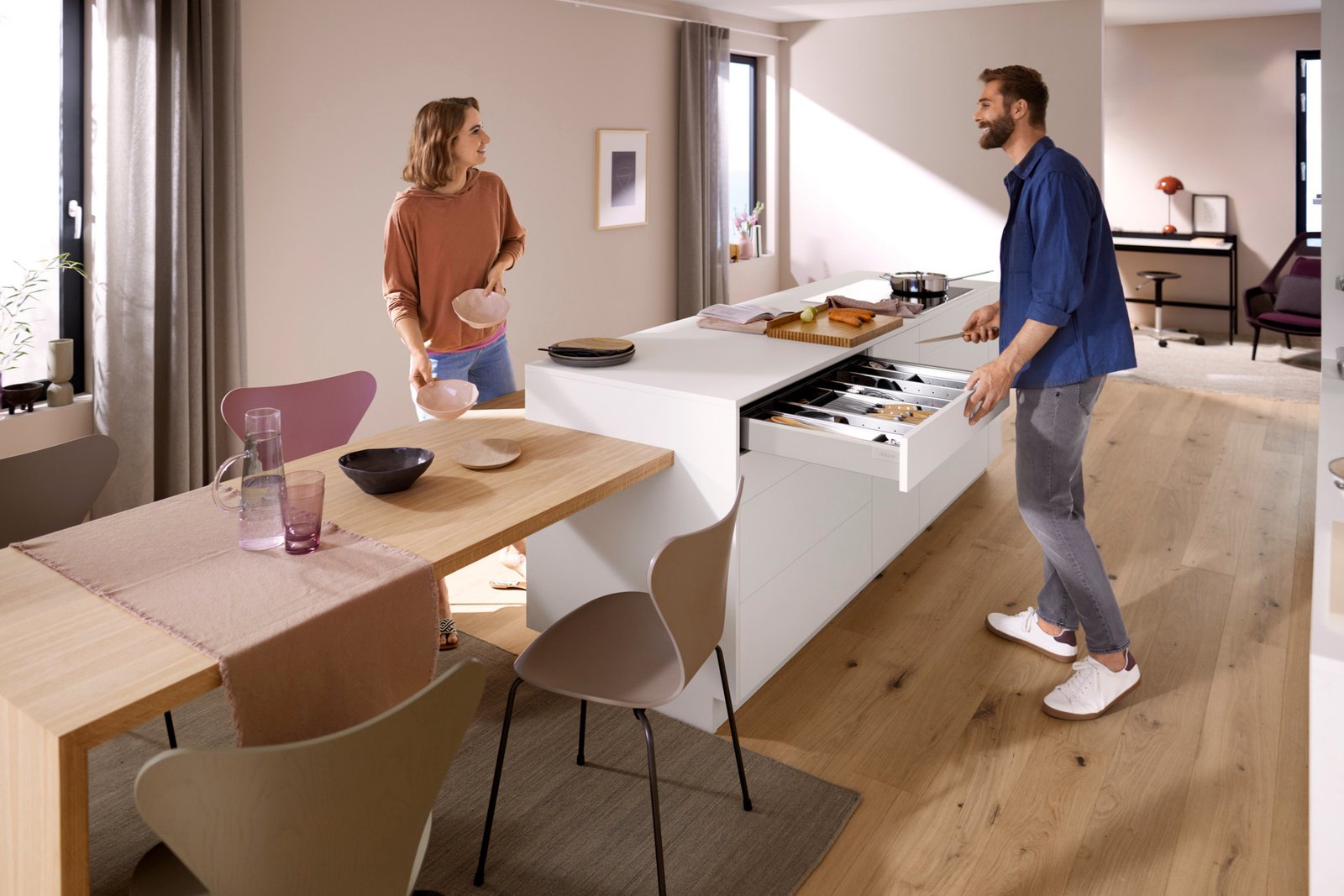
As contemporary kitchens prioritize seamless facades and touch-activated interiors, the hidden mechanics inside cabinets are now as vital to design as visible surfaces. Blum, the Austrian hardware manufacturer, has positioned its TANDEMBOX antaro within this shift, presenting the full-extension, double-walled box system as a foundation that furniture designers can adapt across standard drawers, inner drawers, and high-fronted pull-outs intended for kitchens, bathrooms, and broader living spaces.
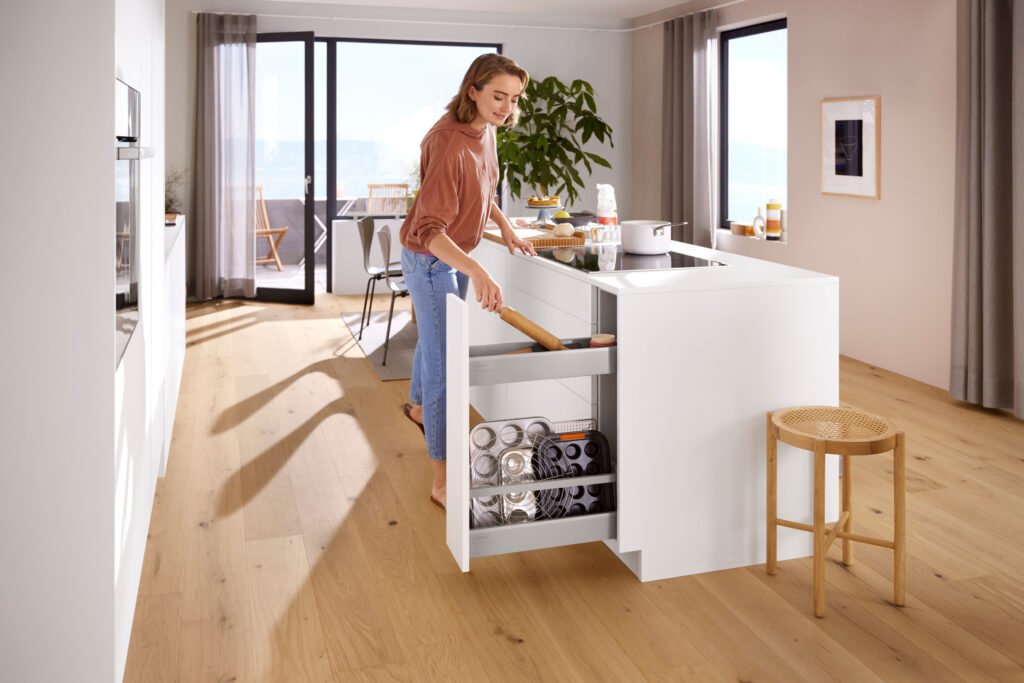
The company’s case rests substantially on durability, an attribute that has grown more important as fitted furniture is expected to perform reliably across decades rather than years. According to Blum, the system is built around a proven cabinet profile fitted with low-friction cylindrical nylon rollers that eliminate metal wear and are intended to deliver a featherlight glide that persists for the lifetime of the drawer. The manufacturer states that each box system is tested for one hundred thousand opening and closing cycles and is offered in thirty kilogram and sixty-five kilogram weight-bearing variants, figures the company says are meant to reflect the everyday demands placed on furniture over its working life. Blum maintains that its quality controls extend further to static load tests, lateral load tests, and slam open and shut tests, a regimen the company argues allows the system to exceed both legal requirements and international quality testing standards.
Alongside the engineering claims, design considerations have moved closer to the center of how such hardware is specified. Blum describes the TANDEMBOX antaro as minimalist and timeless, characterized by a clear-cut rectangular profile and a linear appearance available in grey, silk white, and stainless steel color schemes. The system is supplied in a range of nominal lengths spanning three hundred and fifty millimeters to six hundred and fifty millimeters and in two side heights comprising the standard M and the deeper D, a spread the company says is intended to let the same hardware integrate across kitchens, living rooms, and bathrooms without compromising the visual language of a scheme.
The movement toward quieter, handleless interiors is most visible in the motion technologies the system can accommodate. Blum pairs the TANDEMBOX with several mechanisms aimed at making the drawer feel effortless in use. BLUMOTION, the company’s mechanical soft-close system, is designed to draw the drawer shut in a gentle movement, while SERVO-DRIVE provides an electrical alternative that opens the drawer with a light touch and closes it softly. TIP-ON BLUMOTION offers a mechanical route that opens the drawer through an easy push and closes it quietly. It is these last two technologies, SERVO-DRIVE and TIP-ON, that enable the handleless drawer designs increasingly sought in contemporary interiors, removing the visible pull from the front of the unit altogether.
Installation has become a competitive consideration of its own, particularly for trade users working to tight schedules. Blum says assembly of the TANDEMBOX antaro is straightforward, rapid, and tool-free through its INSERTA technology, supported by three-dimensional adjustment options governing height, side, and tilt alignment. The manufacturer adds that it supports the process through its EASY ASSEMBLY app, available across both Android and iOS platforms.
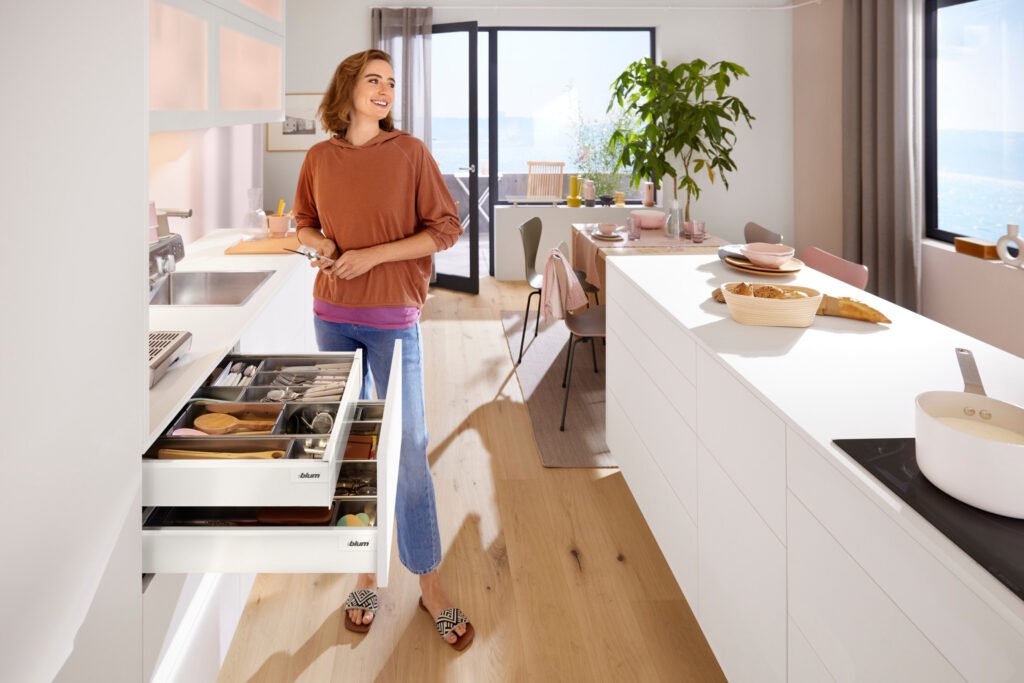
Storage organization, long an afterthought in drawer design, has emerged as a selling point in its own right. To combine generous capacity with ordered interiors and clear visibility, Blum offers the option of pairing the TANDEMBOX antaro with ORGA-LINE, its range of inner dividing systems. The company says these organizers are intended to keep the contents of a drawer arranged, readily visible, and within reach, whether the items in question are chopping boards, cutlery, bottles, or pots and pans.
Where the system arguably distinguishes itself is in its attempt to reclaim the awkward and underused corners of a home. Blum presents several applications built on the TANDEMBOX antaro that are designed to extract storage from difficult spaces. The SPACE CORNER is described as a cabinet application that opens up accessible storage within the often-neglected kitchen corner, while the SPACE TOWER takes the form of a tall pantry unit composed of inner pull-outs stacked one above another to furnish a clear overview and ready access to its contents. The SPACE STEP, meanwhile, is positioned as a two-in-one solution, providing a step for reaching higher shelves alongside a concealed drawer that recovers storage from the toe-kick.
Taken together, the proposition Blum advances is that a single drawer platform can meet the competing demands now placed on fitted furniture, namely durability, a restrained aesthetic, quiet and increasingly handleless operation, and the efficient use of space. The breadth of side heights, lengths, and motion technologies is intended to give designers latitude when planning drawers for varied rooms, and the company’s emphasis on weight and slam testing is offered as evidence that the double-walled system can absorb years of daily use. For a category of hardware that spends its working life hidden behind a drawer front, the marketing increasingly turns on what happens out of sight.
Website: https://www.blum.com/in/en
