
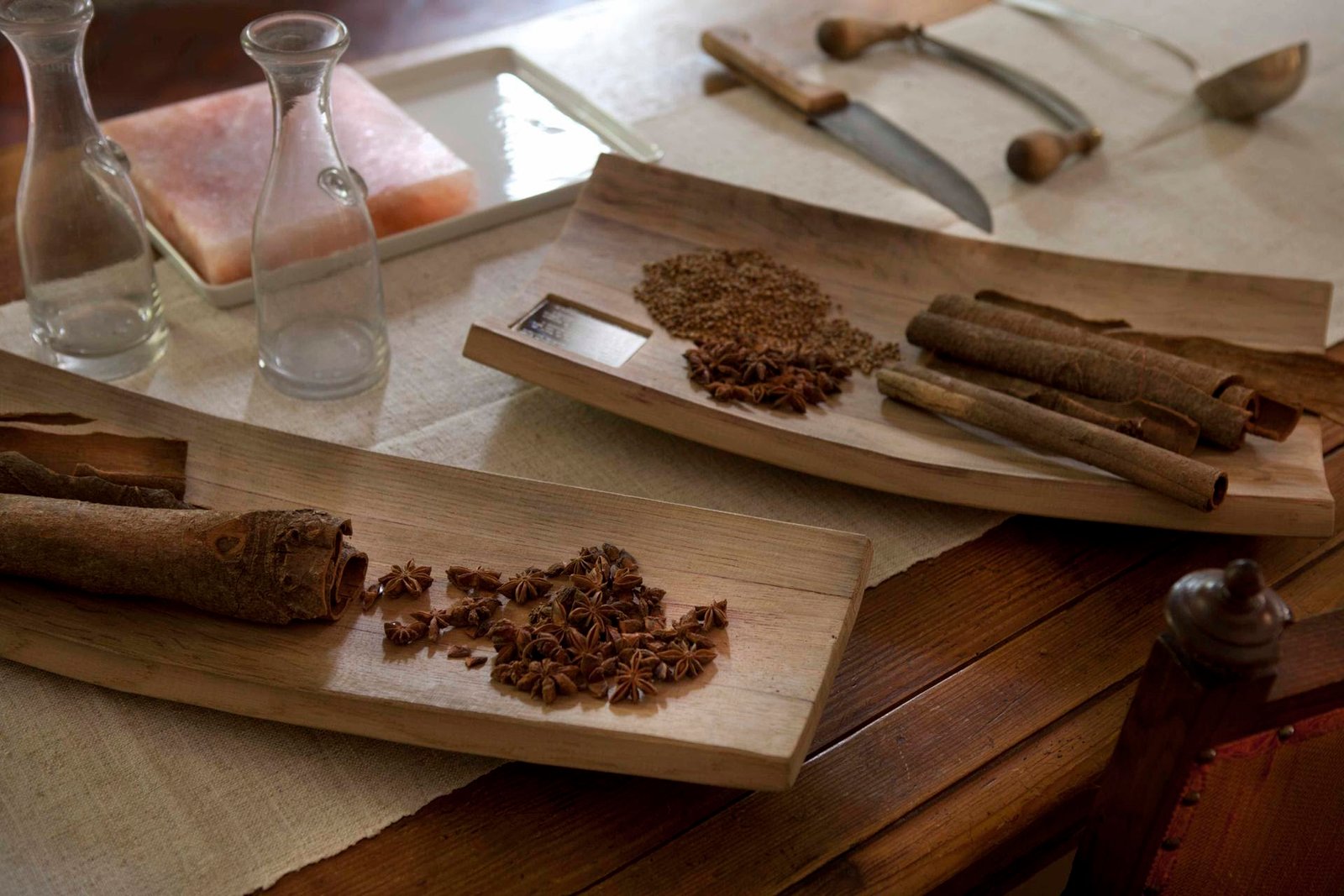
knIndustrie’s cutting board range, comprising Barrique, S/Lab, and Essenze, approaches a familiar kitchen object as a study in material sourcing and longevity rather than pure form. The three pieces share a working philosophy: that the transition between food preparation and serving doesn’t need two separate objects and that the material itself, not applied styling, should carry the design.
Barrique is the collection’s most material-forward piece. Built from reclaimed wine barrels, it comes in two formats, 19×80 cm and 28×50 cm, and retains the aromas and surface characteristics left behind by the barrel’s prior use. Rather than refinishing the wood into something neutral, knIndustrie keeps the marks of its origin visible, positioning the object as a direct continuation of the barrel’s working life rather than a disguised reuse of scrap material.
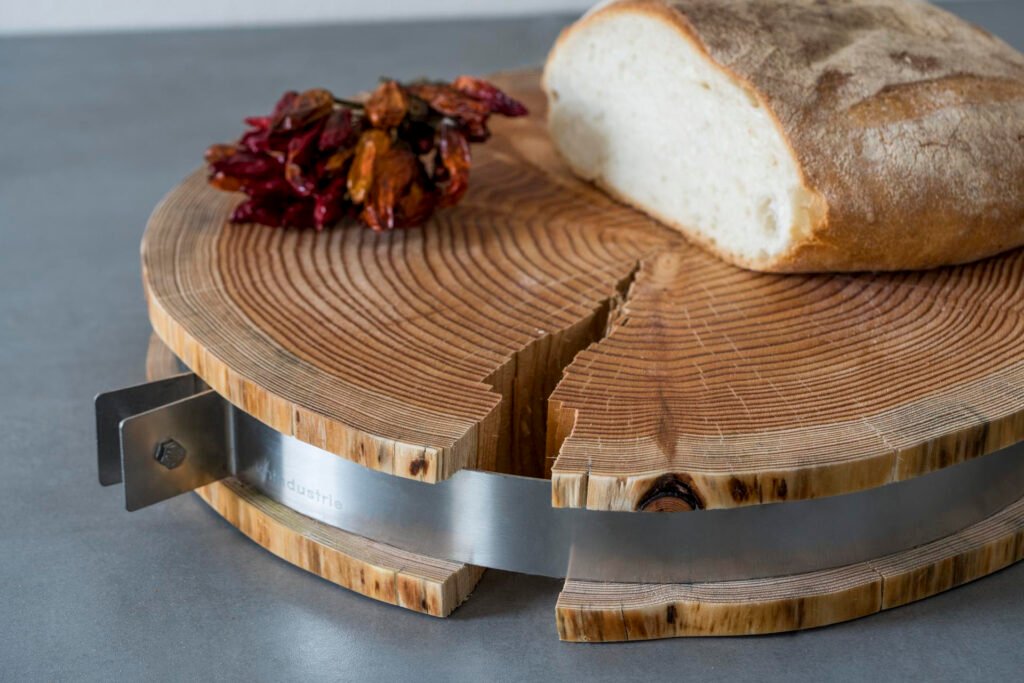
S/Lab takes an opposite approach, built entirely around what solid wood does on its own. At roughly 40 cm in diameter and edged with a slim metal band, the board is cut from solid larch, meaning the tree’s growth rings are visible across the surface of every piece. No two boards read identically. The design decision here is essentially an absence of decision: let the material’s own structure be the only variable.
Essenze, at 70×18 cm, is the most functionally oriented of the three, made in Italian walnut, pear wood, and cherry wood. Each board retains the natural silhouette of the trunk it came from, avoiding the squared-off standardization common to mass-produced boards. It’s built for daily rotation between kitchen and table rather than display.
Taken together, the collection reflects a broader position knIndustrie has staked out across its catalog: that functional objects built for repeated daily use deserve the same material rigor typically reserved for furniture or architectural fittings, and that sustainability, here expressed through reclaimed barrel wood and solid-cut timber, functions as a design constraint rather than a marketing footnote.
