
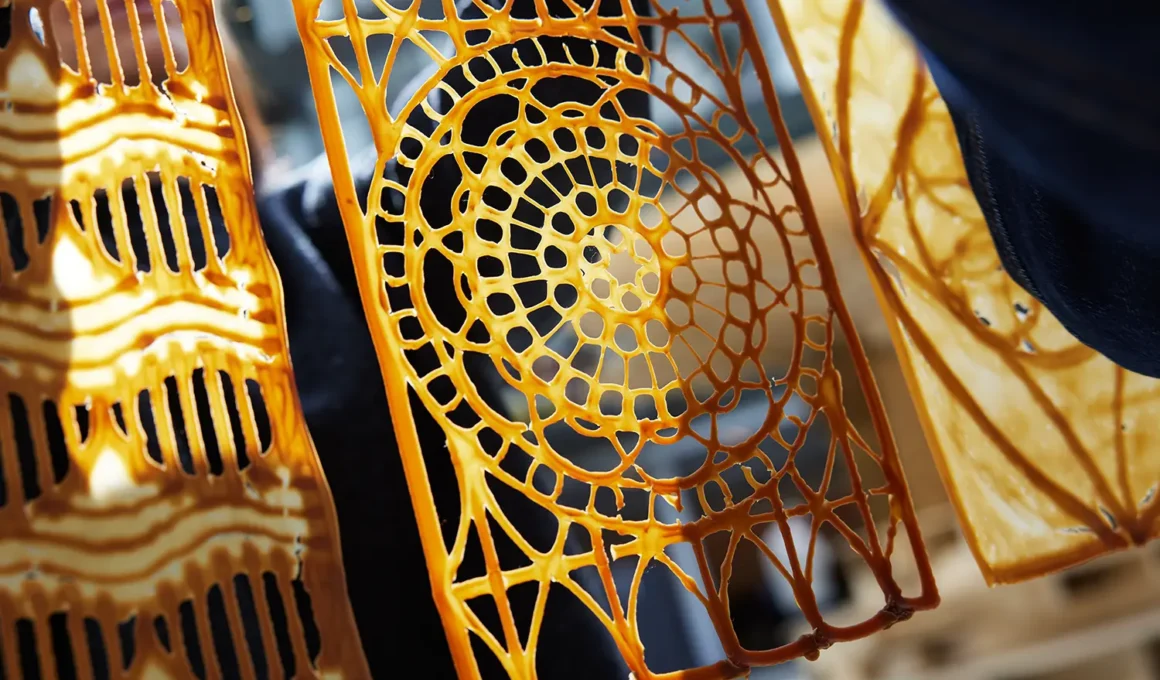
The unexpected ingredient at thecentere of this material is the same one that makes bread rise. A research team at Chalmers University of Technology in Sweden has turned baker’s yeast into a 3D-printable building material, aimed squarely at the interior elements that today rely on plaster, plastic,, and synthetic textiles. Think daylight-filtering screens, sun shading, room dividers, and wall panels, all reimagined from something entirely organic and renewable.
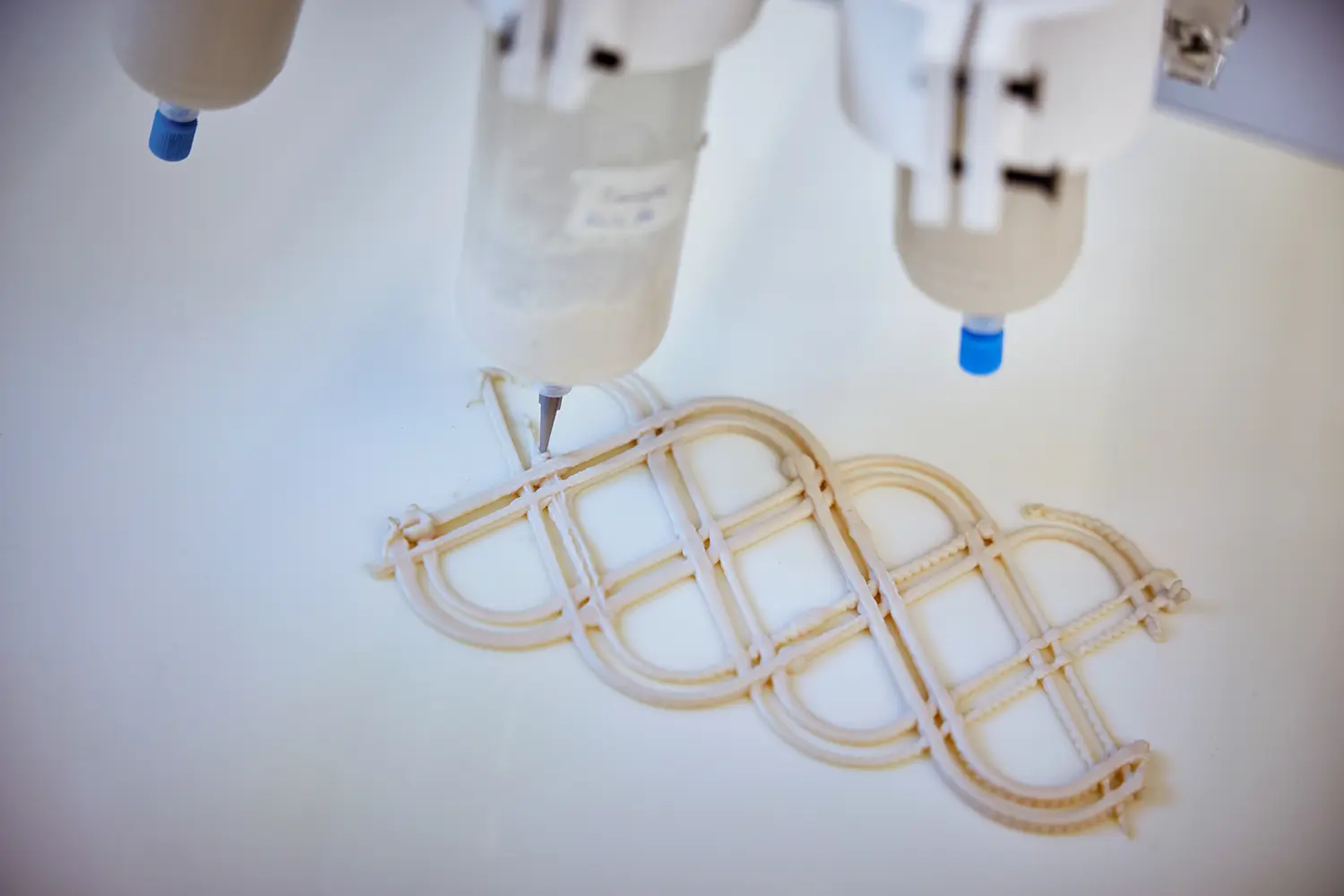
The recipe reads more like a kitchen than a laboratory. Yeast forms the structural base, joined by cellulose fibers from wood, alginate drawn from algae, glycerol from plants, and water. Combined, these ingredients produce a hydrogel, a soft and jelly-like mass that can be pushed through a printer and shaped at will. The yeast itself is not doing the work it usually does. It is heat-deactivated first and stabilized rather than left to ferment, so it functions as biomass and structure instead of a rising agent.
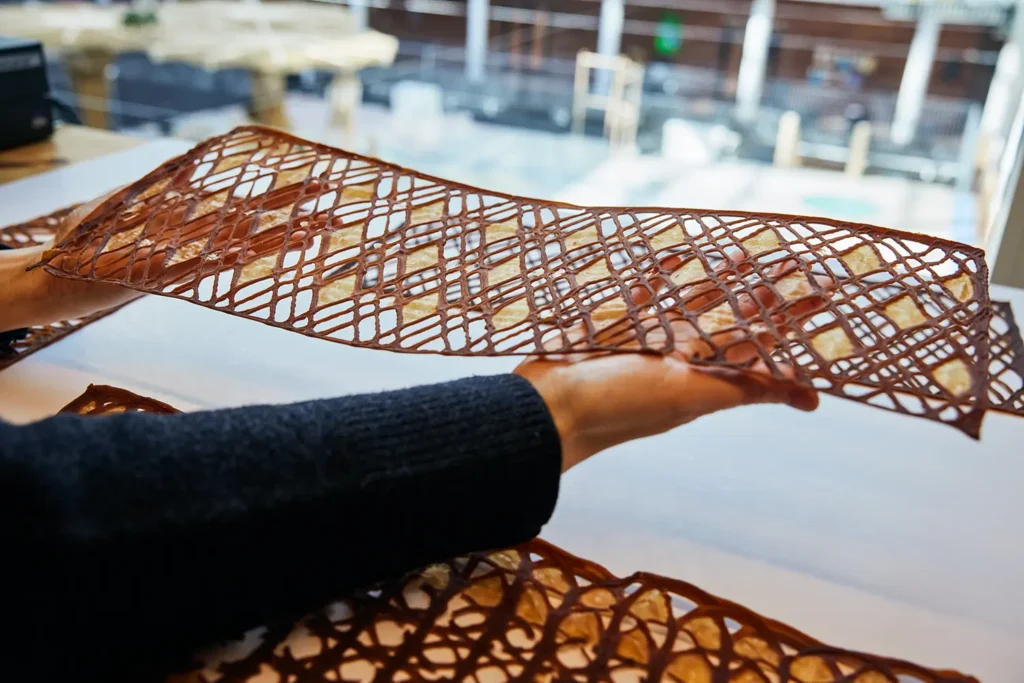
What sets this product apart from the broader field of engineered living materials is not the ambition but the choice of raw material. Yeast is cheap, produced industrially at an enormous scale, and leaves behind large quantities of residual biomass through brewing and agriculture that currently has no second life. The argument from Professor Malgorzata Zboinska, who led the study, is that leftover yeast unfit for food or animal feed could instead find a home in architecture. It is a way of pulling value out of what would otherwise be discarded.
The production method is deliberately low-tech, and that is part of the appeal. The hydrogel is printed using air pressure at room temperature, then left to air dry into its final form. There is no energy-hungry heating, no support scaffolding, and no offcut waste. Small tweaks to the formula shift the material’s transparency, color, and surface texture, which makes it adaptable to a range of interior uses without reinventing the process each time.
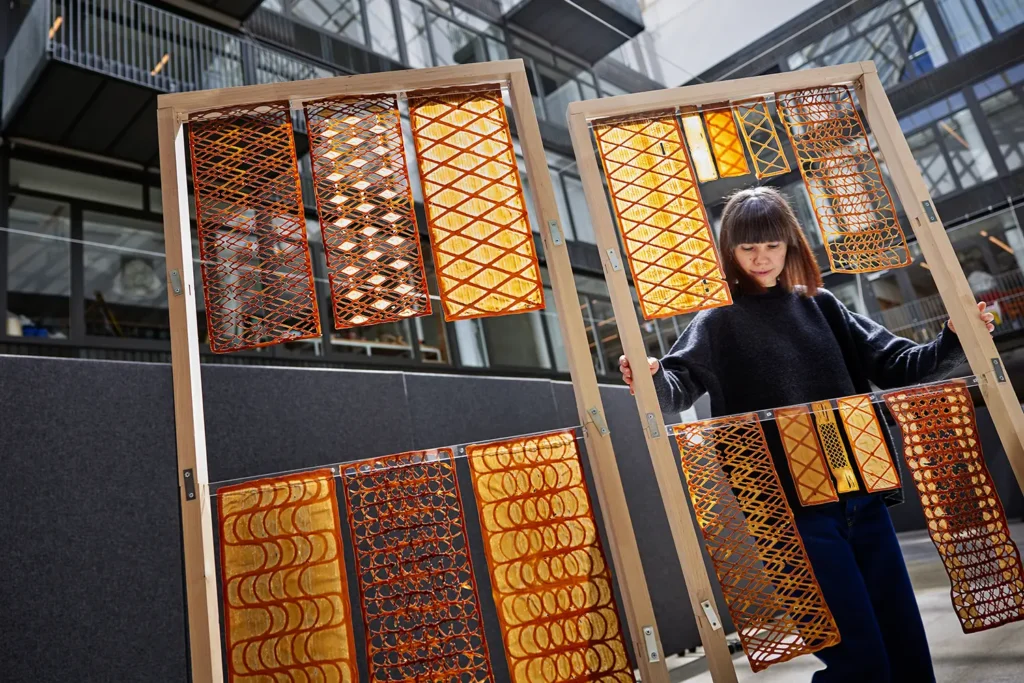
The most interesting idea here is philosophical rather than technical. Most building materials are engineered to last as long as possible, and their durability is treated as the goal. This material is designed to biodegrade. The team incorporates decay into the design, intentionally building shorter and circular life cycles from the start. It reframes sustainability not as cleanup but as a decision made at the moment of creation.
None of the material is ready for the building site yet, and the researchers are clear about that. Fire safety, behaviour under moisture, structural strength at larger scales, and the logistics of robotic printing all need much more work before anything like this technology reaches widespread use. What the study offers for now is a credible proof of concept and a genuinely different way of thinking about where construction materials come from and where they are meant to end up.
Fact File
Material: 3D-printable yeast-based architectural material
Institution: Chalmers University of Technology, Gothenburg, Sweden
Typology: Material innovation, bio-based building material for interiors
Lead researcher: Professor Malgorzata Zboinska
Co-author: Yagmur Bektas (doctoral researcher)
Research team: Yagmur Bektas, Malgorzata A. Zboinska, Cecilia Geijer, Tiina Nypelö, Zeinab Hefny
Ingredients: baker’s yeast, cellulose fibres from wood, alginate from algae, glycerol, water
Applications: daylight screens, sun shading, room partitions, wall panels
Published in: Frontiers of Architectural Research
Funding: Swedish Energy Agency
Year: 2026
